element14 Community
element14 Community
    Register Log In
  • Site
  • Search
  • Log In Register
  • Community Hub
    Community Hub
    • What's New on element14
    • Feedback and Support
    • Benefits of Membership
    • Personal Blogs
    • Members Area
    • Achievement Levels
  • Learn
    Learn
    • Ask an Expert
    • eBooks
    • element14 presents
    • Learning Center
    • Tech Spotlight
    • STEM Academy
    • Webinars, Training and Events
    • Learning Groups
  • Technologies
    Technologies
    • 3D Printing
    • FPGA
    • Industrial Automation
    • Internet of Things
    • Power & Energy
    • Sensors
    • Technology Groups
  • Challenges & Projects
    Challenges & Projects
    • Design Challenges
    • element14 presents Projects
    • Project14
    • Arduino Projects
    • Raspberry Pi Projects
    • Project Groups
  • Products
    Products
    • Arduino
    • Avnet & Tria Boards Community
    • Dev Tools
    • Manufacturers
    • Multicomp Pro
    • Product Groups
    • Raspberry Pi
    • RoadTests & Reviews
  • About Us
  • Store
    Store
    • Visit Your Store
    • Choose another store...
      • Europe
      •  Austria (German)
      •  Belgium (Dutch, French)
      •  Bulgaria (Bulgarian)
      •  Czech Republic (Czech)
      •  Denmark (Danish)
      •  Estonia (Estonian)
      •  Finland (Finnish)
      •  France (French)
      •  Germany (German)
      •  Hungary (Hungarian)
      •  Ireland
      •  Israel
      •  Italy (Italian)
      •  Latvia (Latvian)
      •  
      •  Lithuania (Lithuanian)
      •  Netherlands (Dutch)
      •  Norway (Norwegian)
      •  Poland (Polish)
      •  Portugal (Portuguese)
      •  Romania (Romanian)
      •  Russia (Russian)
      •  Slovakia (Slovak)
      •  Slovenia (Slovenian)
      •  Spain (Spanish)
      •  Sweden (Swedish)
      •  Switzerland(German, French)
      •  Turkey (Turkish)
      •  United Kingdom
      • Asia Pacific
      •  Australia
      •  China
      •  Hong Kong
      •  India
      •  Korea (Korean)
      •  Malaysia
      •  New Zealand
      •  Philippines
      •  Singapore
      •  Taiwan
      •  Thailand (Thai)
      • Americas
      •  Brazil (Portuguese)
      •  Canada
      •  Mexico (Spanish)
      •  United States
      Can't find the country/region you're looking for? Visit our export site or find a local distributor.
  • Translate
  • Profile
  • Settings
Publications
  • Learn
  • More
Publications
Blog Move over silicon, scientists from Stanford create world’s first all-carbon solar cell
  • Blog
  • Documents
  • Events
  • Files
  • Members
  • Mentions
  • Sub-Groups
  • Tags
  • More
  • Cancel
  • New
Join Publications to participate - click to join for free!
  • Share
  • More
  • Cancel
Group Actions
  • Group RSS
  • More
  • Cancel
Engagement
  • Author Author: Catwell
  • Date Created: 5 Nov 2012 6:39 PM Date Created
  • Views 567 views
  • Likes 1 like
  • Comments 2 comments
  • research
  • alternative_energy
  • industry
  • on_campus
  • cabeatwell
  • prototyping
  • measurement
  • university
  • energy
  • solar
  • sensor
  • innovation
Related
Recommended

Move over silicon, scientists from Stanford create world’s first all-carbon solar cell

Catwell
Catwell
5 Nov 2012

image

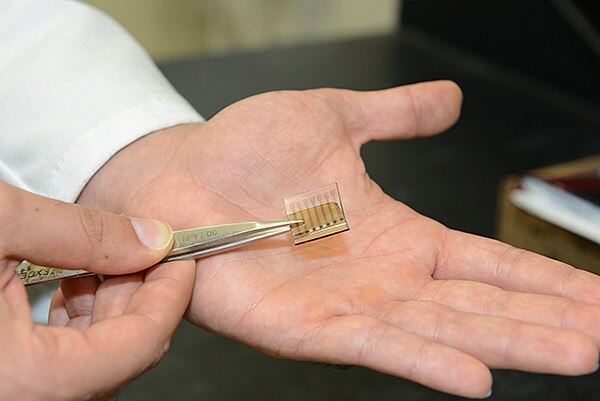
All carbon solar cell (via Stanford)


Solar cells come in many different flavors and are traditionally made with any number of silicon materials, such as monocrystalline silicon, polycrystalline silicon and amorphous silicon (to name a few), but now scientists from Stanford University have succeeded in adding a new material to the solar cell mix in the form of carbon. Most solar cells use rare-earth metals in their make-up for the cells electrodes such as ITO (indium tin oxide) and silver which are extremely costly and will not last forever (according to China who exports 90% of the world’s supply). This fact alone makes Stanford’s thin-film solar cell an attractive prospect to manufacturers as the cost of materials are reduced along with a reduced amount of steps to fabricate the cells. To make the all carbon photovoltaic cell, Stanford’s scientists replaced the silver and indium tin oxide electrodes with graphene along with single-walled carbon nan-tubes, which have outstanding electrical conductivity as well as excellent light gathering properties. For the cells light-absorbing layer, the scientists used a carbon mixture containing nano-tubes and buckyballs (a carbon soccer-ball cage-like fused ring structure) which primarily gathers light from the infrared wavelength of the spectrum making the cell inefficient (taken from a laboratory conversion efficiency of less than 1 percent) over it’s more common counterparts (more on this later).


Stanford’s scientists state that their thin-film carbon solar cell can be applied through a unique solution to various surfaces including rooftops, windows or even cars to help generate electricity. However the questio0n of inefficiency still remains but the team states that they are looking at ways of improving the cell’s only drawback. One of the way’s the scientists are considering is to smooth the graphene material by re-stacking the nano-structures in a more compact efficient manner, which would make it easier to collect an electrical current. Another prospect the team is looking at is experimenting with different carbon nano-materials that are able to absorb light in a wider-range of wavelengths including those in the visible spectrum. While you may not see these carbon-based solar cells anytime soon, in the commercial market they do have promise as it stands right now. Carbon is extremely durable and remains stable in harsh conditions including heat (up to 1,1000 Fahrenheit) where function is the priority rather than form and efficiency. This means with a little tweaking these cells could be implemented in environments such as space, deserts and oceans (saltwater corrodes just about everything you can imagine) in the near future.


Cabe

http://twitter.com/Cabe_e14

  • Sign in to reply
  • Catwell
    Catwell over 13 years ago in reply to DAB

    It is a shame that this cell doesn't produce a higher efficiency. Then funding for research would increase. Now, it will only lurch along.


    Cabe

    • Cancel
    • Vote Up 0 Vote Down
    • Sign in to reply
    • More
    • Cancel
  • DAB
    DAB over 13 years ago

    The new carbon based devices is really exciting.

    After living through the change from tubes to transisters to IC's, the new discoveries are eerily similar as we watch a new technology unfold before our eyes.

    I can't wait to see what new capabilities they evolve from the technology as they get to understand it better.


    Definately an exciting time in electronics.


    DAB

    • Cancel
    • Vote Up 0 Vote Down
    • Sign in to reply
    • More
    • Cancel
element14 Community

element14 is the first online community specifically for engineers. Connect with your peers and get expert answers to your questions.

  • Members
  • Learn
  • Technologies
  • Challenges & Projects
  • Products
  • Store
  • About Us
  • Feedback & Support
  • FAQs
  • Terms of Use
  • Privacy Policy
  • Legal and Copyright Notices
  • Sitemap
  • Cookies

An Avnet Company © 2025 Premier Farnell Limited. All Rights Reserved.

Premier Farnell Ltd, registered in England and Wales (no 00876412), registered office: Farnell House, Forge Lane, Leeds LS12 2NE.

ICP 备案号 10220084.

Follow element14

  • X
  • Facebook
  • linkedin
  • YouTube