element14 Community
element14 Community
    Register Log In
  • Site
  • Search
  • Log In Register
  • Community Hub
    Community Hub
    • What's New on element14
    • Feedback and Support
    • Benefits of Membership
    • Personal Blogs
    • Members Area
    • Achievement Levels
  • Learn
    Learn
    • Ask an Expert
    • eBooks
    • element14 presents
    • Learning Center
    • Tech Spotlight
    • STEM Academy
    • Webinars, Training and Events
    • Learning Groups
  • Technologies
    Technologies
    • 3D Printing
    • FPGA
    • Industrial Automation
    • Internet of Things
    • Power & Energy
    • Sensors
    • Technology Groups
  • Challenges & Projects
    Challenges & Projects
    • Design Challenges
    • element14 presents Projects
    • Project14
    • Arduino Projects
    • Raspberry Pi Projects
    • Project Groups
  • Products
    Products
    • Arduino
    • Avnet & Tria Boards Community
    • Dev Tools
    • Manufacturers
    • Multicomp Pro
    • Product Groups
    • Raspberry Pi
    • RoadTests & Reviews
  • About Us
  • Store
    Store
    • Visit Your Store
    • Choose another store...
      • Europe
      •  Austria (German)
      •  Belgium (Dutch, French)
      •  Bulgaria (Bulgarian)
      •  Czech Republic (Czech)
      •  Denmark (Danish)
      •  Estonia (Estonian)
      •  Finland (Finnish)
      •  France (French)
      •  Germany (German)
      •  Hungary (Hungarian)
      •  Ireland
      •  Israel
      •  Italy (Italian)
      •  Latvia (Latvian)
      •  
      •  Lithuania (Lithuanian)
      •  Netherlands (Dutch)
      •  Norway (Norwegian)
      •  Poland (Polish)
      •  Portugal (Portuguese)
      •  Romania (Romanian)
      •  Russia (Russian)
      •  Slovakia (Slovak)
      •  Slovenia (Slovenian)
      •  Spain (Spanish)
      •  Sweden (Swedish)
      •  Switzerland(German, French)
      •  Turkey (Turkish)
      •  United Kingdom
      • Asia Pacific
      •  Australia
      •  China
      •  Hong Kong
      •  India
      • Japan
      •  Korea (Korean)
      •  Malaysia
      •  New Zealand
      •  Philippines
      •  Singapore
      •  Taiwan
      •  Thailand (Thai)
      • Vietnam
      • Americas
      •  Brazil (Portuguese)
      •  Canada
      •  Mexico (Spanish)
      •  United States
      Can't find the country/region you're looking for? Visit our export site or find a local distributor.
  • Translate
  • Profile
  • Settings
Publications
  • Learn
  • More
Publications
Blog Oregon researchers use sound to increase storage capacity
  • Blog
  • Documents
  • Events
  • Files
  • Members
  • Mentions
  • Sub-Groups
  • Tags
  • More
  • Cancel
  • New
Join Publications to participate - click to join for free!
  • Share
  • More
  • Cancel
Group Actions
  • Group RSS
  • More
  • Cancel
Engagement
  • Author Author: Catwell
  • Date Created: 12 Mar 2013 8:16 PM Date Created
  • Views 436 views
  • Likes 0 likes
  • Comments 0 comments
  • research
  • industry
  • hmi
  • on_campus
  • storage
  • embedded
  • Design
  • cabeatwell
  • prototyping
  • sound
  • university
  • data
  • sensor
  • innovation
  • communication
Related
Recommended

Oregon researchers use sound to increase storage capacity

Catwell
Catwell
12 Mar 2013

image

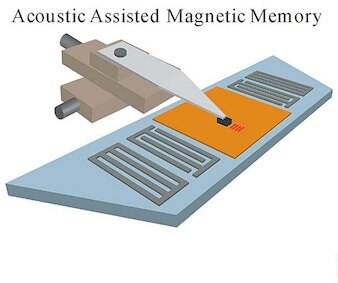
concept of acoustic-assisted magnetic recording device (via OSU)


Increasing our computer memory is a task that is constantly being worked on. Whether we are working on more energy efficient storage, more compact storage, or a cheaper way to deliver the goods, we will take it however we can get it. Solid state drives (SSDs) and hard disk drives (HDDs) are our most common form of storage medium. However, HDDs are still much cheaper than SSDs, going for around 10 times cheaper per unit of storage. Researchers from Oregon State University may have found a technique that can be used to help increase storage within SSDs without cramming more components into a smaller space. 


Pallavi Dhagat, an associate professor in the OSU School of Electrical Engineering and Computer Science, commented, “We're near the peak of what we can do with the technology we now use for magnetic storage. There's always a need for approaches that could store even more information in a smaller space, cost less, and use less power.”


At first, the researchers were studying how heat can be used to temporarily expand a storage medium, store the data onto it, and then remove the heat to allow it to return to its original form. Although it sounded good at first, the heat had unintentional effects. When the researchers began to heat specific regions, they were not able to control the propagation of heat as much as they had hoped. Therefore, this method was not as precise as it needed to be in order to create an efficient solution. Nevertheless, a new method was discovered that worked on the same principles, but rather than using heat, they used sound waves to temporarily expand the medium.


Calling the technology, Acoustic-Assisted Magnetic Recording (AAMR), the researchers have filed a patent on the technology and have just recently presented their findings at the 12th Joint MMM/Intermag Conference in Chicago. According to the researchers, using ultrasound, or high frequency sound waves, specific areas can be precisely targeted, then stretch and bend the material to allow more information to be stored on it. Consequently, when the sound waves cease, the material returns to its original form and shape. It is not yet clear as to how much more information the method is capable of storing, but the researchers stated that it may work with magnetic materials already being used.


Albrecht Jander, a collaborator on the research and associate professor, stated, “This technology should allow us to marry the benefits of solid state electronics with magnetic recording, and create non volatile memory systems that store more data in less space, using less power.” Much more work is still needed to be done on the research along with testing the longevity of the method. I would believe that constant bending and deformation may result in a less reliable product. However, we will have to wait and see what happens with the ongoing research.


C


More news at:

http://twitter.com/Cabe_e14

  • Sign in to reply
element14 Community

element14 is the first online community specifically for engineers. Connect with your peers and get expert answers to your questions.

  • Members
  • Learn
  • Technologies
  • Challenges & Projects
  • Products
  • Store
  • About Us
  • Feedback & Support
  • FAQs
  • Terms of Use
  • Privacy Policy
  • Legal and Copyright Notices
  • Sitemap
  • Cookies

An Avnet Company © 2026 Premier Farnell Limited. All Rights Reserved.

Premier Farnell Ltd, registered in England and Wales (no 00876412), registered office: Farnell House, Forge Lane, Leeds LS12 2NE.

ICP 备案号 10220084.

Follow element14

  • X
  • Facebook
  • linkedin
  • YouTube