


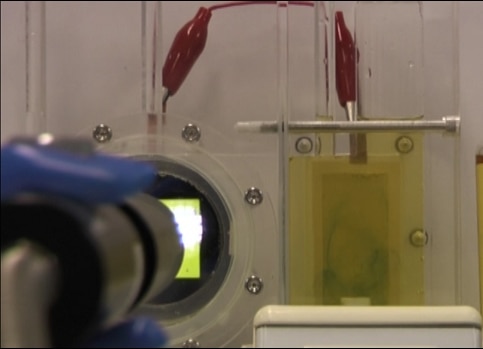
Artificial photosynthesis in action. (Left) nitride semiconductor (Right) Metallic catalyst (via Panasonic)
There is plenty left to learn from plants, as we venture towards more complex gadgets. All they need is nutrients, water and light (for the most part) to generate usable food and other organic materials. Panasonic has just developed a system that generates formic acid by using a process we learned from plants, photosynthesis.
The key to this project was finding the adequate materials to use in the reaction of carbon, oxygen, hydrogen and light that forms formic acid. It was found that nitride semi conductors, when hit by intense light, could function as a photo-electrode that could excite carbon dioxide electrons with the energy needed to react with oxygen and hydrogen to create formic acid. The performance of the nitride semiconductor was significantly improved by making it into a thin film.
Similar systems have been created before, but the simple set up of Panasonic's experiment sets it apart. This is made possible by the highly effective nitride semiconductor film allowed the Panasonic system to achieve the highest efficiency of any similar carbon reduction system yet.
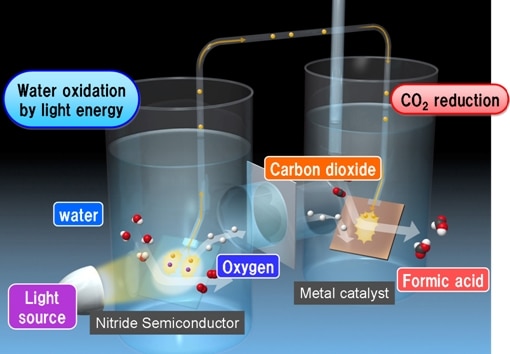
System concept (via Panasonic)
Though the efficiency of 0.2% may seem too inefficient, Panasonic noted that because of the effectiveness of the nitride semiconductor film there is practically no energy loss within the system itself. Which means the amount of formic acid created, or the amount of carbon reduced, is proportional only the power of the light used in the experiment. Panasonic says that building lots of these systems could impact the effect that excess carbon emissions are having on the climate. (Reminds me of the French scientist that made lamps that run on algae who also ran on this claim, but did not have the influence or resources Panasonic does.)
Panasonic holds 18 domestic and 11 oversees patents on applications to this system. Formic acid, itself, is toxic to humans, but formates are used in dyes, fragrances, cleaning products, pesticides, as a preservative in food for livestock and many other industrial applications.
Cabe