element14 Community
element14 Community
    Register Log In
  • Site
  • Search
  • Log In Register
  • Community Hub
    Community Hub
    • What's New on element14
    • Feedback and Support
    • Benefits of Membership
    • Personal Blogs
    • Members Area
    • Achievement Levels
  • Learn
    Learn
    • Ask an Expert
    • eBooks
    • element14 presents
    • Learning Center
    • Tech Spotlight
    • STEM Academy
    • Webinars, Training and Events
    • Learning Groups
  • Technologies
    Technologies
    • 3D Printing
    • FPGA
    • Industrial Automation
    • Internet of Things
    • Power & Energy
    • Sensors
    • Technology Groups
  • Challenges & Projects
    Challenges & Projects
    • Design Challenges
    • element14 presents Projects
    • Project14
    • Arduino Projects
    • Raspberry Pi Projects
    • Project Groups
  • Products
    Products
    • Arduino
    • Avnet & Tria Boards Community
    • Dev Tools
    • Manufacturers
    • Multicomp Pro
    • Product Groups
    • Raspberry Pi
    • RoadTests & Reviews
  • About Us
    About the element14 Community
  • Store
    Store
    • Visit Your Store
    • Choose another store...
      • Europe
      •  Austria (German)
      •  Belgium (Dutch, French)
      •  Bulgaria (Bulgarian)
      •  Czech Republic (Czech)
      •  Denmark (Danish)
      •  Estonia (Estonian)
      •  Finland (Finnish)
      •  France (French)
      •  Germany (German)
      •  Hungary (Hungarian)
      •  Ireland
      •  Israel
      •  Italy (Italian)
      •  Latvia (Latvian)
      •  
      •  Lithuania (Lithuanian)
      •  Netherlands (Dutch)
      •  Norway (Norwegian)
      •  Poland (Polish)
      •  Portugal (Portuguese)
      •  Romania (Romanian)
      •  Russia (Russian)
      •  Slovakia (Slovak)
      •  Slovenia (Slovenian)
      •  Spain (Spanish)
      •  Sweden (Swedish)
      •  Switzerland(German, French)
      •  Turkey (Turkish)
      •  United Kingdom
      • Asia Pacific
      •  Australia
      •  China
      •  Hong Kong
      •  India
      •  Japan
      •  Korea (Korean)
      •  Malaysia
      •  New Zealand
      •  Philippines
      •  Singapore
      •  Taiwan
      •  Thailand (Thai)
      •  Vietnam
      • Americas
      •  Brazil (Portuguese)
      •  Canada
      •  Mexico (Spanish)
      •  United States
      Can't find the country/region you're looking for? Visit our export site or find a local distributor.
  • Translate
  • Profile
  • Settings
Publications
  • Learn
  • More
Publications
Blog Quantum leap to the physics Nobel - observing the smallest interactions
  • Blog
  • Documents
  • Events
  • Files
  • Members
  • Mentions
  • Sub-Groups
  • Tags
  • More
  • Cancel
  • New
Join Publications to participate - click to join for free!
  • Share
  • More
  • Cancel
Group Actions
  • Group RSS
  • More
  • Cancel
Engagement
  • Author Author: Catwell
  • Date Created: 12 Oct 2012 7:08 PM Date Created
  • Views 509 views
  • Likes 1 like
  • Comments 2 comments
  • nobel2012
  • quantum
  • research
  • nobel
  • industry
  • hmi
  • on_campus
  • nobel_physics_2012
  • cabeatwell
  • prototyping
  • measurement
  • university
  • sensor
  • innovation
  • communication
Related
Recommended

Quantum leap to the physics Nobel - observing the smallest interactions

Catwell
Catwell
12 Oct 2012

image

David Wineland in lab (via Reuters)


"I admire to the highest degree the achievement of the younger generation of physicists which goes by the term quantum mechanics, and believe in the deep level of truth of that theory; but I believe that its limitation to 'statistical laws' will be a temporary one." -Albert Einstein, 1929


This quote, by Albert Einstein, predicted what has now become true, winning a French and an American scientist the 2012 Nobel Prize in Physics. Serge Haroche from the Collège de France and École Normale Supérieure in Paris, and David Wineland from the Commerce Department’s National Institute of Standards and Technology (NIST) have both been working on projects that observe discrete behaviors of interacting quantum particles. The long time friends received the prestigious award for what the Royal Swedish Academy of Sciences calls “ground-breaking experimental methods that enable measuring and manipulation of individual quantum systems.” Interestingly, these experimental methods take opposite approaches to doing the same thing.
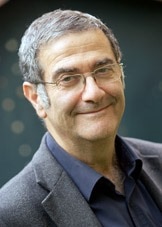
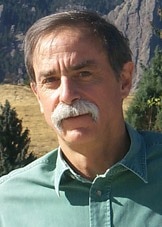
 

imageimage

(Left) Serge Haroche (Right) David J. Wineland (via Nobelprize.org)


Haroche was able to achieve the marvelous observation of individual quanta using what is called optical cavities. These cavities are made of tiny box-like devices, a couple centimeters in length, that are lined with ultra-reflective superconducting mirrors, at a temperature of only 0.5 degrees Kelvin. The Casmir Effect says that in any part of “empty” space, tiny fluctuations within the energetic fabric of space-time can result in virtual particles coming into existence at any moment and decaying as soon as they appear. Inside of the optical cavities, however, an emerging photon can be trapped and bounce between the mirrors billions of times for more than a tenth of a second (about 40,000 km). Haroche shoots rubidium atoms, which cannot absorb a single photon because a photon is not the correct “package” of energy to boost one rubidium atom to another energy state) one at a time through this optical cavity.


Haroche best explains the resulting measurements that allow him to observe the individual quantum systems involved. When referring to the interaction of the “caged” photon and the rubidium atom, he says, "This [interaction] is not performed at the expense of the photon energy, so if one is detected, it is still there afterwards for successive rubidium atoms, allowing us to track it," says Haroche. "A typical signal has a sequence of [rubidium] atoms at one energy level, meaning an empty cavity, suddenly interrupted by atoms at another energy level, signaling the photon birth. Later, a jump in the opposite direction signals the photon annihilation."


This research confirmed fundamental operations necessary for quantum computing. Haroche showed that the state of qubits, or quantum bits of information, could be controlled by trapped photons. This achievement in part, was what got him his share of The Nobel Prize.


When Wineland wants to observe a single quantum entity (which ironically means he will see two of the same thing) he uses his laser cooling technique. In contrast with Haroche’s approach, he traps an ion in an electric field and proceeds to shot it with photons (a laser), which cools the ion by absorbing the random fluctuations or vibrations (heat) of the atom. Using this, he is able to control the quantum state of the ion by forcing it to occupy its lowest possible state. Minute but precise bursts of more energy can also force it to occupy its next higher state and this condenses the quantum probability of the ion to where it can be observed in two locations, 80 billionths of a meter apart.


David Wineland has been working for the NIST since 1975 and has been involved in developing some of the very first devices that test quantum theory. In 1978 for example, he demonstrated laser cooling of individual ions that led to the development of ultra-precise clocks that have become the standard in frequency and time measurements. He was part of the first group that demonstrated the entanglement of two (1998) and then four (2000) ions, quantum teleportation of massive particles (2004) and the first “quantum logic atomic clock” (2005), which would have only lost 4 seconds if it had been started at the beginning of time about 15 billion years ago. In 1995, Wineland also demonstrated the use of the first quantum logic gate. Along with his manipulation of individual quanta, all of these achievements accelerate the efforts of scientists towards quantum computing that would exploit the strange behaviors of quanta.


Wineland was awoken by his wife, who answered the important phone call. Haroche, was on a walk with his wife when he received a call with the area code “46” which he knew to be Sweden’s. The long-time friends may have been surprised by their selection for this year’s Nobel Prize, but nothing has astonished the scientific community, especially the quantum physics world, more than their experiments. They have made reality out of what was once believed to only exist in mathematical equations and the imaginations of crazed physicists; proving behaviors and opening the door to possibilities that surely would have surprised Einstein himself.


Cabe

http://twitter.com/Cabe_e14

  • Sign in to reply
  • DAB
    DAB over 13 years ago

    They are getting close, but they are still not able to understand the real secret behind photons.


    Soon they will understand the real secrets of dark matter and realize that it is right in front of them.


    Until then, they will still hang on to the Quantum theory, which is not correct.


    Just my opinion,

    DAB

    • Cancel
    • Vote Up 0 Vote Down
    • Sign in to reply
    • More
    • Cancel
  • Catwell
    Catwell over 13 years ago

    More reading on what these two Nobel winners have discovered:


    Book Chapters and Papers by Serge Haroche:

    • Cryogenic Atom Chips,
      Gilles Nogues, Adrian Lupaşcu, Andreas Emmert, Michel Brune, Jean-Michel Raimond, Serge Haroche,
      In Atom Chips,
      Jakob Reichel, Vladan Vuletić (Eds.),
      Wiley-VCH, Weinheim, Germany, 2011.
      DOI: 10.1002/9783527633357.ch10
    • Entanglement experiments in cavity QED,
      S. Haroche,
      Fortschr. Phys. 2003, 51(4-5), 388–395.
      DOI: 10.1002/prop.200310052
    • New Tests of Quantum Theory,
      S. Haroche,
      Ann. N. Y. Acad. Sci.1995, 755(1), 73–86.
      DOI: 10.1111/j.1749-6632.1995.tb38957.x

    Papers by David Wineland:

    • Quantum information processing and metrology with trapped ions,
      D. J. Wineland, D. Leibfried,
      Laser Phys. Lett. 2011, 8(3), 175–188.
      DOI: 10.1002/lapl.201010125
    • Transport dynamics of single ions in segmented microstructured Paul trap arrays,
      R. Reichle, D. Leibfried, R. B. Blakestad, J. Britton, J. D. Jost, E. Knill, C. Langer, R. Ozeri, S. Seidelin, D. J. Wineland,
      Fortschr. Phys. 2006, 54(8-10), 666–685.
      DOI: 10.1002/prop.200610326
    • Superposition and quantum measurement of trapped atoms,
      D. J. Wineland, C. R. Monroe, C. Sackett, D. Kielpinski, M. Rowe, V. Meyer, W. Itano,
      Ann. Phys. 2000, 9(11-12), 851–854.
      DOI: 10.1002/1521-3889(200011)9:11/12<851::AID-ANDP851>3.0.CO;2-#
    • Experimental Primer on the Trapped Ion Quantum Computer,
      D. J. Wineland, C. Monroe, W. M. Itano, B. E. King, D. Leibfried, D. M. Meekhof, C. Myatt, C. Wood
      Fortschr. Phys. 1998, 46(4-5), 363–390.
      DOI: 10.1002/(SICI)1521-3978(199806)46:4/5<363::AID-PROP363>3.0.CO;2-4

    Book Chapters by David Wineland:

    • Micro-Fabricated Chip Traps for Ions,
      J. M. Amini, J. Britton, D. Leibfried, D. J. Wineland,
      In Atom Chips
      Jakob Reichel, Vladan Vuletić (Eds.)
      Wiley-VCH, Weinheim, Germany, 2011.
      DOI: 10.1002/9783527633357.ch13
    • Transport Dynamics of Single Ions in Segmented Microstructured Paul Trap Arrays,
      R. Reichle, D. Leibfried, R. B. Blakestad, J. Britton, J.D. Jost, E. Knill, C. Langer, R. Ozeri, S. Seidelin, D. J. Wineland,
      In Elements of Quantum Information,
      Wolfgang P. Schleich, Herbert Walther (Eds.),
      Wiley-VCH, Weinheim, Germany, 2007.
      DOI: 10.1002/9783527611065.ch3
    • Experimental Primer on the Trapped Ion Quantum Computer,
      D. J. Wineland, C. Monroe, W. M. Itano, B. E. King, D. Leibfried, D. M. Meekhof, C. Myatt, C. Wood,
      In Quantum Computing: Where Do We Want to Go Tomorrow?
      Samuel L. Braunstein (Ed.),
      Wiley-VCH, Weinheim, Germany, 1999.
      DOI: 10.1002/3527603093.ch3
    • Cancel
    • Vote Up 0 Vote Down
    • Sign in to reply
    • More
    • Cancel
element14 Community

element14 is the first online community specifically for engineers. Connect with your peers and get expert answers to your questions.

  • Members
  • Learn
  • Technologies
  • Challenges & Projects
  • Products
  • Store
  • About Us
  • Feedback & Support
  • FAQs
  • Terms of Use
  • Privacy Policy
  • Legal and Copyright Notices
  • Sitemap
  • Cookies

An Avnet Company © 2026 Premier Farnell Limited. All Rights Reserved.

Premier Farnell Ltd, registered in England and Wales (no 00876412), registered office: Farnell House, Forge Lane, Leeds LS12 2NE.

ICP 备案号 10220084.

Follow element14

  • X
  • Facebook
  • linkedin
  • YouTube