


Example map and name chart
University of Queensland and Queensland University of Technology has set out to allow see how robots would develop a language of their own. Ruth Shulz and her research team gave the bots the ability to speak and a set number of syllable sounds (words). The bots, dubbed Lingodroids, are a simple mobile platform equipped with a camera, laser range finder, and a speaker and microphone for communication. The bots then use the sensors to map the surroundings as it navigates through “the land.” As the bots move around in a space, one will name a location it is in by randomly coming up with a name, from the syllables it knows, and broadcast the name to others. The way the Lingodroids learn from each other is by playing a simple game. One tells the other to go to a certain location name, they then race to get to that spot. Along the way, they may come up with new names for new locations. However, some bots may ask the other about the location, and other words are formed for more complex data like direction or distance.
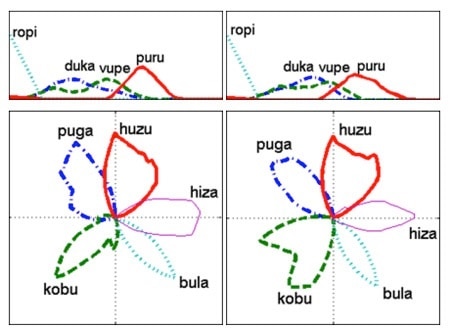
Example of the direction and distance names given by the bots. "Hiza Puru" would mean medium distance eastward.
Shulz and team hope to develop this concept further to allow the bots to communication even more intricate data like accessibility. The goal is future effectiveness of autonomous robotic communication. It seems to be all the rage these days.
Eavesdropper
All pics via Ruth Shulz & University of Queensland