


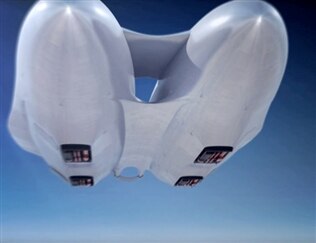
Figure 1: MBDA high-altitude drone-dispensing UAV concept. (via MBDA)
The future, if weapons system maker MBDA has their way, will see the emergence of pairing drone platforms with weapon system, which can stealthy ‘loiter’ over areas for long periods of time. The company had recently unveiled some concepts that centered on drone/weapons systems merger at this year’s Farnborough Airshow held in the UK. One of their more intriguing concepts is called the CVS301 VIGILUS (On-demand Effects) weapon system for UAV’s. The system is a large UAV platform (shown above) that is able to dispense smaller UAVs that are essentially remotely-operated missiles (think of them as a smaller remote controlled cruise missiles). These smaller drones can be deployed off the carrier and directed by ground-based troops ‘on-demand’ as the situation warrants. This greatly reduces the time constraints associated with UAV strikes based on the Predator and Reaper UAV platforms. Using those UAVs typically requires cross-communication with different branches of the military along with identifying whether or not those UAVs have the necessary armament to provide strike capability. This is where the VIGILUS system shines, as it is able to deploy the self-destructive drones anywhere they are needed, while being directly controlled by those on station near the target area.

Figure 2: MBDA's Caelus mid-sized UAV. (via MBDA)
The VIGILUS system is comprised of three separate UAVs. A high-altitude ‘mother-ship’ along with a mid-sized UAV designated as Caelus (Persistent target identification and tracking missile) and a smaller lightweight UAV called Gladius round out its components. Caelus features an electric motor which gives the missile/UAV a 2 hour flight/loiter time with near silent propulsion and features a low IR (Infra-red) signature giving it a limited degree of stealth. The UAV is also outfitted with an ISTAR (Intelligence, Surveillance, Target Acquisition and Reconnaissance) sensor package and has a 1kg payload module that can be equipped with additional sensors or an explosive warhead designed for ‘low’ collateral damage in the target area when detonated. The Caelus is also outfitted with spring-loaded wings measuring over 78 inches after its air-dropped. It can then ‘cruise’ below cloud-level, giving the user better precision target acquisition and over-all sight picture.
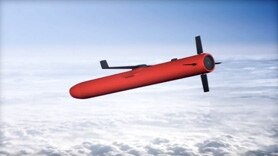
Figure 3: MBDA's Gladius light-weight UAV. (via MBDA)
The smaller of the UAV’s from MBDA is known as the Gladius (Low collateral damage and light-weight missile) and features a sub-sonic rocket-motor engine (with a range of 18.6 miles) along with GNSS (multi-Global Navigation Satellite System) guidance control and anti-jamming technology (unknown at this time). Much like its big brother, the UAV is designed for precision targeting against lightly armored vehicles with minimal collateral damage. However unlike its big brother, the UAV has an in-flight multimode programmable warhead along with a laser targeting system that is capable of guiding other missile/UAV’s to the target or could simply ride along its own laser for target detonation. Its payload area can be outfitted with an EFP (Explosive Formed Projectile) or a ‘directed fragmentation’ (flachete?) explosive depending on the situation.
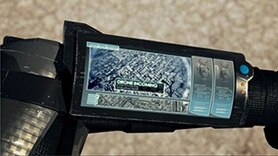
Figure 4: MBDA personal UAV control panel concept. (via MBDA)
What makes MBDA’s conceptual UAV/missile system innovative is the inclusion of their CVS101 remote-control panel capable of controlling their varied UAVs by the soldiers on the ground. The arm-based control panel allows for the ground controllers (presumably Air Force CCT’s or equivalent) to plot GPS way-points for the various UAVs which would give them a greater amount of situational awareness while gaining a greater ‘force-multiplier’ (additional firepower) in potentially dangerous situations. This also gives the ‘ground pounders’ the ability to react quickly to rapidly changing scenarios encountered on the battlefield. This would eliminate the need to call in air-strikes/air-cover which usually takes a considerable amount of time and can result in casualties. The company states that the controller will feature C2 architecture (Coalition interoperability) meaning that any branch of the military or allied forces can seamlessly communicate/control the UAVs through a simplified base-program and can be used with limited instruction.
An allied unit or platoon could conceivably increase their fire-power capabilities using the CVS101 in conjunction with the CVS301 VIGILUS system to engage targets that are non-line of sight. Rockets around corners in urban areas, in other words. While these are only concepts as of now, future allied men and women in uniform could be outfitted with these systems which would almost assuredly save more lives in a battlefield environment.
My opinion, don't get on business of these drones.
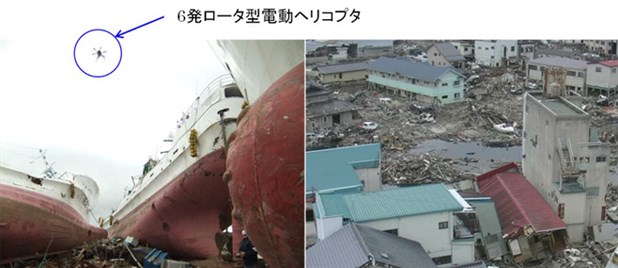
Figure 5: Ariel shot of Naomi Robotics group's multi-rotor helicopter. (via Chiba University)
Not all of new drone system developments are warfare based. Researchers from Chiba University’s Naomi Robotics group are devising a way to implement ‘swarms’ of quadro-copter drones for use in man-made or natural disasters.
The team has developed a way for quadro-copter drones to fly in formation which gives emergency or scientist personnel the advantage of having more ‘eye’s in the sky’ for search and rescue, scientific study (volcanoes) or even infrastructure repair (examining power lines). The team recently demonstrated their quadro-copter formation flying by participating in a chemical plant disaster exercise with a local police department, where they were tasked to locate survivors which proved to be successful. The drones were outfitted with cameras that capture markers that are positioned on the drones themselves (sort of like proximity markers) is then sent to a host computer for processes the images and coordination of the swarm. All action takes place every 10ms. The computer can calculate each drone's respective distance from one another down to 1mm, enabling the drones to maintain a constant relative distance for formation flying.
Each quadro-copter weighs in at approximately 1 pound (including the weight of the drones battery) and is capable of lifting over a ½ pound of equipment such as cameras or other devices as needed. Each drone is capable of autonomous control such as hovering as well as taking off and landing. They can also be programmed to use GPS way-points as an additional way of navigation making recon flights of disaster areas simple and time efficient. Getting the drones to fly in a stable formation, the team implemented a system of mathematical modeling associated with non-linearity mechanics. They state this process is ‘extremely complicated’, but were successful at ‘creating a controller that could match that complexity’ (it’s unknown at this time what software or programming was used). While the future may indeed present us with global conflicts and natural or man-made disasters one thing is for certain; drones will play a major role in how we handle those situations involving warfare, research or search and rescue.
Cabe