


I had the pleasure to visit the Sensor Expo & Conference earlier this week in Chicago. For the last two years, ESC Chicago had occurred alongside the Sensors Expo & Conference, but this year ESC didn't come to Chicago. However, the Sensor Expo on its own did not disappoint.
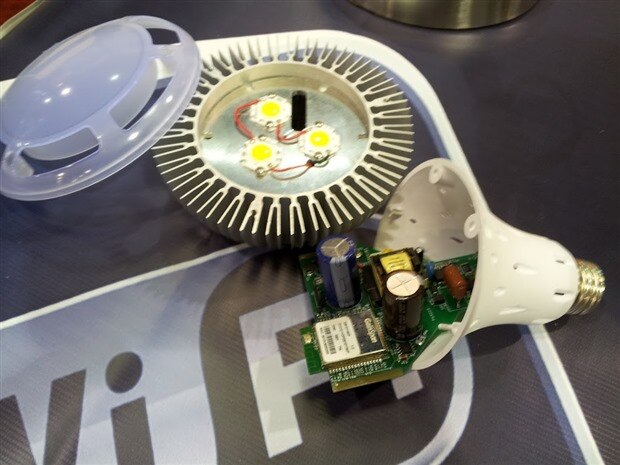
One of the first booths I visited was North Pole Engineering where they were displaying their WiFi-IT! technology which simplifies integrating Wi-Fi control into projects. WiFi-IT! modules are based on a GainSpan SoC which contains two 32-bit ARM processors: one for the wireless communication stack and one for application code. To speed the development cycle, NPE provides a custom Basic language and IDE which abstracts away the low-level details of wireless networking. Several applications were on display including LED lightning that can be controlled by a smartphone or computer via WiFi:
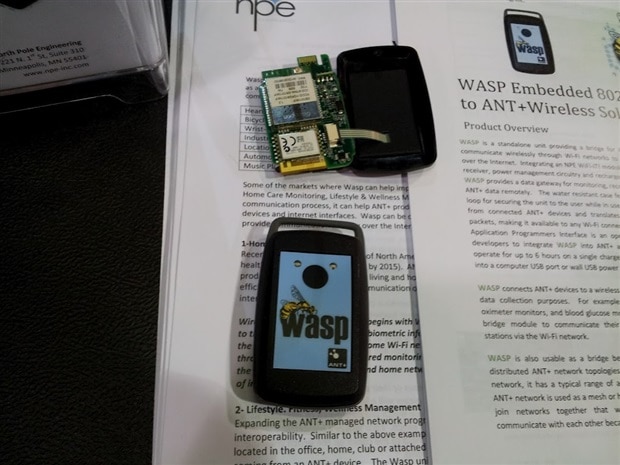
The usage of WiFi-IT! that I found most interesting was their WASP device which can connect up to eight ANT+ devices to WiFi:
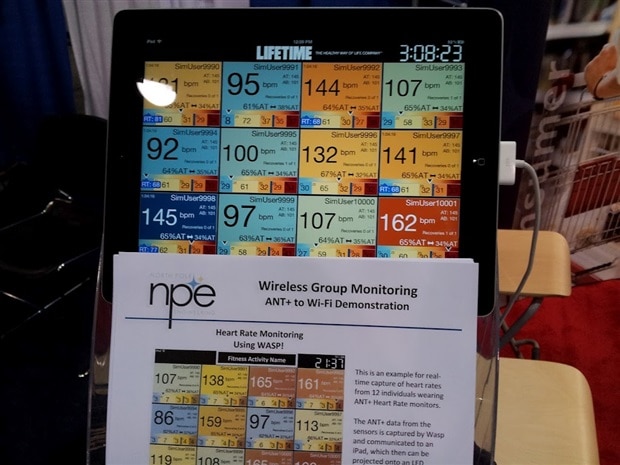
One application for WASP would be to enable a trainer to visualize on a tablet the heart rates of all the students in an exercise class:
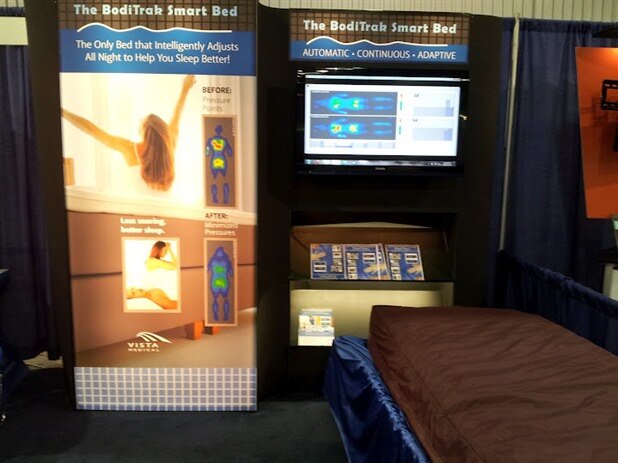
I was just surprised to see a bed a few booths over. More than just a high-tech luxury item, the BodiTrak Smart Bed is an intelligent way for healthcare providers to prevent bed sores:
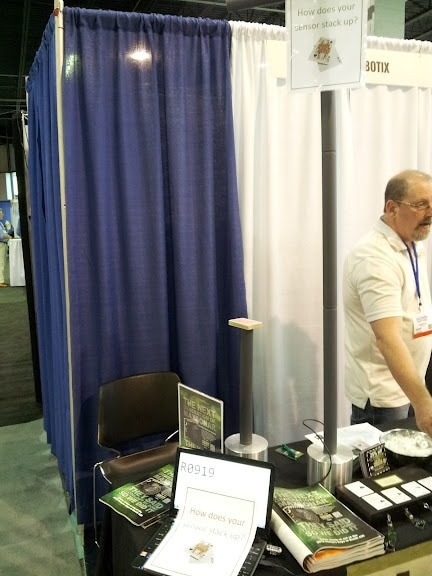
MaxBotix was showing off their latest ultrasonic sensor which offers an impressive 1mm resolution and both analog and serial output. Their demonstration had the MaxSonar module suspended above a deck of cards with serial output from the module displayed in a terminal program on a laptop. It's precise resolution was demonstrated when removing just a few cards from the deck:
In Freescale's booth, I spotted their FSLBOT - a dev kit that can walk! It's 4 servo motors give it four degrees of freedom for bipedal motion, and it's face contains capacitive touch buttons and LEDs:
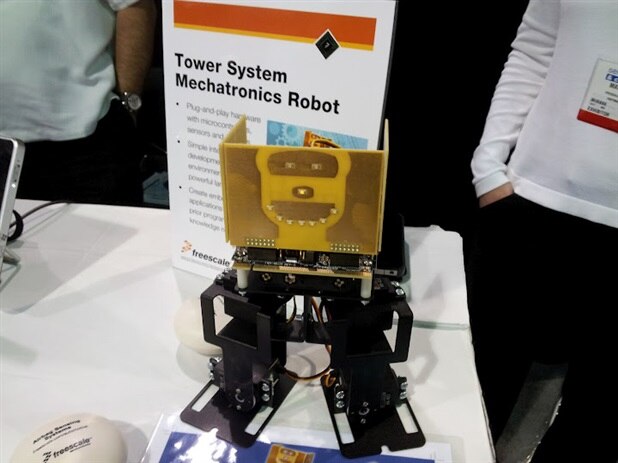
It also supports different add-on sensors such as magnetometer and accelerometer. The 32-bit ColdFire processor can be programmed in C/C++ with Freescale's CodeWarrior IDE. Alternatively, beginners can choose to program in StickOS BASIC which lowers the learning curve by abstracting low level details.
Twisted Traces caught my attention with their beautiful Nixie tube clock:
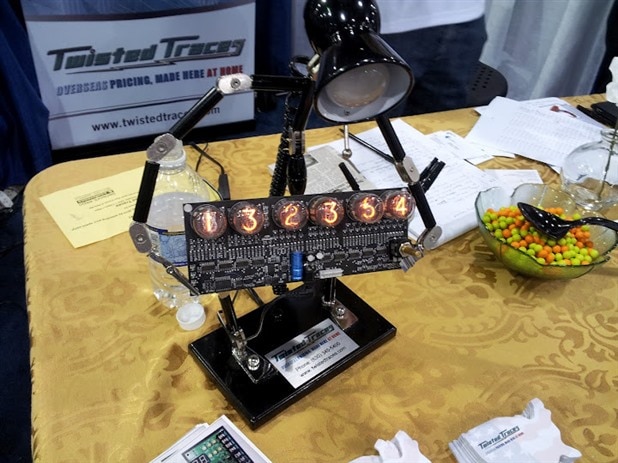
I was pleased to learn they are engineering and PCB services company which does all their fabrication and assembly in the Chicago area. As their name implies, one of the prototyping services they offer is flexible PCBs.
After reading Anaren's The specified item was not found. about the Sensors Expo, I was sure to stop by their booth where they were generously giving away pairs of their wireless AIR BoosterPacks and TI's MSP430 Launchpads:
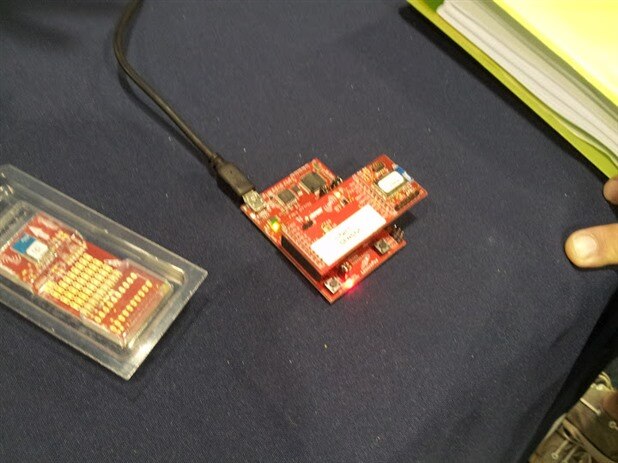
It looks to be a great solution for easy-to-use, low-cost embedded wireless networking. I look forward getting up to speed with AIR and the MSP430 soon.
Speaking of TI, they had impressive booth which included a demonstration of their brand-new, ultra-low-power MSP430 processor code named "Wolverine":
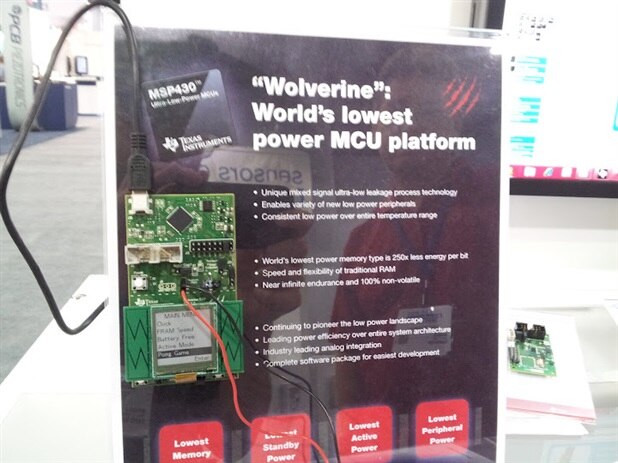
It integrates FRAM and consumes shockingly little current. The other exciting part was the daughter board featuring Sharp's low-power "memory" LCD. I'd heard about these displays before, and it was very interesting to see in person. Hopefully, the complete dev kit will be available soon.
Finally, Rohm had several interesting new personal sensors on display including this UV light sensor which might be worn as a fashion accessory:
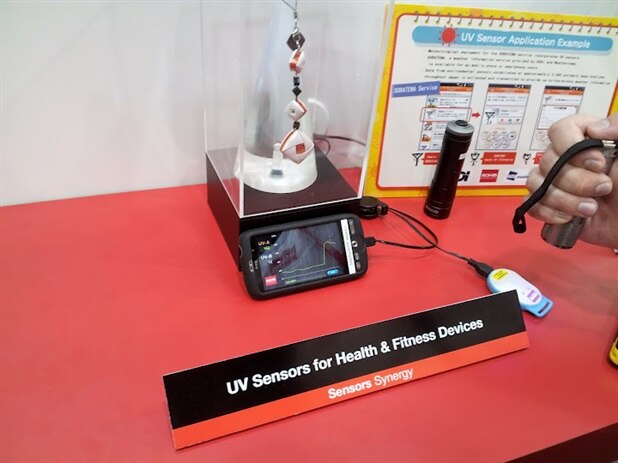
The user could then view UV levels on their smartphone to know if they should apply sunscreen.
Cheers,
Drew
