element14 Community
element14 Community
    Register Log In
  • Site
  • Search
  • Log In Register
  • Community Hub
    Community Hub
    • What's New on element14
    • Feedback and Support
    • Benefits of Membership
    • Personal Blogs
    • Members Area
    • Achievement Levels
  • Learn
    Learn
    • Ask an Expert
    • eBooks
    • element14 presents
    • Learning Center
    • Tech Spotlight
    • STEM Academy
    • Webinars, Training and Events
    • Learning Groups
  • Technologies
    Technologies
    • 3D Printing
    • FPGA
    • Industrial Automation
    • Internet of Things
    • Power & Energy
    • Sensors
    • Technology Groups
  • Challenges & Projects
    Challenges & Projects
    • Design Challenges
    • element14 presents Projects
    • Project14
    • Arduino Projects
    • Raspberry Pi Projects
    • Project Groups
  • Products
    Products
    • Arduino
    • Avnet & Tria Boards Community
    • Dev Tools
    • Manufacturers
    • Multicomp Pro
    • Product Groups
    • Raspberry Pi
    • RoadTests & Reviews
  • About Us
  • Store
    Store
    • Visit Your Store
    • Choose another store...
      • Europe
      •  Austria (German)
      •  Belgium (Dutch, French)
      •  Bulgaria (Bulgarian)
      •  Czech Republic (Czech)
      •  Denmark (Danish)
      •  Estonia (Estonian)
      •  Finland (Finnish)
      •  France (French)
      •  Germany (German)
      •  Hungary (Hungarian)
      •  Ireland
      •  Israel
      •  Italy (Italian)
      •  Latvia (Latvian)
      •  
      •  Lithuania (Lithuanian)
      •  Netherlands (Dutch)
      •  Norway (Norwegian)
      •  Poland (Polish)
      •  Portugal (Portuguese)
      •  Romania (Romanian)
      •  Russia (Russian)
      •  Slovakia (Slovak)
      •  Slovenia (Slovenian)
      •  Spain (Spanish)
      •  Sweden (Swedish)
      •  Switzerland(German, French)
      •  Turkey (Turkish)
      •  United Kingdom
      • Asia Pacific
      •  Australia
      •  China
      •  Hong Kong
      •  India
      •  Korea (Korean)
      •  Malaysia
      •  New Zealand
      •  Philippines
      •  Singapore
      •  Taiwan
      •  Thailand (Thai)
      • Americas
      •  Brazil (Portuguese)
      •  Canada
      •  Mexico (Spanish)
      •  United States
      Can't find the country/region you're looking for? Visit our export site or find a local distributor.
  • Translate
  • Profile
  • Settings
Publications
  • Learn
  • More
Publications
Blog The Automation Paradox
  • Blog
  • Documents
  • Events
  • Files
  • Members
  • Mentions
  • Sub-Groups
  • Tags
  • More
  • Cancel
  • New
Join Publications to participate - click to join for free!
  • Share
  • More
  • Cancel
Group Actions
  • Group RSS
  • More
  • Cancel
Engagement
  • Author Author: gervasi
  • Date Created: 26 Feb 2012 6:12 PM Date Created
  • Views 570 views
  • Likes 2 likes
  • Comments 1 comment
  • automation
Related
Recommended

The Automation Paradox

gervasi
gervasi
26 Feb 2012

Last week was the 50th anniversary John Glenn’s flight in which he became the first American to orbit the earth.  The issues the flight had with automated controls make me think of how automation-related issues affect the world today.image
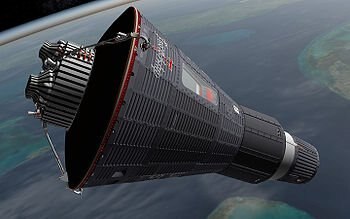
 

The automated attitude control system used a control loop that would fire thrusters to correct the orientation of the capsule.  The system used small thrusters for minor adjustments and large thrusters intended primarily for changing the capsules orbit to return to earth.  Glenn found the control loop was at times using the large thrusters for orientation adjustments that could be done with the smaller jets.  This wasted fuel that would be needed to return to earth.  (See Chaper 6 of this NASA document for further reading.)


This situation reminds me of driving on a hilly highway using cruise control and automatic transmission. When the road exceeds a certain grade, the cruise control opens the throttle which causes the transmission to downshift out of overdrive to get more power.  If I find this is causing needless shifts on small hills, I may disengage the cruise control and wish I could override the automatic transmission too.


Glenn took this approach and turned off the autopilot system.  He experimented with controlling the thrusters completely manually and by using a semi-automated fly-by-wire mode.  The fly-by-wire mode allowed Glenn to control the orientation manually with the computer working out how much to burn each thruster.  This semi-automated mode turned out to be the best choice for attitude control.  He used the fully-automated mode for re-entry but stayed ready to switch the autopilot off if necessary.


The paradox of automation is once an automated system is perfected it often performs worse than a less reliable system because human operators become dependent on the automation.  This appears to be what happened in the Air France Flight 447 crash in 2009.  A loss of airspeed indication caused the plane to switch from a fully automated mode to a semi-automated one.  The fully-automated mode would not allow pilots to put the plane into an aerodynamic stall.  This may have been why the pilots ignored an audible stall warning and didn’t even discuss the possibility the plane was in a stall. 


It is especially hard to improve the safety in commercial aviation because it is already so safe.  Maybe as automation improves further, we will just accept humans becoming less skilled because most of the time computers are more reliable.  On the other hand, systems may be made more reliable using some sort of psychological techniques in which an automated system requests input from human operators to keep the human operators sharp and engaged in the details of the system. 

  • Sign in to reply
  • DAB
    DAB over 13 years ago

    As I recall, the astronauts were almost all test pilots and insisted upon manual controls just in case the automatic controls failed for any reason.  They concluded that if something went wrong, they want the option to try to control the craft using their well honed flying skills.

    As Glenn discovered, he indeed needed just that skill to ensure that his reentry was successful.


    His flight remains a key warning to those who would automate complex jobs.  In the event of an emergency, a well trained human in the loop is far superior to any man made algorithm.  Hopefully, aerospace engineers world wide remember this basic fact.


    DAB

    • Cancel
    • Vote Up 0 Vote Down
    • Sign in to reply
    • More
    • Cancel
element14 Community

element14 is the first online community specifically for engineers. Connect with your peers and get expert answers to your questions.

  • Members
  • Learn
  • Technologies
  • Challenges & Projects
  • Products
  • Store
  • About Us
  • Feedback & Support
  • FAQs
  • Terms of Use
  • Privacy Policy
  • Legal and Copyright Notices
  • Sitemap
  • Cookies

An Avnet Company © 2025 Premier Farnell Limited. All Rights Reserved.

Premier Farnell Ltd, registered in England and Wales (no 00876412), registered office: Farnell House, Forge Lane, Leeds LS12 2NE.

ICP 备案号 10220084.

Follow element14

  • X
  • Facebook
  • linkedin
  • YouTube