


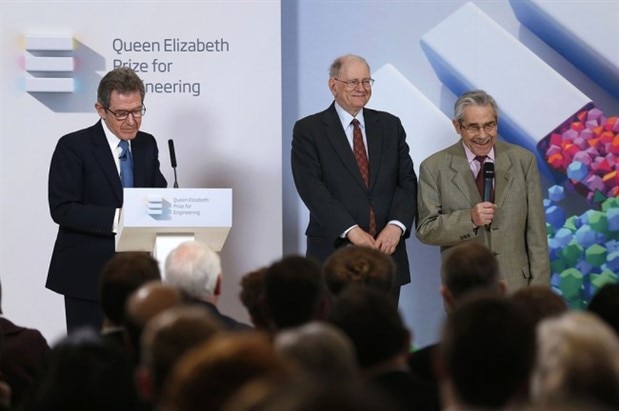
(Left) Lord Browne accouncing the winners of the inaugural Queen Elizabeth Prize for Engineering (Center) Robert Kahn (Right) Louis Pouzin. (image via AP images)
The field of engineering has its hands on just about everything that shapes the advancing modern world, as we know it. To celebrate great engineering achievements, the Queen Elizabeth Prize for Engineering was established in 2011 to honor those life-changing accomplishments with a nice, €1M (~$1.51M) prize. This year’s winners, the Queen Elizabeth’s Prize first ever winners - Tim Berners-Lee, Marc Andreessen, Bob Kahn, Vint Cerf, and Louis Pouzin - are five engineers that we owe much gratitude for their pioneering work that led to the creation of internet. (Al Gore’s contribution oddly missing)
The Queen Elizabeth Prize holds engineering as a fundamental, transformative effort that helps tackle global issues and creates the details of the future. The program is run by the British Academy of Engineering, whom calls on the aid of sponsors to donate the pot awarded to the prizewinners. Though centered in the UK, the competition is open to the whole world to participate in submitting their outstanding engineering inventions. While in the process of searching for a winner, the organization behind the prize highlights impactful engineering success stories that are intended to inspire new generations of engineers and encourage technological innovation.
This year’s winners have seen their work transform from its root as a communication network that virtually links the world together into a living, breathing, and growing network of information. The five engineers sharing the prize all had a major role in the internet’s development: Tim Berners-Lee, inventor of the World Wide Web; Bob Kahn, Vint Cerf, and Louis Pouzin, all responsible for the creation of the TCP/IP protocols; and Marc Andreessen, who helped create the first internet browser, NCSA Mosaic. It is no doubt that these five individuals are very deserving of their award, as it’s clear that the internet is a key role to the world’s social, political, technological, and economical evolution.
"You don't do engineering by yourself. It's teamwork," says Pouzin. "And our teams are not here." Listen/read their full acceptance speech after this link.
That is the underlying message that the winners continued to reiterate as they accepted their award. Rightfully so, engineering greatly relies on the application of vast amounts of information from several different fields all aiding in the design and creation of systems that are beneficial to humanity. As Berners-Lee mentions, engineering needs to be celebrated, for when all of humanity works together as one, we can all play our part to help engineer the world as we would like it to be.
C
See more news at: