element14 Community
element14 Community
    Register Log In
  • Site
  • Search
  • Log In Register
  • Community Hub
    Community Hub
    • What's New on element14
    • Feedback and Support
    • Benefits of Membership
    • Personal Blogs
    • Members Area
    • Achievement Levels
  • Learn
    Learn
    • Ask an Expert
    • eBooks
    • element14 presents
    • Learning Center
    • Tech Spotlight
    • STEM Academy
    • Webinars, Training and Events
    • Learning Groups
  • Technologies
    Technologies
    • 3D Printing
    • FPGA
    • Industrial Automation
    • Internet of Things
    • Power & Energy
    • Sensors
    • Technology Groups
  • Challenges & Projects
    Challenges & Projects
    • Design Challenges
    • element14 presents Projects
    • Project14
    • Arduino Projects
    • Raspberry Pi Projects
    • Project Groups
  • Products
    Products
    • Arduino
    • Avnet & Tria Boards Community
    • Dev Tools
    • Manufacturers
    • Multicomp Pro
    • Product Groups
    • Raspberry Pi
    • RoadTests & Reviews
  • About Us
  • Store
    Store
    • Visit Your Store
    • Choose another store...
      • Europe
      •  Austria (German)
      •  Belgium (Dutch, French)
      •  Bulgaria (Bulgarian)
      •  Czech Republic (Czech)
      •  Denmark (Danish)
      •  Estonia (Estonian)
      •  Finland (Finnish)
      •  France (French)
      •  Germany (German)
      •  Hungary (Hungarian)
      •  Ireland
      •  Israel
      •  Italy (Italian)
      •  Latvia (Latvian)
      •  
      •  Lithuania (Lithuanian)
      •  Netherlands (Dutch)
      •  Norway (Norwegian)
      •  Poland (Polish)
      •  Portugal (Portuguese)
      •  Romania (Romanian)
      •  Russia (Russian)
      •  Slovakia (Slovak)
      •  Slovenia (Slovenian)
      •  Spain (Spanish)
      •  Sweden (Swedish)
      •  Switzerland(German, French)
      •  Turkey (Turkish)
      •  United Kingdom
      • Asia Pacific
      •  Australia
      •  China
      •  Hong Kong
      •  India
      • Japan
      •  Korea (Korean)
      •  Malaysia
      •  New Zealand
      •  Philippines
      •  Singapore
      •  Taiwan
      •  Thailand (Thai)
      • Vietnam
      • Americas
      •  Brazil (Portuguese)
      •  Canada
      •  Mexico (Spanish)
      •  United States
      Can't find the country/region you're looking for? Visit our export site or find a local distributor.
  • Translate
  • Profile
  • Settings
Publications
  • Learn
  • More
Publications
Blog The Technological Evolution of Music: Stanford’s Laptop Orchestra (SLOrK) featured
  • Blog
  • Documents
  • Events
  • Files
  • Members
  • Mentions
  • Sub-Groups
  • Tags
  • More
  • Cancel
  • New
Join Publications to participate - click to join for free!
  • Share
  • More
  • Cancel
Group Actions
  • Group RSS
  • More
  • Cancel
Engagement
  • Author Author: Catwell
  • Date Created: 5 Jul 2013 8:45 PM Date Created
  • Views 811 views
  • Likes 1 like
  • Comments 2 comments
  • research
  • hmi
  • on_campus
  • Design
  • cabeatwell
  • prototyping
  • measurement
  • university
  • music
  • sensor
  • innovation
  • communication
Related
Recommended

The Technological Evolution of Music: Stanford’s Laptop Orchestra (SLOrK) featured

Catwell
Catwell
5 Jul 2013

image

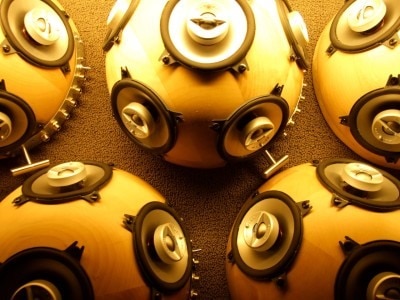
SLOrk consists of a musical ensemble of laptop computers, hemispherical speaker systems, gametrak controllers, and student performers. (via Stanford)

Big music fan? Thought so. With quickly evolving technologies influencing most facets of our daily lives, it is fun to speculate how much of an effect new gadgetry will have on the creation of music. We’ve recently reviewed a project by start-up Lumigeek in partnership with Autodesk that resulted in a spherical speaker system equipped with an array of addressable LEDs; these LEDs are then capable of outputting visuals that are syncopated to a user's music of choice to create a captivating audio-visual experience. The Stanford Laptop Orchestra is one group that is working on new and exciting ways to transform musical experience - and they’re doing by way of computer-mediated orchestra performances.

Otherwise known as SLOrk, the Stanford Laptop Orchestra comprises of computer performers in addition to a classroom of students developing the novel musical systems. Ge Wang, co-founder of iDevice interactive music app developer Smule, founded SLOrk in 2008 at Stanford’s Center for Computer Research in Music and Acoustics (CCRMA). The orchestra has since grown to embody several human performers, over 20 laptops, gametrak controllers, and an arrangement of custom multi-channel speakers.

A typical SLOrk “performer,” or music station if you will, consists of a laptop computer and a six-channel addressable hemispherical speaker. Most of the SLOrk orchestra was built rather resourcefully - using IKEA salad bowls, car speakers, amplifier kits, and even meditation pillows. Gametrak controllers, the 2006 position tracking based game control systems, are used to interact with software running on the laptops; the device works with the computer to map motion to sound for a completely unique form of expressive music generation.

When not performing, SLOrk students focus on an interdisciplinary (Music and Computer Science) approach to improving its musical ensemble utilizing the Princeton-developed ChucK programming language for instrument design, audio synthesis and analysis.

It seems as though forms of music creation are also evolving with technology. Spencer Salazar, member of Stanford’s SLOrk group, explains that the aim is not so much too only focus on the computer coding aspect of the technology, but on enabling unique forms of gestural expression that result in a music experience that is fun for both performers and audience members.

C

See more news at:

http://twitter.com/Cabe_e14

  • Sign in to reply
  • Catwell
    Catwell over 12 years ago in reply to DAB

    The more tools for expression the better.


    C

    • Cancel
    • Vote Up 0 Vote Down
    • Sign in to reply
    • More
    • Cancel
  • DAB
    DAB over 12 years ago

    I think one of the road testers had an idea similar to this where you use the outputs of a 3-axis sensor to adjust the lights and audio out of a SBC.


    It would be very interesting to work with a choreographer to see what kinds of motion and music combinations could result.


    That and to see how different dance styles and music genre would look when put to sound and lighting.


    Entertainment is where you find it, but I think technology has a lot to offer new forms of music.

    I don't know about you, but I am tired of songs that just repeat the same lyrics over, and over and over again.

    Not my idea of music, but to each his own.


    DAB

    • Cancel
    • Vote Up 0 Vote Down
    • Sign in to reply
    • More
    • Cancel
element14 Community

element14 is the first online community specifically for engineers. Connect with your peers and get expert answers to your questions.

  • Members
  • Learn
  • Technologies
  • Challenges & Projects
  • Products
  • Store
  • About Us
  • Feedback & Support
  • FAQs
  • Terms of Use
  • Privacy Policy
  • Legal and Copyright Notices
  • Sitemap
  • Cookies

An Avnet Company © 2026 Premier Farnell Limited. All Rights Reserved.

Premier Farnell Ltd, registered in England and Wales (no 00876412), registered office: Farnell House, Forge Lane, Leeds LS12 2NE.

ICP 备案号 10220084.

Follow element14

  • X
  • Facebook
  • linkedin
  • YouTube