


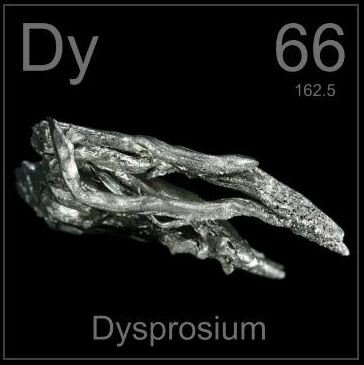
Dysprosium in the raw (via periodictable.com)
China dominates world production of rare earth minerals. However, China has been cutting back on production due to environmental and domestic labor effects. Raising prices was the only option, but they are potentially creating a monopoly on the material. In mid 2011, China increased prices 10 times what it was the going rate at the beginning of the year. What else would one suspect when one place controls 95% of a material.
This has been forcing companies to find ways to produce products without rare earth involved. A large concern, dysprosium, is mainly used in high powered magnets and is very useful in data storage applications such as hard drives. Companies in Japan are working on new ways to create applications without using the rare earth while others are working on recycling methods to extract the rare earth from used appliances. Japan's $65 million USD plan is to cut dependence on dysprosium by 30% over the next 2 years.
In the United States, looking to avoid dependency on rare earth imports. Pacific Northwest Lab is working to find a rare earth magnet replacement using a manganese composite material and advanced algorithms to formulate various metal compositions not involving rare earth. Additionally, many research projects are finding crystals and alloys that will eliminate the need for neodymium used in many of today's tablets and smart phones. Cutting edge research in the United States will soon bring us alternatives to rare earth electronics using readily available inexpensive resources.
Cabe