


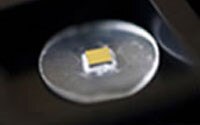
Chip in a pill prototype by ZetrOZ (via ZetrOZ)
Ultrasound is a cornerstone of medical applications. It's in use inside and outside of the human body today. Though this is the case for decades, it is with the shrinking technology that is allowing for innovative uses never thought possible. One such innovation may soon change the daily routines of millions of patients that require daily injections.
Previously, medicines that must take effect quickly, such as insulin, could not be taken by mouth because of slow absorption rates. Now, a team from the biomedical engineering company ZetrOZ LLC is developing a device called the uPill that uses ultrasound to increase the absorption rate of medicines by a factor of 10. The device greeted the world at the IdeaStream Conference at MIT in May.
The method works by heating skin tissue with ultrasound waves and making cell membranes more permeable. The medicine is applied as a coating on the pill and, as it moves through the gastrointestinal tract, the uPill goes to work. The pill then passes through the entire digestive system and could even be reused…(in theory).
The method works best with protein-based medicines like insulin and some vaccines and cancer drugs. Animal tests are underway to ensure safe passage through the digestive system. (See animals in testing). The ZetrOZ team has also developed an ultrasound medicine patch that works on the same principles. These are some of the smallest ultrasound systems in the world and could potentially create a new class of drugs. ZetrOZ hopes to release the uPill in 2013. The price of each pill could be around $20-$30, which could make that reusability option a bit more appetizing.
Cabe
