


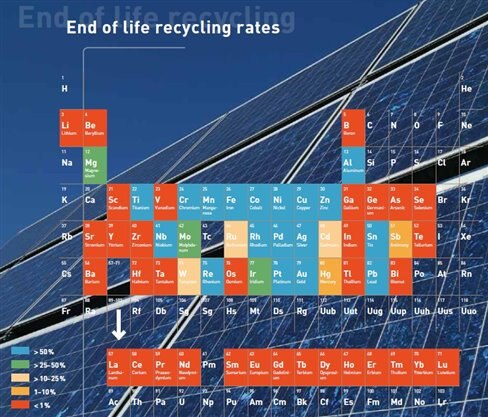
The United Nations Environment Programme examined the recycling rates of 60 different metals. Common metals such as aluminum, copper, iron get recycled above 50%. Precious metals like platinum, gold, titanium also breach the 50% mark, for typical reasons. The area of importance is the less focused metals, like gallium and tellurium used in solar panels, or lithium used in most new battery technology, and 31 other metals that have a below 1% recycle rate.
Most of these metals are found in electronics, and almost everyone has an unused gadget they could recycle. According to Cello MRUK, in a study from 2009, there are 80 million unused electronic gadgets in the U.K. alone. That equates to $641 million USD (£390) in potential funds from recycling. Each device has a bit of many of the un-recycled metals from the UNEP report.
The future will have to feature some urban mining, the mining of resources from garbage repositories to make up for scarce materials. For example, UNEP reports there is an estimate of 225 million metric tons of copper in land-fills globally. At over $4 USD a pound, the waste copper comes to $1 billion USD, is someone sold it all back on the markets. Each of the other metals are also sitting in the land-fills waiting for future generations to harvest.
20 million tons of e-waste, electronic waste, is deposited in big piles globally. A large portion of this is sent to China, where crude recycling techniques release pollutants, organic pollutants, and heavy metals that can affect human beings. Zhejiang University's Dr. Fangxing Yang said in reference to Interleukin-8 (IL-8) and Reactive Oxygen Species (ROS) causing extensive damage in lab lung cells, "both inflammatory response and oxidative stress may lead to DNA damage, which could induce oncogenesis, or even cancer. Of course, inflammatory response and oxidative stress are also associated with other diseases, such as cardiovascular diseases."
Electronic gadget hoarding seems to be a common practice with people. Just in my workshop, I see 5 old/broken cell phones, dozens of development boards I never use, several MP3 players, old computer parts, power supplies with no paired devices, and the list goes on from there. I do not need all of this, none of us do. I try to recycle everything, but this UNEP report pointed out there is much more I can do.
Or necessity could lead to innovation. , un-recycled , dwindling resources.
Cabe
pic from the UNEP report