


The US Army has confirmed that it is currently developing new helicopter-style drones with 1.8 gigapixel colour cameras. And according to the military, the technology promised "an unprecedented capability to track and monitor activity on the ground".
In a statement announcing the development, it said that three of the sensor-equipped drones were due to go into service in Afghanistan in either May or June 2012. Although Boeing built the first drones, other firms are welcome to bid to manufacture others.
"These aircraft will deploy for up to one full year as a way to harness lessons learned and funnel them into a program of record," explained Lieutenant Colonel Matthew Munster, product manager at the US Army's Unmanned Aerial System Modernization unit.
The A160 Hummingbird is distinguished by a number of impressive new features, one of which is that the system is capable of vertical take-off, which means that access to a runway is not necessary. Furthermore, it has been revealed that the drones have hovering capabilities - a feature that existing unmanned aircraft lack.
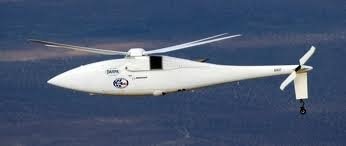
Additionally, the drones will feature the Autonomous Real-time Ground Ubiquitous Surveillance-Imaging System, which was first deployed earlier this year.
Based on a 1.8 gigapixel camera, the surveillance system offers the army wider fields of view than had been possible using earlier equipment. The revolutionary system can provide real-time video streams at the rate of ten frames a second, which is enough to track people and vehicles from altitudes above 20,000 feet across nearly 65 square miles.
"If you have a bunch of people leaving a place at the same time, they no longer have to say, 'Do I follow vehicle one, two, three or four,'" explained Brian Leninger, the program manager, who was speaking ahead of the system's launch.
"They can say: 'I will follow all of them, simultaneously and automatically.'"
Furthermore, the US Defense Advanced Research Projects Agency has announced that it is working with BAE Systems, the UK-based defence contractor, to develop a version that will offer night vision. The infrared imaging sensors would be sensitive enough to follow "dismounted personnel at night", military officials said.
It has been confirmed that test flights will be carried out in Arizona at the start of 2012 and the drones are set to be shipped to the Middle East shortly thereafter.
