element14 Community
element14 Community
    Register Log In
  • Site
  • Search
  • Log In Register
  • Community Hub
    Community Hub
    • What's New on element14
    • Feedback and Support
    • Benefits of Membership
    • Personal Blogs
    • Members Area
    • Achievement Levels
  • Learn
    Learn
    • Ask an Expert
    • eBooks
    • element14 presents
    • Learning Center
    • Tech Spotlight
    • STEM Academy
    • Webinars, Training and Events
    • Learning Groups
  • Technologies
    Technologies
    • 3D Printing
    • FPGA
    • Industrial Automation
    • Internet of Things
    • Power & Energy
    • Sensors
    • Technology Groups
  • Challenges & Projects
    Challenges & Projects
    • Design Challenges
    • element14 presents Projects
    • Project14
    • Arduino Projects
    • Raspberry Pi Projects
    • Project Groups
  • Products
    Products
    • Arduino
    • Avnet & Tria Boards Community
    • Dev Tools
    • Manufacturers
    • Multicomp Pro
    • Product Groups
    • Raspberry Pi
    • RoadTests & Reviews
  • About Us
  • Store
    Store
    • Visit Your Store
    • Choose another store...
      • Europe
      •  Austria (German)
      •  Belgium (Dutch, French)
      •  Bulgaria (Bulgarian)
      •  Czech Republic (Czech)
      •  Denmark (Danish)
      •  Estonia (Estonian)
      •  Finland (Finnish)
      •  France (French)
      •  Germany (German)
      •  Hungary (Hungarian)
      •  Ireland
      •  Israel
      •  Italy (Italian)
      •  Latvia (Latvian)
      •  
      •  Lithuania (Lithuanian)
      •  Netherlands (Dutch)
      •  Norway (Norwegian)
      •  Poland (Polish)
      •  Portugal (Portuguese)
      •  Romania (Romanian)
      •  Russia (Russian)
      •  Slovakia (Slovak)
      •  Slovenia (Slovenian)
      •  Spain (Spanish)
      •  Sweden (Swedish)
      •  Switzerland(German, French)
      •  Turkey (Turkish)
      •  United Kingdom
      • Asia Pacific
      •  Australia
      •  China
      •  Hong Kong
      •  India
      • Japan
      •  Korea (Korean)
      •  Malaysia
      •  New Zealand
      •  Philippines
      •  Singapore
      •  Taiwan
      •  Thailand (Thai)
      • Vietnam
      • Americas
      •  Brazil (Portuguese)
      •  Canada
      •  Mexico (Spanish)
      •  United States
      Can't find the country/region you're looking for? Visit our export site or find a local distributor.
  • Translate
  • Profile
  • Settings
Publications
  • Learn
  • More
Publications
Blog What's Next?
  • Blog
  • Documents
  • Events
  • Files
  • Members
  • Mentions
  • Sub-Groups
  • Tags
  • More
  • Cancel
  • New
Join Publications to participate - click to join for free!
  • Share
  • More
  • Cancel
Group Actions
  • Group RSS
  • More
  • Cancel
Engagement
  • Author Author: sciguy14
  • Date Created: 15 Jun 2011 1:04 PM Date Created
  • Views 589 views
  • Likes 2 likes
  • Comments 3 comments
  • jblum:dit
Related
Recommended

What's Next?

sciguy14
sciguy14
15 Jun 2011
This is the question that constantly irks technophiles.  What is the next major technology going to be?  Can we even conceive what it will be like?  Or, is it so far out that no words in our dictionary can even describe what it will do?  What will the implications be?  How will we get to that point? And most importantly: How soon can I get one?  The following is a “wish list” of upcoming technologies that I think we are actually on track to create in the next few decades.  Despite the fact that I’d love to own a TARDIS, there are no interstellar time machines or similarly complex technologies here.  These are only things that we really have the potential to develop.
 
Truly Holographic Displays and Interactions
 

image

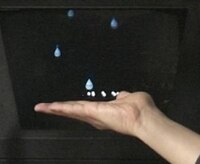
Touchable Holography

Holographic displays have been around for some time now, but they have yet to reach ubiquity.  More importantly, complex 3D interactions with holographic displays (like in the movies) are still a way off.  However, new research and consumer products like the Microsoft Kinect and Wiimotes are bringing us closer and closer to virtual 3D interactions.  The key to making holographic interaction marketable will be to develop an intuitive user interface; this will require that tactile feedback is present and realistic.  To date, I’ve only found one example of a tactile feedback hologram system: The “Touchable Holography” system uses ultra sound waves at their focal points to generate simulated contact forces from the image displayed in the hologram.


Personal Fabrication Machines


image

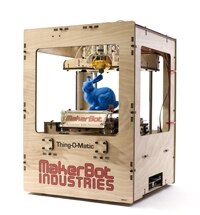
MakerBot Thing-O-Matic

Again, I’m a bit biased in this field since I work in a 3D Printing Lab at my University, and I’m currently employed at Makerbot Industries.  But would I be doing those things if I didn’t think personal-level manufacturing was going to be big!?  For those who aren’t familiar with 3D printing, devices like the Makerbot Thing-O-Matic allow you to print almost anything you can imagine out of plastic by depositing layers one by one until an object is built up.  Devices like this have major implications for the way we lead our lives – could there be a new DIY generation on the horizon?  I hope so!


Vacations to Space

image

Virgin "SpaceShipTwo"

Technically, you can book one of these right now.  But, it’s probably safe to assume that you don’t have a spare $200,000 laying around to book a spot on Virgin Galactic’s maiden flight.  But just think how quickly we’ve reached this point.  It was less than a decade ago that civilian space flight even entered consideration, and now we’re already seeing successful test flights!  It’s only a matter of time before price comes down, and you get the chance to try to spot your house from space.


Computers and Machines that Understand Natural Language
 

image

HAL from "2001: A Space Odyssey"

Natural language processing is one of the holy grails of Artificial intelligence and will likely be impossible to accomplish with even complex algorithms.  In order to make machines fully capable of understanding human language (any language), an extremely sophisticated artificial intelligence program will need to first be crafted – one that rivals the human brain.  To my knowledge, nobody has a good estimate of when we will reach “technological singularity”, but an average estimate seems to be around the year 2040.  Now we just need to make sure that robots don’t take over the world before they get the chance to listen to us.

.

Programmable Matter + Self Reconfiguring and Aware Robots
 

image

"Stochastic Modular Assembly"

This is yet another topic where I do research, so it’s close to my heart, and goes hand in hand with personal manufacturing.  The first time I heard about this was during a presentation from Intel about “Claytronics” - a collaborative technology being developed with Carnegie Mellon University.  Programmable matter would permit for the instantaneous modeling and reconfiguration of 3D objects in the physical world – Think play-doh on steroids.
  • Sign in to reply
  • gervasi
    gervasi over 14 years ago

    I am suborbital flights within my lifetime.  Speaking of lifetime, slowing down or stopping some elements of aging would be a huge breakthrough.  I suspect it's coming within a few hundred years.

    • Cancel
    • Vote Up 0 Vote Down
    • Sign in to reply
    • More
    • Cancel
  • sciguy14
    sciguy14 over 14 years ago in reply to DAB

    DAB,


    Yeah - that's what I was getting at with the "Programmable Matter".  I think an eventual synthesis of the two technologies is inevitable, and would allow some pretty cool things to get done.  The Makerbot+Frostruder or the Fab@Home 3D printers are both capable of printing just about anything that you can put in a synringe, so I imagine ceramic compounds would be possible.

    • Cancel
    • Vote Up 0 Vote Down
    • Sign in to reply
    • More
    • Cancel
  • DAB
    DAB over 14 years ago

    Hi Jeremy,


    I think you are on the right track with the 3D printer.  If we could get them to work on the molecular level, then we could theorectically make any compound we need in any shape we need.

    Since you work with these things, is it possible to use them to lay down different ceramic compounds?

    I can think of some really useful products that could start out as just mud and end up being really useful tools.


    Thanks,

    DAB

    • Cancel
    • Vote Up 0 Vote Down
    • Sign in to reply
    • More
    • Cancel
element14 Community

element14 is the first online community specifically for engineers. Connect with your peers and get expert answers to your questions.

  • Members
  • Learn
  • Technologies
  • Challenges & Projects
  • Products
  • Store
  • About Us
  • Feedback & Support
  • FAQs
  • Terms of Use
  • Privacy Policy
  • Legal and Copyright Notices
  • Sitemap
  • Cookies

An Avnet Company © 2026 Premier Farnell Limited. All Rights Reserved.

Premier Farnell Ltd, registered in England and Wales (no 00876412), registered office: Farnell House, Forge Lane, Leeds LS12 2NE.

ICP 备案号 10220084.

Follow element14

  • X
  • Facebook
  • linkedin
  • YouTube