element14 Community
element14 Community
    Register Log In
  • Site
  • Search
  • Log In Register
  • Community Hub
    Community Hub
    • What's New on element14
    • Feedback and Support
    • Benefits of Membership
    • Personal Blogs
    • Members Area
    • Achievement Levels
  • Learn
    Learn
    • Ask an Expert
    • eBooks
    • element14 presents
    • Learning Center
    • Tech Spotlight
    • STEM Academy
    • Webinars, Training and Events
    • Learning Groups
  • Technologies
    Technologies
    • 3D Printing
    • FPGA
    • Industrial Automation
    • Internet of Things
    • Power & Energy
    • Sensors
    • Technology Groups
  • Challenges & Projects
    Challenges & Projects
    • Design Challenges
    • element14 presents Projects
    • Project14
    • Arduino Projects
    • Raspberry Pi Projects
    • Project Groups
  • Products
    Products
    • Arduino
    • Avnet & Tria Boards Community
    • Dev Tools
    • Manufacturers
    • Multicomp Pro
    • Product Groups
    • Raspberry Pi
    • RoadTests & Reviews
  • About Us
  • Store
    Store
    • Visit Your Store
    • Choose another store...
      • Europe
      •  Austria (German)
      •  Belgium (Dutch, French)
      •  Bulgaria (Bulgarian)
      •  Czech Republic (Czech)
      •  Denmark (Danish)
      •  Estonia (Estonian)
      •  Finland (Finnish)
      •  France (French)
      •  Germany (German)
      •  Hungary (Hungarian)
      •  Ireland
      •  Israel
      •  Italy (Italian)
      •  Latvia (Latvian)
      •  
      •  Lithuania (Lithuanian)
      •  Netherlands (Dutch)
      •  Norway (Norwegian)
      •  Poland (Polish)
      •  Portugal (Portuguese)
      •  Romania (Romanian)
      •  Russia (Russian)
      •  Slovakia (Slovak)
      •  Slovenia (Slovenian)
      •  Spain (Spanish)
      •  Sweden (Swedish)
      •  Switzerland(German, French)
      •  Turkey (Turkish)
      •  United Kingdom
      • Asia Pacific
      •  Australia
      •  China
      •  Hong Kong
      •  India
      • Japan
      •  Korea (Korean)
      •  Malaysia
      •  New Zealand
      •  Philippines
      •  Singapore
      •  Taiwan
      •  Thailand (Thai)
      • Vietnam
      • Americas
      •  Brazil (Portuguese)
      •  Canada
      •  Mexico (Spanish)
      •  United States
      Can't find the country/region you're looking for? Visit our export site or find a local distributor.
  • Translate
  • Profile
  • Settings
Community Hub
Community Hub
Member Blogs Biosensor crunch time
  • Blog
  • Forum
  • Documents
  • Quiz
  • Events
  • Leaderboard
  • Polls
  • Files
  • Members
  • Mentions
  • Sub-Groups
  • Tags
  • More
  • Cancel
  • New
Join Community Hub to participate - click to join for free!
  • Share
  • More
  • Cancel
Group Actions
  • Group RSS
  • More
  • Cancel
Engagement
  • Author Author: fustini
  • Date Created: 1 May 2011 10:40 PM Date Created
  • Views 1360 views
  • Likes 3 likes
  • Comments 4 comments
  • hackerspace
  • maker
  • body
  • infrared
  • education
  • pumpingstationone
  • pulse
  • hackerspaces
  • ps1
  • make
  • diy
  • chicago
  • schools
  • sparkfun
  • ekg
  • ir
  • oximeter
  • gghc
  • biology
  • ecg
  • arduino
  • psone
Related
Recommended

Biosensor crunch time

fustini
fustini
1 May 2011

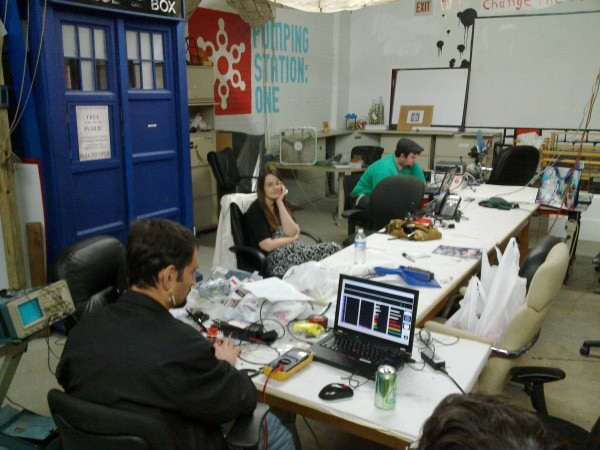
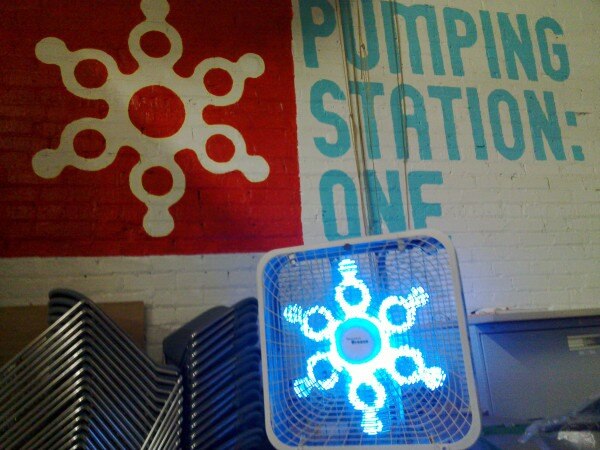
Our biosensor array team worked late into the night on Saturday at Pumping Station: One.  With the hackerspace challenge build deadline on Tuesday night, it's definately crunch time!
 

image

Thankfully we've got a nice array of working sensors (in the order of signal speed):


  • EKG
  • Pulse oximeter
  • GSR (Galvanic Skin Response)
  • CO2
  • Temperature

image


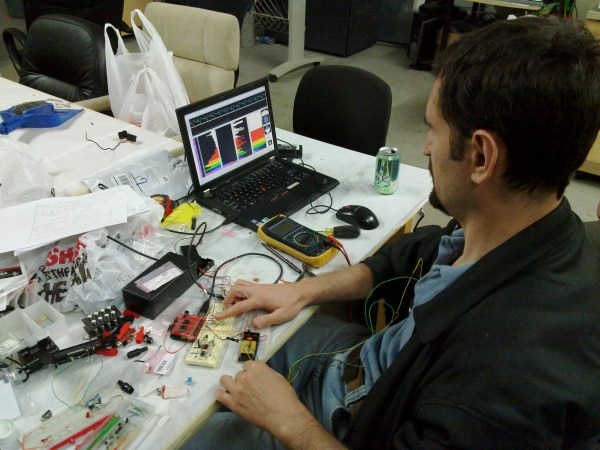
Dan yet again played the role of test subject:
 

image

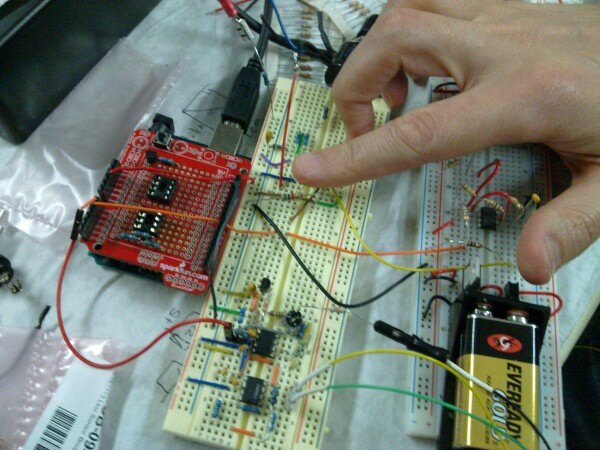
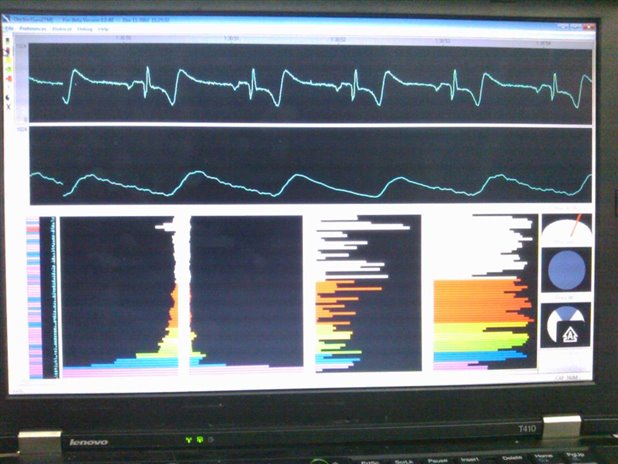
The QRD1114QRD1114 sensor from SparkFun contains an IR LED and a compatible phototransistor.  It dectects pulse via the change in the amount of infrared light reflected by finger as blood pumps through it.
image

We observed a great correlation between EKG and pulse oximetry signals:
image


Cheers,

Drew

  • Sign in to reply

Top Comments

  • Former Member
    Former Member over 13 years ago +1
    ron5329, you mention your BP drops and your heart rate is rocketing? Please look into Postural Orthostatic Tachycardia Syndrome, this may be what you are suffering from. I have been diagnosed with this…
Parents
  • aswinvenu
    aswinvenu over 5 years ago

    Hi Drew,

      ECG and PPG (Photoplethysmograph) signals are very highly correlated. Consider your heart like an electric pump. ECG talks about the armature current and PPG talks about the pumping action. PPG is also correlated to the pressure at which the blood has been pushed through the blood vessels. Algorithms used to calculate the BP using cuffless monitors use this correlation.

    Ventricular Depolarization happens -> ventricles contracts -> when the pressure increases more than 120mmhg -> aortic valve opens -> bloods gets squeezed out from the chamber -> it travels through the vessels and reaches you finger tip where you are measuring the PPG.

    calculate - pulse transit time (PTT). This will be proportional to the pressure (or pulse wave velocity). But we are all different and we do have slightly different anatomy. Our blood vessel thickness and elasticity is different. This is a variable parameter in the BP calculation. So we have to perform calibrations with different readings and finally make a regressive model to calculate the BP. (Blood vessels looses its elastic property over time so calibrations is required periodically)


    Regards,

    Aswin

    • Cancel
    • Vote Up 0 Vote Down
    • Sign in to reply
    • More
    • Cancel
Comment
  • aswinvenu
    aswinvenu over 5 years ago

    Hi Drew,

      ECG and PPG (Photoplethysmograph) signals are very highly correlated. Consider your heart like an electric pump. ECG talks about the armature current and PPG talks about the pumping action. PPG is also correlated to the pressure at which the blood has been pushed through the blood vessels. Algorithms used to calculate the BP using cuffless monitors use this correlation.

    Ventricular Depolarization happens -> ventricles contracts -> when the pressure increases more than 120mmhg -> aortic valve opens -> bloods gets squeezed out from the chamber -> it travels through the vessels and reaches you finger tip where you are measuring the PPG.

    calculate - pulse transit time (PTT). This will be proportional to the pressure (or pulse wave velocity). But we are all different and we do have slightly different anatomy. Our blood vessel thickness and elasticity is different. This is a variable parameter in the BP calculation. So we have to perform calibrations with different readings and finally make a regressive model to calculate the BP. (Blood vessels looses its elastic property over time so calibrations is required periodically)


    Regards,

    Aswin

    • Cancel
    • Vote Up 0 Vote Down
    • Sign in to reply
    • More
    • Cancel
Children
No Data
element14 Community

element14 is the first online community specifically for engineers. Connect with your peers and get expert answers to your questions.

  • Members
  • Learn
  • Technologies
  • Challenges & Projects
  • Products
  • Store
  • About Us
  • Feedback & Support
  • FAQs
  • Terms of Use
  • Privacy Policy
  • Legal and Copyright Notices
  • Sitemap
  • Cookies

An Avnet Company © 2025 Premier Farnell Limited. All Rights Reserved.

Premier Farnell Ltd, registered in England and Wales (no 00876412), registered office: Farnell House, Forge Lane, Leeds LS12 2NE.

ICP 备案号 10220084.

Follow element14

  • X
  • Facebook
  • linkedin
  • YouTube