


| {gallery}My Gallery Title |
|---|
|
The Title image |
|
functions, more you can see on my hackster |
|
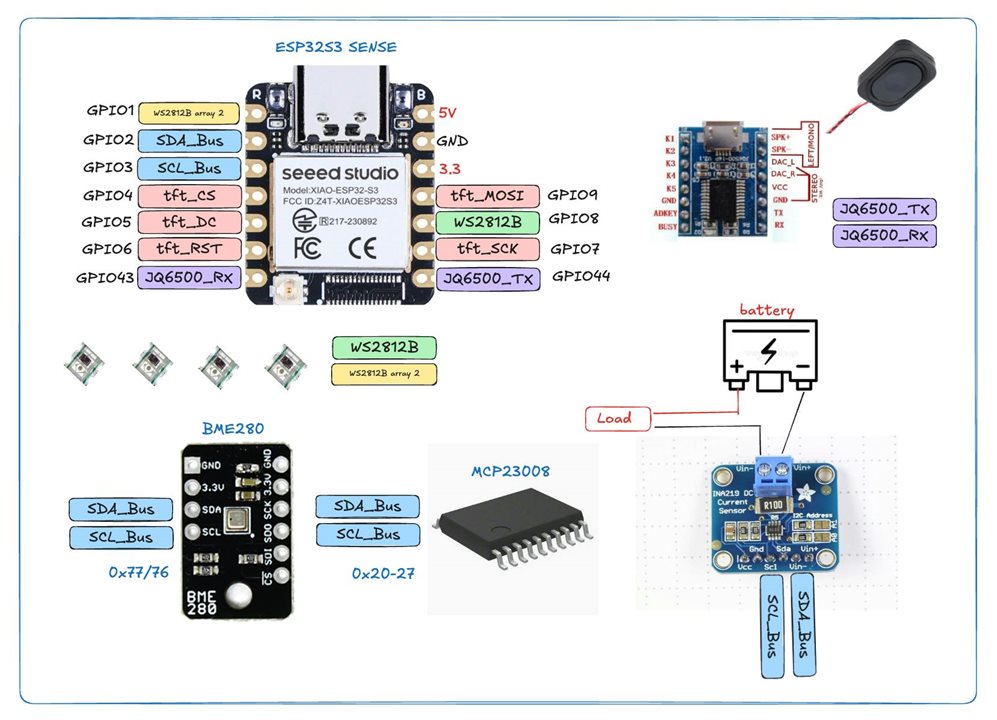
raw circuit diagram made in canva |
|
size of the device, could easily fit in hands |
|
after paint and clear spray |
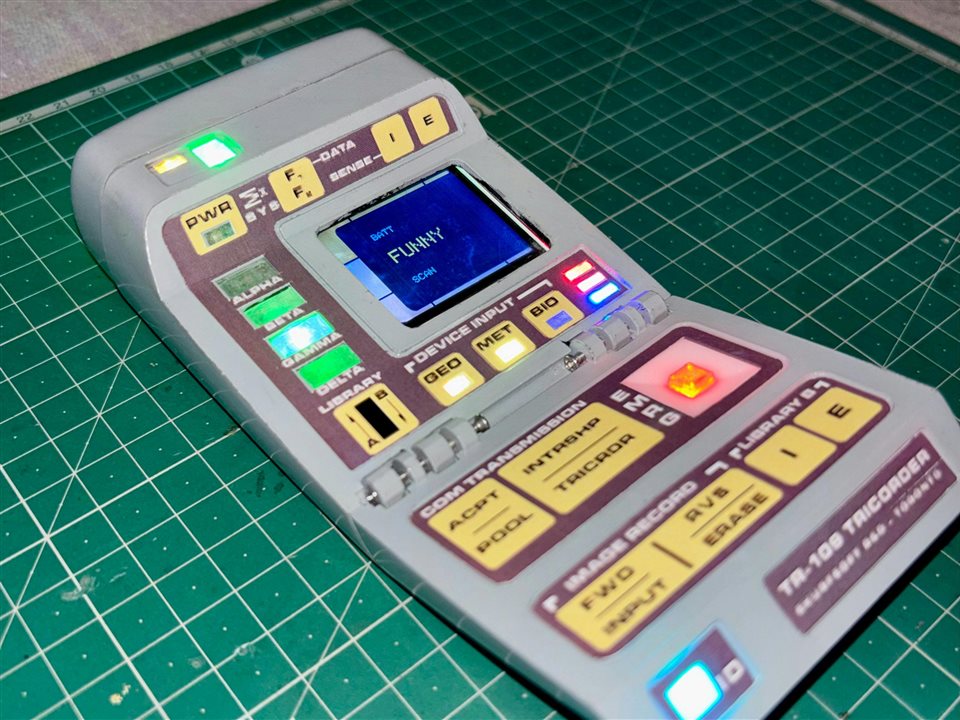
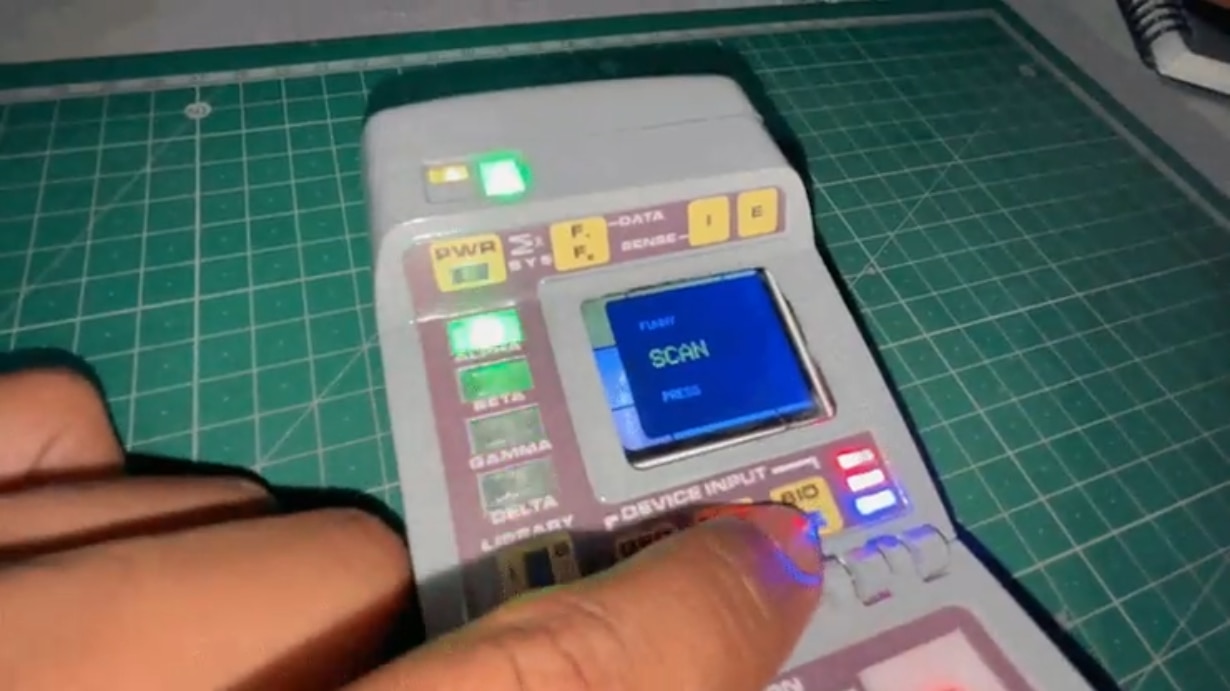
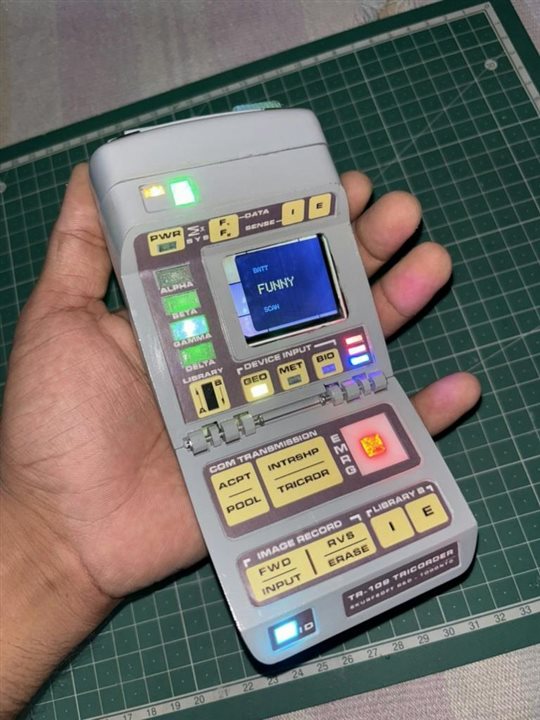
A couple of years ago I built a Star Trek Tricorder for a Hackster "TV Prop" contest. It looked the part but did nothing just a shell. Afterward I actually watched Star Trek properly, realized what a Tricorder is supposed to do, and decided the prop deserved real functionality. That became Rev 2.
What it actually does now
The whole thing runs on a Seeed Studio XIAO ESP32S3 Sense and packs in:
- Environmental sensing — a Bosch BME280 reading live temperature, pressure, and altitude (calculated from the barometric formula)
- Power monitoring — an INA219 tracking voltage, current, and draw in real time
- LCARS-style UI — animations and menus rendered on a 1.8" ST7735 TFT
- Touch-only navigation — six TTP223 capacitive pads (no physical buttons), read through an MCP23008 GPIO expander
- LED effects — WS2812B arrays for the classic glowing indicator strips, toggleable to save battery
- Sound — a JQ6500 audio module for startup sequences, scan effects, and alerts
- Auto power on/off — a reed switch that triggers when the case opens/closes, just like the show
- Rechargeable — Li-Ion cell with TP4056 charging
The build
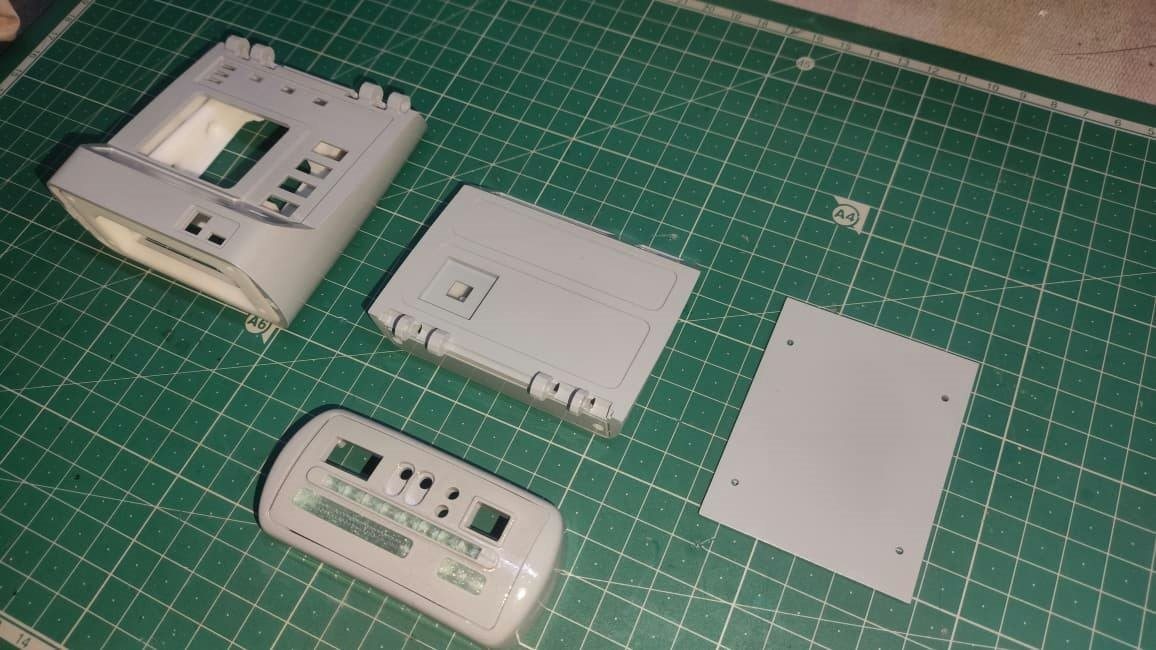
Electronics-wise it's two custom PCBs a main control board and a sensor panel linked by a 20-pin FFC cable, all designed in KiCad. The enclosure got a proper upgrade this time too: resin printing (courtesy of Justway) for a smooth main body, PETG for the LED diffuser sections so the light spreads evenly, then hand-painted and clear-coated.
Firmware is modular C/Arduino separate files for UI, sensors, LEDs, audio, and each "mode" (environment scan, alert, funny mode, startup animation), all coordinated from a single main loop.
Why bother with all this for a prop
Because once you've watched the source material, a static prop just isn't satisfying. Having it actually read the room's temperature and pressure, react to touch, and power itself on when you flip it open makes it feel like the device it's imitating — that's really the whole appeal of a build like this.
Links
- Full writeup: Hackster.io project page
- Circuits (KiCad): github.com/vishalqsoni/Tricoder-Rev2-Circuits
- Firmware: github.com/vishalqsoni/Tricoder-Rev2
Rev 1 exists too, if you want to see how far this thing has come.


