


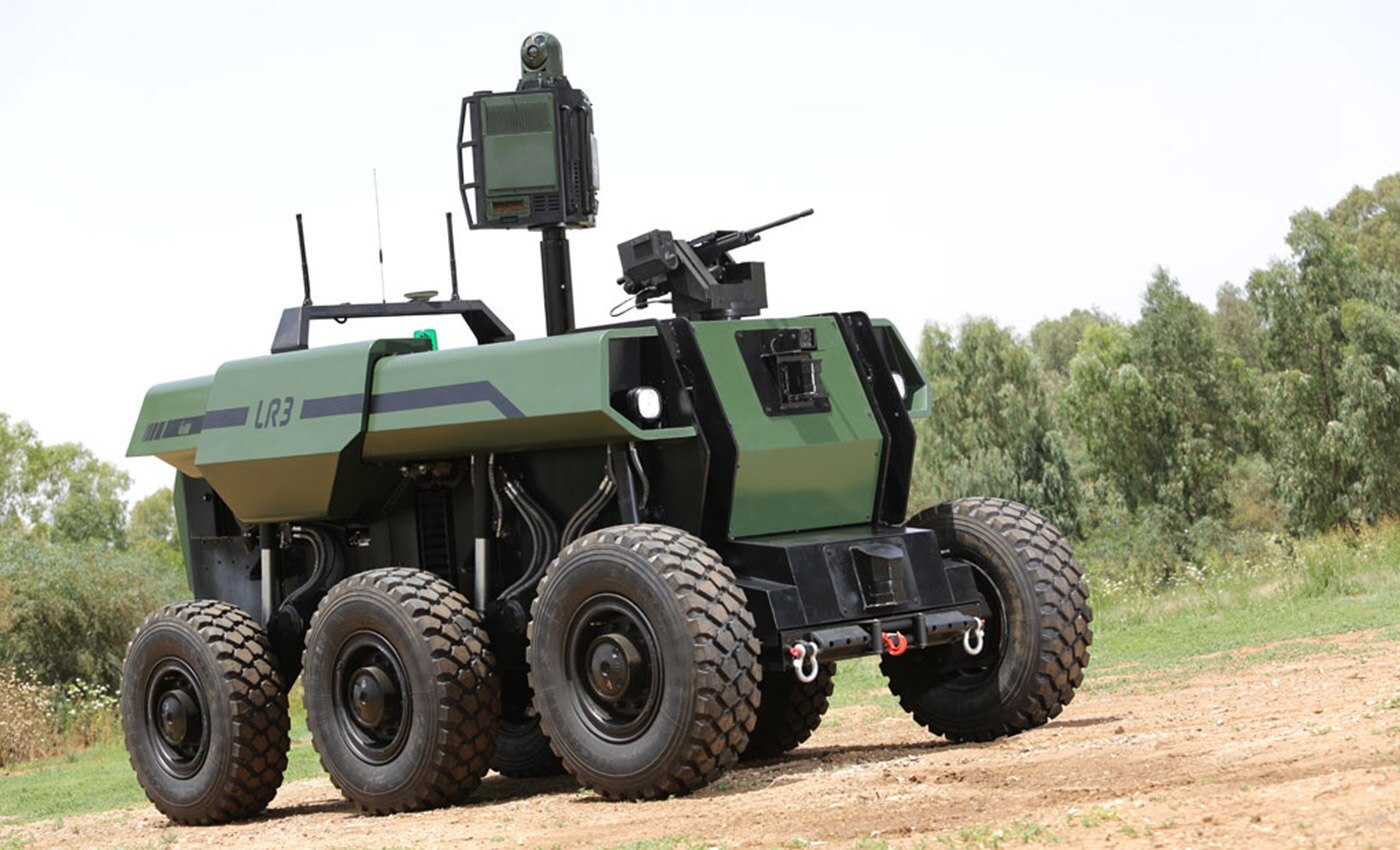
IAI’s RoBattle is a modular robotic platform that can be reconfigured for any number of missions. (via Israel Aerospace Industries)
Harm's way is for robots. Like that DIY explosive investigating robot. It weighs seven tons, can carry a three-ton payload and is autonomous- those are just the basic features of the RoBattle, Israel Aerospace Industries’ newest entry in their UGV (Unmanned Ground Vehicle) family. The battlebot was introduced at this year’s Eurosatory defense and security exhibition held in Paris, which adds to the IAI’s unmanned lineup that includes PANDA (for combat engineering operations), SAHAR (IED detection/clearing), RoboCon (convoy/logistic support) and GUARDIUM (border protection/security).
What separates the RoBattle from other robotic UGVs is its ability to be adapted to almost any combat role needed- surveillance/intelligence gathering, armed recon, convoy protection and even ambush and attack operations. The IAI attributes the UGV’s wide-range of capabilities to the vehicle’s modular kits that can be swapped-out depending on the mission.
The vehicles modular kits are extensive and suited for anything that’s needed- Black Granite sensor platform (imaging sensors, RADAR and communications intel), IED detection and ISR (surveillance and reconnaissance) sensors and even robotic arms if the need arises. Even the UGV’s wheels can be switched out for tracks depending on the terrain requirements.
One of the more notable kits it can be outfitted with is General Robotics’ Pitbull LWS, which features a NEGEV 5.56 / 7.62 or FN MAG 7.62 weapons platform, day/night/limited visibility cameras and optical fire-source detectors that pinpoint gunfire and explosions.
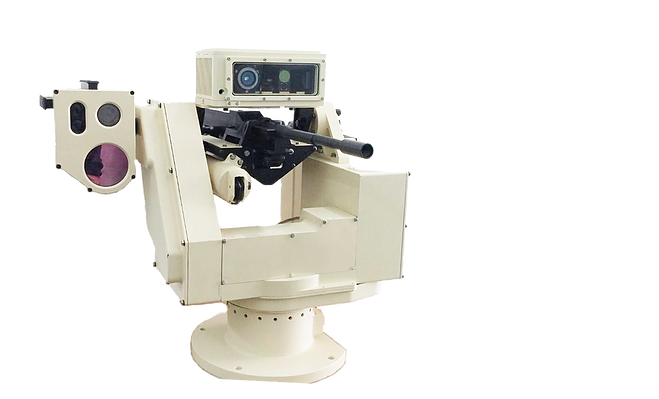
General Robotics’ Pibull Light Weapon Station is just one of the many kits that can be integrated into RoBattle’s modular design.
On the autonomous side of things, the RoBattle can be programmed to act depending on the engagement- meaning it can operate independently to carryout specified actions like those mentioned above or can be controlled remotely by an operator in the field. This is done over a Tac4G LTE network, which provides secure communications over a wide area.
The vehicle was also designed for survivability and able to cope with extensive damage before vital systems become damaged, hence the 7-ton base platform. Of course, there’s no word yet on when the RoBattle will be available or when it will be incorporated on the battlefield, chances are however only those unlucky enough to be on the business end will have that information.