Dear Element14,
Is there a suitable sub-forum for this sort of thing? If so, please move it there.
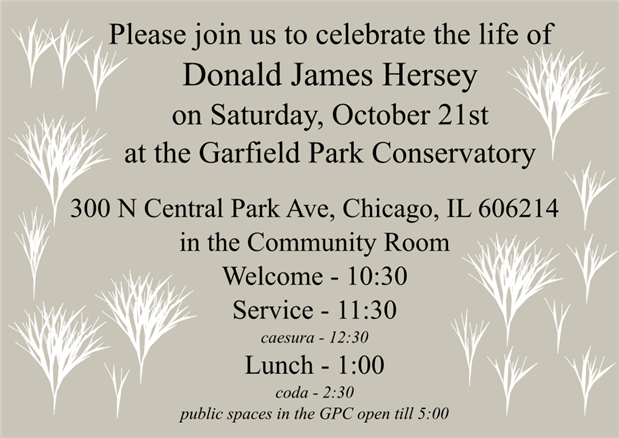
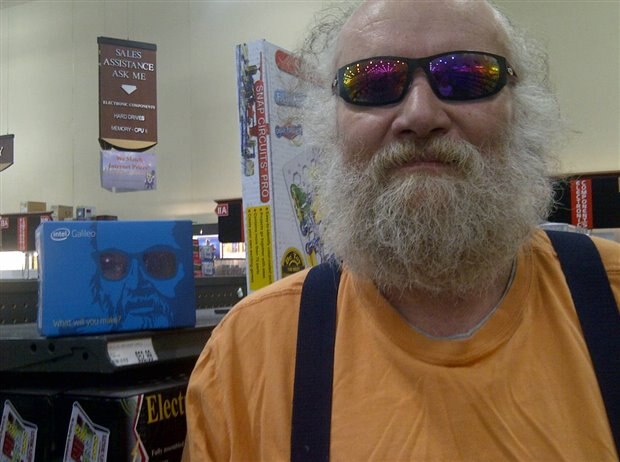
It is with sadness today that I write that my father d_hersey passed away on 4/24/2017 at 57 years of age.
I know that he got a lot of enjoyment out of the fellowship of engineers that is fostered here.
My dad raised two boys, Nathan Aristotle (live up to that name...) and (mom named the next kid...) Donald Benjamin (that's me). He is survived by his children, grandchildren Demetri and Katie, his 40 year life partner Terri P., brother Charles and sister Jean, and mother Norma.
Due to the circumstances of his personal life, my father was never able to go to college and join the work force as a professional engineer. While he was raising his children, he would receive trade journals and data sheets to entertain himself with in the mail every day. Later on, he home schooled us as well. As one may imagine, being tutored by this man touched on many elements of life. Electromagnetism being one of them. During the course of educating his children we both achieved amateur radio licenses by the 8th grade. (Also shout out to Mr. Edison who ran the ham club, RIP.)
He always kept up to date in the engineering world, and we were recently discussing a potential update to the chaos generator project (Nate's old science fair project) and had been working on python scripting our raspberry pi.
Because recursive circumstances dictated he be the homemaker, he largely was unable to interact with his peers in engineering, and the personal correspondence sent to him from members here meant the world to him. He frequently mentioned how great it was to be able to converse with people who share in the joy and art of electronics.
Nathan always seemed to gravitate towards the electronics end of things, whereas I have focused on computer science. I think it is fair to say that Nathan's success as a submariner and beyond was impacted by his homeschooling, and I myself have used many lessons learned in my career in data.
Even after we dropped out of homeschooling to settle for careers and girlfriends/marriage, Don still loved to help people learn both in person and here. The only time he seemed frustrated was when people didn't put in their fair share of research, or were overly pedantic in disagreements - ignoring the scope of the current discussion. He usually took care to tailor his lessons to the knowledge level of the audience. He was comfortable in a teaching role in person, especially one based on discourse. He truly enjoyed the pursuit of knowledge, and had little tolerance for bullies, or the willfully ignorant.
There is one major project of ours that I don't possess the skills to complete. Who knows high voltage around here? We have electron tubes to spark up if we're going to do the old man's (tbd) memorial service right. Let me know if you're interested.
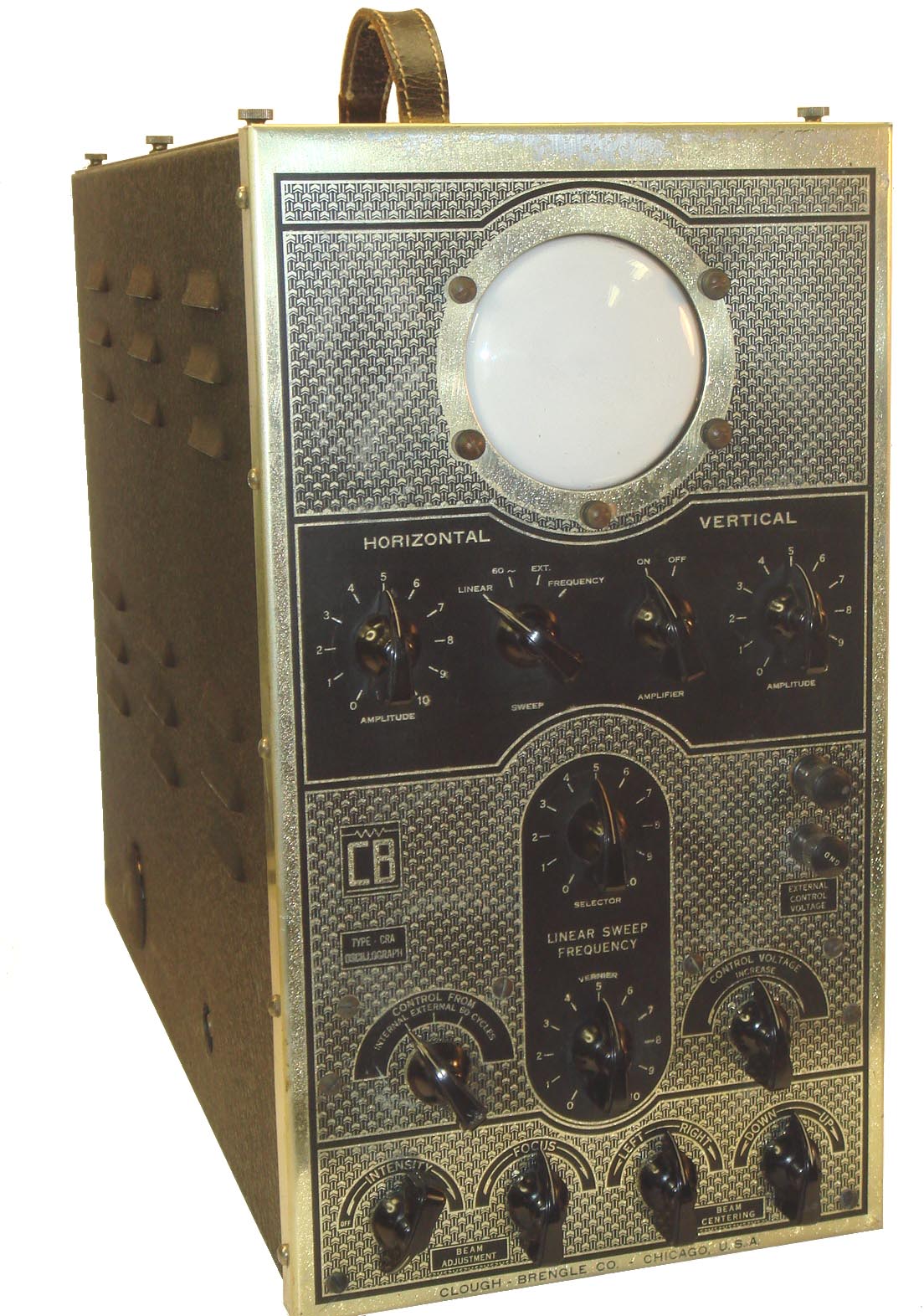
Specifically, we always planned to port our computer graphics code to render on a pair of oscilloscope tubes, one with slow phosphor and one with fast phosphor. If anyone can help with the high voltage components I would be exceedingly grateful. Anyone good at switching power supplies around here?
I will have to write parametric versions of the rendering functions for the code, but the main library is written in pure c++ and should port to any platform that has nice A2D and D2A converters on it.
Anybody good at programmable logics out there?
My research lately indicates there are a few systems now that will do c++ code natively, complete with real time monitoring of what part of the SW is taking the longest to run. Recommendations for a suitable Dev Kit would be appreciated. I'll have to dig out the data sheets on the tubes as we settle affairs.
Additionally, he had some really sweet laser cut acrylic polyhedron models he was working on. If there is any interest in having one, please post a comment with your request in the form of an lesson entitled "The Op-Amp is your friend." This was an ongoing class in Hersey & Associates home schooling, and it would warm his heart. Plus, I am still trying to pass that class.
I was told Great Grandfather Walker designed mechanical calculation machines for tide analysis, HVAC systems for submarines in WW2, and later worked as an architect. He tutored my father until his death when my dad was 8 if memory serves. My father lived on the cutting edge through the transition from electronic analog computation machines to PCs and the internet. Constructing own antennas, building noise generators, suppressing kick back from turning off a motor... it was a wild ride to learn electronics as his assistant.
Now that I don't have him to call up and talk shop with anymore, I'll have to lean harder on you guys so that I can finally graduate.
Best wishes to you all,
Benjamin Hersey