element14 Community
element14 Community
    Register Log In
  • Site
  • Search
  • Log In Register
  • Community Hub
    Community Hub
    • What's New on element14
    • Feedback and Support
    • Benefits of Membership
    • Personal Blogs
    • Members Area
    • Achievement Levels
  • Learn
    Learn
    • Ask an Expert
    • eBooks
    • element14 presents
    • Learning Center
    • Tech Spotlight
    • STEM Academy
    • Webinars, Training and Events
    • Learning Groups
  • Technologies
    Technologies
    • 3D Printing
    • FPGA
    • Industrial Automation
    • Internet of Things
    • Power & Energy
    • Sensors
    • Technology Groups
  • Challenges & Projects
    Challenges & Projects
    • Design Challenges
    • element14 presents Projects
    • Project14
    • Arduino Projects
    • Raspberry Pi Projects
    • Project Groups
  • Products
    Products
    • Arduino
    • Avnet & Tria Boards Community
    • Dev Tools
    • Manufacturers
    • Multicomp Pro
    • Product Groups
    • Raspberry Pi
    • RoadTests & Reviews
  • About Us
    About the element14 Community
  • Store
    Store
    • Visit Your Store
    • Choose another store...
      • Europe
      •  Austria (German)
      •  Belgium (Dutch, French)
      •  Bulgaria (Bulgarian)
      •  Czech Republic (Czech)
      •  Denmark (Danish)
      •  Estonia (Estonian)
      •  Finland (Finnish)
      •  France (French)
      •  Germany (German)
      •  Hungary (Hungarian)
      •  Ireland
      •  Israel
      •  Italy (Italian)
      •  Latvia (Latvian)
      •  
      •  Lithuania (Lithuanian)
      •  Netherlands (Dutch)
      •  Norway (Norwegian)
      •  Poland (Polish)
      •  Portugal (Portuguese)
      •  Romania (Romanian)
      •  Russia (Russian)
      •  Slovakia (Slovak)
      •  Slovenia (Slovenian)
      •  Spain (Spanish)
      •  Sweden (Swedish)
      •  Switzerland(German, French)
      •  Turkey (Turkish)
      •  United Kingdom
      • Asia Pacific
      •  Australia
      •  China
      •  Hong Kong
      •  India
      •  Japan
      •  Korea (Korean)
      •  Malaysia
      •  New Zealand
      •  Philippines
      •  Singapore
      •  Taiwan
      •  Thailand (Thai)
      •  Vietnam
      • Americas
      •  Brazil (Portuguese)
      •  Canada
      •  Mexico (Spanish)
      •  United States
      Can't find the country/region you're looking for? Visit our export site or find a local distributor.
  • Translate
  • Profile
  • Settings
Community Hub
Community Hub
Member's Forum Top Tech Voices Podcast S2 E3: Neuro-Tech and Brain Interfaces
  • Blog
  • Forum
  • Documents
  • Quiz
  • Events
  • Leaderboard
  • Polls
  • Files
  • Members
  • Mentions
  • Sub-Groups
  • Tags
  • More
  • Cancel
  • New
Join Community Hub to participate - click to join for free!
Actions
  • Share
  • More
  • Cancel
Forum Thread Details
  • Replies 12 replies
  • Subscribers 593 subscribers
  • Views 559 views
  • Users 0 members are here
  • neuro-tech
  • top-tech-voices
  • top tech voices podcast
  • podcast
Related

Top Tech Voices Podcast S2 E3: Neuro-Tech and Brain Interfaces

JoRatcliffe
JoRatcliffe 5 days ago

Episode Three of Top Tech Voices is here and it’s all about neuro-tech with Anil Seth - professor of Cognitive and Computational Neuroscience. 

Grab a coffee, tea, beverage of your choice, and watch/listen in on your preferred platform to a conversation exploring: 

  • Brain-computer interfaces (BCIs) - the developments realistically around the corner, and what is just science fiction (for now, at least!) 
  • How to train your brain to improve your mindfulness and attention span 
  • The idea that perhaps everything we experience is a controlled hallucination… 

Click the banner below to watch the podcast video or listen on your favorite platform.
image
Or you can watch straight away right here.

You don't have permission to edit metadata of this video.
Edit media
x
image
Upload Preview
image

 
Another episode means another competition! Leave a comment to be in the running to win! 

All you have to do is the following: 
 
1. You have to either Register or Login   
2. Leave a comment or reply below! 

Comments should include constructive discussion on the episode's topics (for example, neuro-tech, mindfulness and meditation, or the internet trend of the dress that looked blue/black to some people and white/gold to others), or useful feedback that helps improve future podcasts. 
 
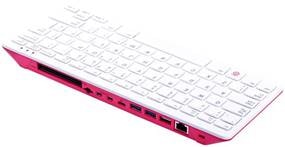
The Community team will select the best 5 comments to each win a Raspberry Pi 400!  
 
image
Learn More
 
Terms and Conditions 


  • Sign in to reply
  • Cancel

Top Replies

  • dougw
    dougw 5 days ago +2
    I think of consciousness as the awareness that a memory is a memory, but I don't dwell on trying to define it better. That is a murky rabbit hole. I find it curious that when recalling a phone number…
  • chloro
    chloro 4 days ago +2
    This episode pretty much shows why folks get caught up in conspiracy theories without much trouble. If our minds are basically just making educated guesses all the time, then it makes sense that once we…
  • Aniket_kumar_raj
    Aniket_kumar_raj 3 days ago in reply to Aniket_kumar_raj +2
    have a look what goldmine i found on internet today. https://www.youtube.com/watch?v=KBYSpR8N6pc
Parents
  • gpolder
    gpolder 3 days ago

    Very engaging episode, definitely food for thought.

    I often use the famous “dress” image in my computer vision lectures as an example of how human perception can mislead us. While it’s commonly described as an illusion, it’s really about interpretation. If you measure the pixel values, for example using ImageJ, you’ll find that in the supposedly “white” regions, the red and green components are actually lower than the blue, indicating that the color is in fact blue. Of course, this doesn’t reveal the true color of the dress, since illumination conditions play a crucial role. The full explanation is well documented on Wikipedia (https://en.wikipedia.org/wiki/The_dress).

    Around the 38-minute mark, Anil Seth argues that the brain is not a computer, later refining the comparison by likening it more to an analog system. This brought back memories of early analog computer prototypes I encountered in my youth. Ultimately, digital computers, even those based on vacuum tubes, proved more efficient and scalable. Still, it’s interesting to imagine how analog computing might have evolved if it had kept pace technologically. Neural networks, the backbone of modern AI, largely implemented as software on digital hardware, are relatively inefficient compared to what an analog neural network could achieve, for instance, using operational amplifiers to perform summation and activation functions directly in hardware. Interestingly comparable technology in camera technology, so called neuromorphic cameras are now entering the scene (https://en.wikipedia.org/wiki/Event_camera).

    Finally, I’d like to touch on the discussion of free will at around 24 minutes. This debate goes back centuries. In the 16th century, Martin Luther’s De Servo Arbitrio (“On the Bondage of the Will”) argued that humans cannot freely choose between good and evil, but depend entirely on divine grace for salvation. This was written in response to Erasmus’ earlier defence of free will. That said, Anil Seth seems to approach the concept from a different, less theological perspective (https://en.wikipedia.org/wiki/On_the_Bondage_of_the_Will).

    • Cancel
    • Vote Up +1 Vote Down
    • Sign in to reply
    • Cancel
Reply
  • gpolder
    gpolder 3 days ago

    Very engaging episode, definitely food for thought.

    I often use the famous “dress” image in my computer vision lectures as an example of how human perception can mislead us. While it’s commonly described as an illusion, it’s really about interpretation. If you measure the pixel values, for example using ImageJ, you’ll find that in the supposedly “white” regions, the red and green components are actually lower than the blue, indicating that the color is in fact blue. Of course, this doesn’t reveal the true color of the dress, since illumination conditions play a crucial role. The full explanation is well documented on Wikipedia (https://en.wikipedia.org/wiki/The_dress).

    Around the 38-minute mark, Anil Seth argues that the brain is not a computer, later refining the comparison by likening it more to an analog system. This brought back memories of early analog computer prototypes I encountered in my youth. Ultimately, digital computers, even those based on vacuum tubes, proved more efficient and scalable. Still, it’s interesting to imagine how analog computing might have evolved if it had kept pace technologically. Neural networks, the backbone of modern AI, largely implemented as software on digital hardware, are relatively inefficient compared to what an analog neural network could achieve, for instance, using operational amplifiers to perform summation and activation functions directly in hardware. Interestingly comparable technology in camera technology, so called neuromorphic cameras are now entering the scene (https://en.wikipedia.org/wiki/Event_camera).

    Finally, I’d like to touch on the discussion of free will at around 24 minutes. This debate goes back centuries. In the 16th century, Martin Luther’s De Servo Arbitrio (“On the Bondage of the Will”) argued that humans cannot freely choose between good and evil, but depend entirely on divine grace for salvation. This was written in response to Erasmus’ earlier defence of free will. That said, Anil Seth seems to approach the concept from a different, less theological perspective (https://en.wikipedia.org/wiki/On_the_Bondage_of_the_Will).

    • Cancel
    • Vote Up +1 Vote Down
    • Sign in to reply
    • Cancel
Children
No Data
element14 Community

element14 is the first online community specifically for engineers. Connect with your peers and get expert answers to your questions.

  • Members
  • Learn
  • Technologies
  • Challenges & Projects
  • Products
  • Store
  • About Us
  • Feedback & Support
  • FAQs
  • Terms of Use
  • Privacy Policy
  • Legal and Copyright Notices
  • Sitemap
  • Cookies

An Avnet Company © 2026 Premier Farnell Limited. All Rights Reserved.

Premier Farnell Ltd, registered in England and Wales (no 00876412), registered office: Farnell House, Forge Lane, Leeds LS12 2NE.

ICP 备案号 10220084.

Follow element14

  • X
  • Facebook
  • linkedin
  • YouTube