element14 Community
element14 Community
    Register Log In
  • Site
  • Search
  • Log In Register
  • Community Hub
    Community Hub
    • What's New on element14
    • Feedback and Support
    • Benefits of Membership
    • Personal Blogs
    • Members Area
    • Achievement Levels
  • Learn
    Learn
    • Ask an Expert
    • eBooks
    • element14 presents
    • Learning Center
    • Tech Spotlight
    • STEM Academy
    • Webinars, Training and Events
    • Learning Groups
  • Technologies
    Technologies
    • 3D Printing
    • FPGA
    • Industrial Automation
    • Internet of Things
    • Power & Energy
    • Sensors
    • Technology Groups
  • Challenges & Projects
    Challenges & Projects
    • Design Challenges
    • element14 presents Projects
    • Project14
    • Arduino Projects
    • Raspberry Pi Projects
    • Project Groups
  • Products
    Products
    • Arduino
    • Avnet & Tria Boards Community
    • Dev Tools
    • Manufacturers
    • Multicomp Pro
    • Product Groups
    • Raspberry Pi
    • RoadTests & Reviews
  • About Us
    About the element14 Community
  • Store
    Store
    • Visit Your Store
    • Choose another store...
      • Europe
      •  Austria (German)
      •  Belgium (Dutch, French)
      •  Bulgaria (Bulgarian)
      •  Czech Republic (Czech)
      •  Denmark (Danish)
      •  Estonia (Estonian)
      •  Finland (Finnish)
      •  France (French)
      •  Germany (German)
      •  Hungary (Hungarian)
      •  Ireland
      •  Israel
      •  Italy (Italian)
      •  Latvia (Latvian)
      •  
      •  Lithuania (Lithuanian)
      •  Netherlands (Dutch)
      •  Norway (Norwegian)
      •  Poland (Polish)
      •  Portugal (Portuguese)
      •  Romania (Romanian)
      •  Russia (Russian)
      •  Slovakia (Slovak)
      •  Slovenia (Slovenian)
      •  Spain (Spanish)
      •  Sweden (Swedish)
      •  Switzerland(German, French)
      •  Turkey (Turkish)
      •  United Kingdom
      • Asia Pacific
      •  Australia
      •  China
      •  Hong Kong
      •  India
      •  Japan
      •  Korea (Korean)
      •  Malaysia
      •  New Zealand
      •  Philippines
      •  Singapore
      •  Taiwan
      •  Thailand (Thai)
      •  Vietnam
      • Americas
      •  Brazil (Portuguese)
      •  Canada
      •  Mexico (Spanish)
      •  United States
      Can't find the country/region you're looking for? Visit our export site or find a local distributor.
  • Translate
  • Profile
  • Settings
Community Hub
Community Hub
Member's Forum Which famous engineer should be on an element14 sticker?
  • Blog
  • Forum
  • Documents
  • Quiz
  • Events
  • Leaderboard
  • Polls
  • Files
  • Members
  • Mentions
  • Sub-Groups
  • Tags
  • More
  • Cancel
  • New
Join Community Hub to participate - click to join for free!
Actions
  • Share
  • More
  • Cancel
Forum Thread Details
  • Replies 62 replies
  • Subscribers 650 subscribers
  • Views 4006 views
  • Users 0 members are here
Related

Which famous engineer should be on an element14 sticker?

kellyhensen
kellyhensen over 7 years ago

image


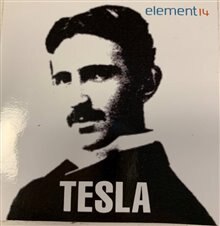
About five years ago, we printed up some element14 stickers with Nikola Tesla on them.  i just found the last remaining one in my desk drawer which made me think that we should have some new ones printed. 


We're also going to print some with Ada Lovelace.

image


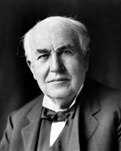
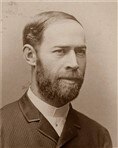
Who else should get this high honor?  Here's our suggestions, "vote" for two in the comments below!


image

Thomas Alva Edison

image

Michael Faraday

image

Beulah Louise Henry

image

Heinrich Hertz

image

Katherine Johnson

image

Hedy Lamarr

  • Sign in to reply
  • Cancel
Parents
  • stevesmythe
    stevesmythe over 7 years ago

    If we are talking engineers rather than scientists, physicists and mathematicians I would add Tommy Flowers.


    Although Alan Turing rightly gets a lot of credit for "inventing" computers, it was Tommy Flowers who designed and (with other engineers from the British Post Office) built the first one (Colossus) and delivered it to Bletchley Park in the 1940s. It worked exactly as planned and helped the UK decrypt messages sent using the Germans' Geheimschreiber machine. Although everybody knows about the Enigma machine, the Geheimschreiber offered far greater security than Enigma - and Alan Turing's Bombes were simply not fast enough to decode the messages. The biggest technological advance introduced by Flowers was the use of several thousand electronic valves in a single device, instead of the mechanical relays used by the Bombes. Bletchley Park did not believe that using valves in such numbers would be practical because of reliability but Flowers knew that, as long as they were left running, they would prove to be very reliable, as well as being many times faster than relays. The success of the first Colossus led to another ten being built. After the war, they were all destroyed, along with the plans, and Tommy Flowers has never enjoyed the recognition that he deserved. Ironically, some plans did survive as they had been shared with the US secret services, and those were later used to recreate Colossus. A working replica can be seen in operation now at Bletchley Park.

    • Cancel
    • Vote Up +9 Vote Down
    • Sign in to reply
    • Cancel
Reply
  • stevesmythe
    stevesmythe over 7 years ago

    If we are talking engineers rather than scientists, physicists and mathematicians I would add Tommy Flowers.


    Although Alan Turing rightly gets a lot of credit for "inventing" computers, it was Tommy Flowers who designed and (with other engineers from the British Post Office) built the first one (Colossus) and delivered it to Bletchley Park in the 1940s. It worked exactly as planned and helped the UK decrypt messages sent using the Germans' Geheimschreiber machine. Although everybody knows about the Enigma machine, the Geheimschreiber offered far greater security than Enigma - and Alan Turing's Bombes were simply not fast enough to decode the messages. The biggest technological advance introduced by Flowers was the use of several thousand electronic valves in a single device, instead of the mechanical relays used by the Bombes. Bletchley Park did not believe that using valves in such numbers would be practical because of reliability but Flowers knew that, as long as they were left running, they would prove to be very reliable, as well as being many times faster than relays. The success of the first Colossus led to another ten being built. After the war, they were all destroyed, along with the plans, and Tommy Flowers has never enjoyed the recognition that he deserved. Ironically, some plans did survive as they had been shared with the US secret services, and those were later used to recreate Colossus. A working replica can be seen in operation now at Bletchley Park.

    • Cancel
    • Vote Up +9 Vote Down
    • Sign in to reply
    • Cancel
Children
No Data
element14 Community

element14 is the first online community specifically for engineers. Connect with your peers and get expert answers to your questions.

  • Members
  • Learn
  • Technologies
  • Challenges & Projects
  • Products
  • Store
  • About Us
  • Feedback & Support
  • FAQs
  • Terms of Use
  • Privacy Policy
  • Legal and Copyright Notices
  • Sitemap
  • Cookies

An Avnet Company © 2026 Premier Farnell Limited. All Rights Reserved.

Premier Farnell Ltd, registered in England and Wales (no 00876412), registered office: Farnell House, Forge Lane, Leeds LS12 2NE.

Follow element14

  • X
  • Facebook
  • linkedin
  • YouTube