element14 Community
element14 Community
    Register Log In
  • Site
  • Search
  • Log In Register
  • Community Hub
    Community Hub
    • What's New on element14
    • Feedback and Support
    • Benefits of Membership
    • Personal Blogs
    • Members Area
    • Achievement Levels
  • Learn
    Learn
    • Ask an Expert
    • eBooks
    • element14 presents
    • Learning Center
    • Tech Spotlight
    • STEM Academy
    • Webinars, Training and Events
    • Learning Groups
  • Technologies
    Technologies
    • 3D Printing
    • FPGA
    • Industrial Automation
    • Internet of Things
    • Power & Energy
    • Sensors
    • Technology Groups
  • Challenges & Projects
    Challenges & Projects
    • Design Challenges
    • element14 presents Projects
    • Project14
    • Arduino Projects
    • Raspberry Pi Projects
    • Project Groups
  • Products
    Products
    • Arduino
    • Avnet & Tria Boards Community
    • Dev Tools
    • Manufacturers
    • Multicomp Pro
    • Product Groups
    • Raspberry Pi
    • RoadTests & Reviews
  • About Us
    About the element14 Community
  • Store
    Store
    • Visit Your Store
    • Choose another store...
      • Europe
      •  Austria (German)
      •  Belgium (Dutch, French)
      •  Bulgaria (Bulgarian)
      •  Czech Republic (Czech)
      •  Denmark (Danish)
      •  Estonia (Estonian)
      •  Finland (Finnish)
      •  France (French)
      •  Germany (German)
      •  Hungary (Hungarian)
      •  Ireland
      •  Israel
      •  Italy (Italian)
      •  Latvia (Latvian)
      •  
      •  Lithuania (Lithuanian)
      •  Netherlands (Dutch)
      •  Norway (Norwegian)
      •  Poland (Polish)
      •  Portugal (Portuguese)
      •  Romania (Romanian)
      •  Russia (Russian)
      •  Slovakia (Slovak)
      •  Slovenia (Slovenian)
      •  Spain (Spanish)
      •  Sweden (Swedish)
      •  Switzerland(German, French)
      •  Turkey (Turkish)
      •  United Kingdom
      • Asia Pacific
      •  Australia
      •  China
      •  Hong Kong
      •  India
      •  Japan
      •  Korea (Korean)
      •  Malaysia
      •  New Zealand
      •  Philippines
      •  Singapore
      •  Taiwan
      •  Thailand (Thai)
      •  Vietnam
      • Americas
      •  Brazil (Portuguese)
      •  Canada
      •  Mexico (Spanish)
      •  United States
      Can't find the country/region you're looking for? Visit our export site or find a local distributor.
  • Translate
  • Profile
  • Settings
Community Hub
Community Hub
Member's Forum Need Advice About A Roadtest: Amber Pi Design Kit
  • Blog
  • Forum
  • Documents
  • Quiz
  • Events
  • Leaderboard
  • Polls
  • Files
  • Members
  • Mentions
  • Sub-Groups
  • Tags
  • More
  • Cancel
  • New
Join Community Hub to participate - click to join for free!
Actions
  • Share
  • More
  • Cancel
Forum Thread Details
  • Replies 20 replies
  • Subscribers 633 subscribers
  • Views 1600 views
  • Users 0 members are here
Related

Need Advice About A Roadtest: Amber Pi Design Kit

rscasny
rscasny over 7 years ago

Greetings. I wanted to get the advice of any top member regarding a roadtest I am getting ready to launch.


Let me start by saying, most roadtests begin with a meeting with the sponsor who indicates an interest in sponsoring a roadtest. My boss gives a high level view of the roadtest program, and then I fill in the details, schedules, gathering information, etc. One of the things we always point out is that the products we roadtest have to be global (they can be used in N/SA, Europe, Asia, etc.)image
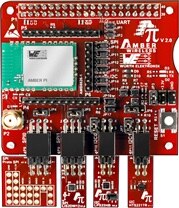
 

I met with WURTH ELEKTRONIK about its Amber Pi Design Kit. AMBER PI is an expansion board for the Raspberry Pi 3B that gives the Pi a sub-1GHz RF interface. The included sensors (temperature, humidity, pressure, motion) and RF dongle which runs as remote station for the AMBER PI.


It seemed like a good product to roadtest. It has an IoT angle, and it seemed like a product that would appeal to both makers and professionals alike. As usual, the sponsor sends me the kits so we can ship them out to the roadtesters. Well,when I opened the box, I soon learned all the kits were for use at 868MHZ (Europe) only. I didn't see that as a problem because often times there are separate part numbers for a 915MHZ product and an 868MHZ product. This time, however, there was not one for 915MHZ. I contacted the tech support line which said : "yes, unfortunately the Amber Pi is only available with the 868MHz RF module." This poses a problem since I need to open the roadtest to North America, at the very least.


After some quick research, I see that while the company does not make an Amber Pi with a 915MHZ radio module installed, it does sell aimage

915 MHZ radio module separately. So the radio module would need to be swapped out.


Question In Need of Advice

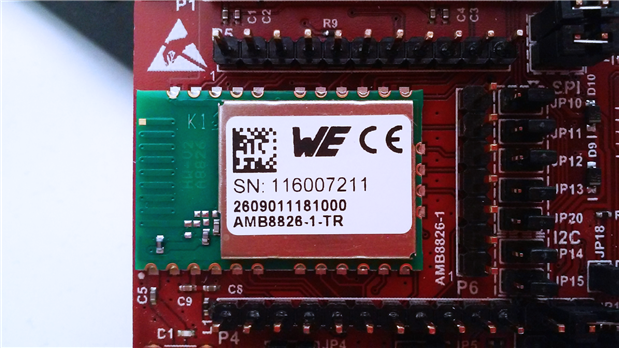
I could very well purchase some 915MHZ radio modules and provide them to the North America roadtesters. So, they would have to swap out the radio modules. I guess if this was a quick pull out/plug in task, I wouldn't be writing this discussion. But it appears that the module is soldered in. I took a close up picture of it (pictured below) for you to see. If I'm wrong, say the word. End of story.


But if it requires to be desoldered/soldered, then I am somewhat concerned for a couple of reasons:image
 

-- it changes the nature of the roadtest to include the modification task instead of just focusing on the rapid prototyping capability

--What if there is damage to the radio module during the swap out.

--The swap increases the complexity of the roadtest to the point where it is possible that a roadtester may not complete the roadtest/review


Now, I guess I could request from the company to custom build 915MHZ versions. Moreover, since they sell it with a separate 915MHZ radio module, perhaps the swapout should be roadtested to see if it is as easy to do as is implied by the supplier tech support line.


So, I am looking for some advice. I want to make sure the roadtest is fair and straightforward for both the supplier and the roadtester.


Any comments you have would be appreciated.


Randall

  • Sign in to reply
  • Cancel
Parents
  • ravi_butani
    ravi_butani over 7 years ago

    One more solution...

    As you are providing both 915MHz already on Amber Pi and 868MHz stand alone module... You can just Ask roadtester to come up with standalone or something more creative application with or without Raspberry Pi using 868MHz module with DIY PCB...

    • Cancel
    • Vote Up 0 Vote Down
    • Sign in to reply
    • Cancel
  • Gough Lui
    Gough Lui over 7 years ago in reply to ravi_butani

    I don't think that's necessarily a great idea. For one, it comes with the EU 868MHz module by default (from my understanding of what is written) but for RoadTesting outside EU, the 915MHz module is more appropriate.


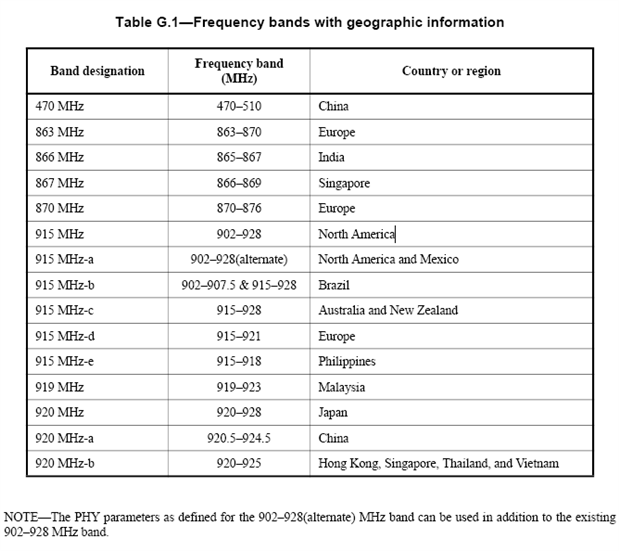
    This is because the "900MHz" band is not quite as "standardised" across the world as the 2.4GHz band is (more or less). Different countries have different restrictions on the use of 900MHz frequencies. I took this snapshot from the present 802.15.4v document just to illustrate the point:

    image


    Using the "other" (i.e. 868MHz) module outside of EU will likely cause interference to licensed services and should not be encouraged. If you did that in Australia, you'd be interfering with the CMTS (Commercial Mobile Telephone Service) base stations, specifically Telstra NextG (3G-850MHz) band. Likewise, even 915MHz comes in several sub-bands - something I mentioned in my recent RoadTest of the IDT Wireless Sensor Cube because it could not operate with its included software in a legal way in Australia (using a frequency in the Optus 900MHz CMTS band instead, with potentially stiff penalties if caught).


    - Gough

    • Cancel
    • Vote Up 0 Vote Down
    • Sign in to reply
    • Cancel
Reply
  • Gough Lui
    Gough Lui over 7 years ago in reply to ravi_butani

    I don't think that's necessarily a great idea. For one, it comes with the EU 868MHz module by default (from my understanding of what is written) but for RoadTesting outside EU, the 915MHz module is more appropriate.


    This is because the "900MHz" band is not quite as "standardised" across the world as the 2.4GHz band is (more or less). Different countries have different restrictions on the use of 900MHz frequencies. I took this snapshot from the present 802.15.4v document just to illustrate the point:

    image


    Using the "other" (i.e. 868MHz) module outside of EU will likely cause interference to licensed services and should not be encouraged. If you did that in Australia, you'd be interfering with the CMTS (Commercial Mobile Telephone Service) base stations, specifically Telstra NextG (3G-850MHz) band. Likewise, even 915MHz comes in several sub-bands - something I mentioned in my recent RoadTest of the IDT Wireless Sensor Cube because it could not operate with its included software in a legal way in Australia (using a frequency in the Optus 900MHz CMTS band instead, with potentially stiff penalties if caught).


    - Gough

    • Cancel
    • Vote Up 0 Vote Down
    • Sign in to reply
    • Cancel
Children
No Data
element14 Community

element14 is the first online community specifically for engineers. Connect with your peers and get expert answers to your questions.

  • Members
  • Learn
  • Technologies
  • Challenges & Projects
  • Products
  • Store
  • About Us
  • Feedback & Support
  • FAQs
  • Terms of Use
  • Privacy Policy
  • Legal and Copyright Notices
  • Sitemap
  • Cookies

An Avnet Company © 2026 Premier Farnell Limited. All Rights Reserved.

Premier Farnell Ltd, registered in England and Wales (no 00876412), registered office: Farnell House, Forge Lane, Leeds LS12 2NE.

Follow element14

  • X
  • Facebook
  • linkedin
  • YouTube