


Introduction
The purpose of the blog is to introduce the embedded systems project being developed, and demonstrate it’s aims and progress. To begin with, students were given the opportunity to to come up with their own idea about the project topic, and use their imagination and software skills to develop their idea.
Project Topic
The project which was decided to be developed is a game called Treasure Hunt. The mission that the hero has to accomplish is to reach the treasure which is well protected by enemies and obstacles. There are be different kind of enemies which have one common objective; to prevent the hero from reaching the treasure. The enemies are moving objects who would try to defeat the hero, whereas the obstacles are located in the ground, making it more difficult for the hero to cross the battlefield. The hero has the ability to shoot enemies by the use of a button. Another ability he possesses is to clear the area from all enemies in case of greater difficulty. The ability would be available every twenty seconds. A blue LED would turn on once the ability is ready for use. Furthermore, there would be multiple levels in the game which have to be overcome in order to reach the treasure. As the level increases, the game becomes more challenging. In addition, there are three tires which would be represented by three red LEDs, turned ON. If the hero was hit by an enemy an LED would turn OFF. Finally, an arrow would act as guidance which is to be followed in order to reach the treasure.
Constraints
Furthermore, only a specified range of hardware components, and software tools were available for use in this project.
The list of hardware constraints used is shown below:
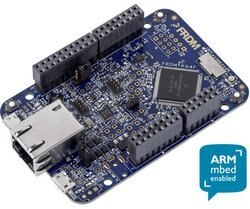
- Mbed: FRDM – K64F
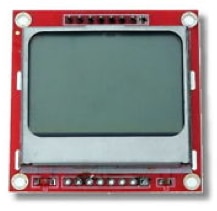
- Nokia LCD N5110
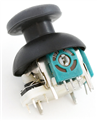
- Joystick
- PCB mounted 9 V batter
- 9V – To – 5V Buck converter (MC34062 switching regulator
- Two – layer PCB, limited to 100 mm by 80 mm
More general components such as resistors and LEDs were also added to the project. The list of elements is shown below:
- Digital button
- Red LEDs
- Blue LED
- Current limiting resistors (1 KΩ) SMT
- Piezo buzzer
Game Implementation
The game is implemented by the interaction of hardware and software tools which control the operation of components. The software will be discussed in a further blog. Each component is used for a specific operation as shown below:
- A joystick will be used to control the hero
- The game will be displayed on the Nokia N5110 LCD
- A switching regulator (9 V to 5 V) will be used which provides high power efficiency
- The button of the joystick will be used as an interrupt which will shoot enemies
- Another button will be used to as an ultra weapon to clear the enemies from the field
- A timer interrupt will be used to to update the game 10 times per second
- A finite state machine will be used to set the state of the LEDs that represent the number of trials
- A buzzer will be used which would play sounds during the game
Conclusion
To take everything into consideration, the blog was an introduction to the project game which is called Treasure Hunt. A brief description of the game was summarized, and some software and hardware limitations were specified. The progress of the project will be demonstrated in further blogs. The next step would be to design the printed circuit board (PCB) where the components will be placed, and than implement the software for the game.