


The progress on the DC Load unit has raced well ahead of my progress on this blog. As is my nature once I get involved it is hard to stop working. Fortunately I did remember from time to time to stop and take some pictures. In this next to last blog I will post the most recent revision of the schematics and show pictures of the completed boards and write a little bit about the things I learned. Here is the final Main Board Schematic and picture of the board before and after mounting it in the unit.

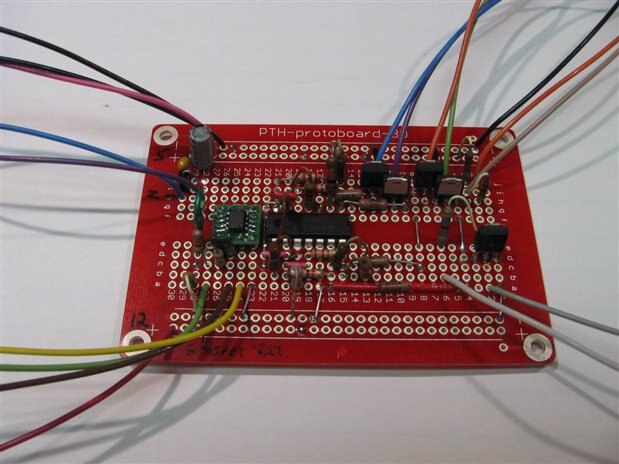

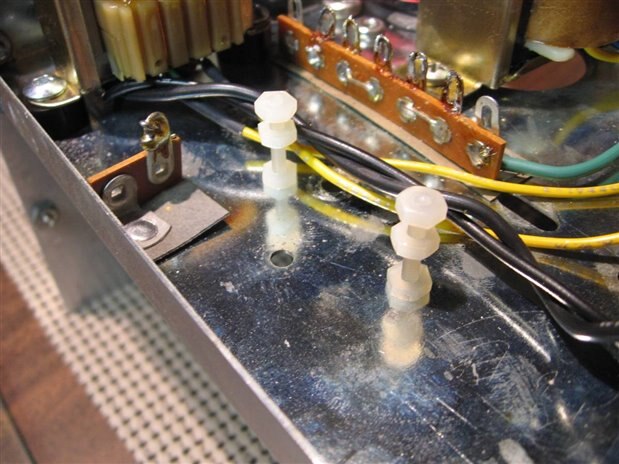
There are a few things of interest on the main board. During testing of the unit I had some problems with an intermittent oscillation. Fortunately some timely information that I learned from Peter Oakes allowed me to make a fix by increasing the value of C5 in the Op Amp circuit to 100 nF. This solved the problem and it has not come back. Another situation was encountered when the flyback protection diode integral in the MOSFET made the design of the Polarity Fault detection circuitry difficult. You might note the scheme that I have used to mount the circuit boards. I am using 1 inch 4-40 nylon screws brought up from below the chassis and nylon nuts to produce stand off insulators for the boards. Keep in mind that some of the circuitry on the schematic is actually off the PCB and on the chassis.
The next Schematic and Board is the Power Supply

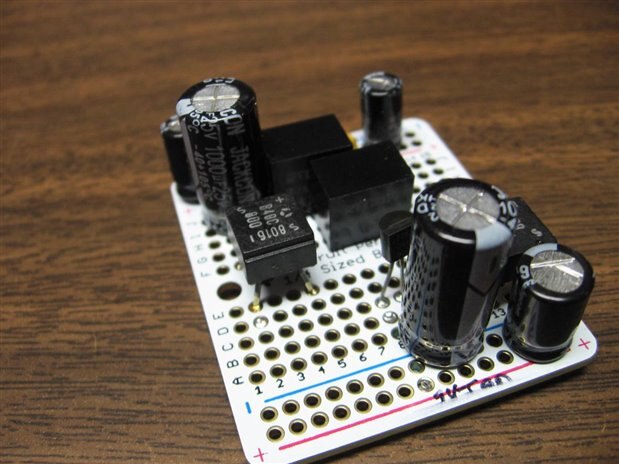
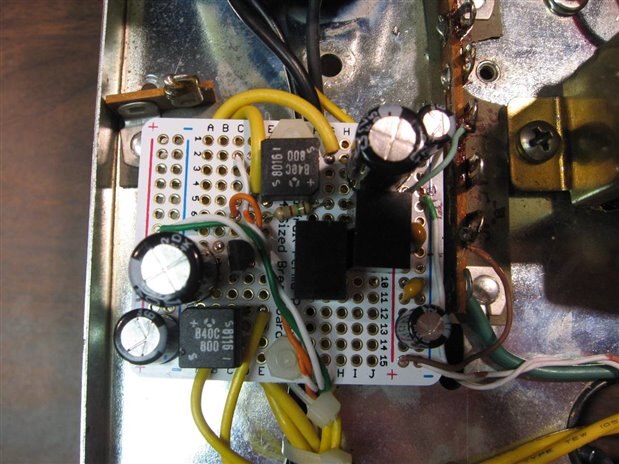
The first problem that I had with the power supply involved not being able to find a transformer with the proper windings in my parts graveyard. The solution was the use of two separate smaller transformers. On the board next to the bridge diodes you can see 2 small black boxes. These are RECOM DC to DC switching regulators. In this case there is a 12 volt and a 5 volt both of which are able to put out 1 amp. These provide power for all the boards excepts the Fan and Fan Control Board. Since they are switching regulators they produce almost no heat. I am excited about them as this is the first time I have used them in a piece of equipment. The small TO 92 device in the grouping at the lower right of the board is a 9 volt linear regulator that is being used to control the voltage to the meter circuits which require an isolated 9 volt supply. Here is a picture of the nylon screws for mounting the board and also a picture of the installed board.
The next board that we will cover is the Limits Board.

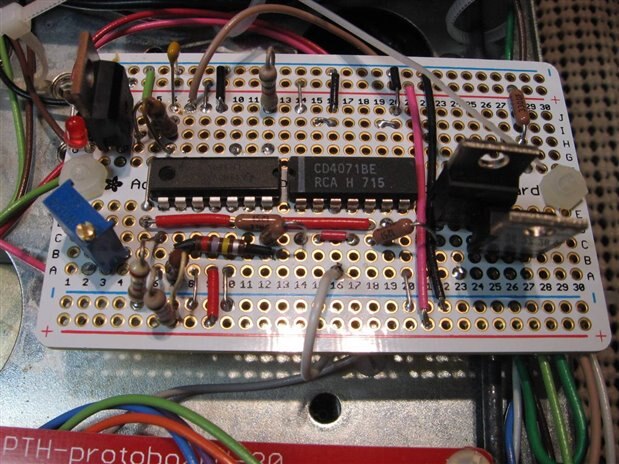
The design and production of this board was the most difficult part of building the DC Load. I made it the subject of my last blog post Episode IV. Fortunately with many hours of redesign and bread boarding it finally operated as intended. This is the board that senses the limits and shuts down the Load if #1 The input test voltage exceeds 35 volts, #2 The current through the sense resistor exceeds 6 amps, or #3 The polarity of the test voltage is reversed. The blue trimmer allows the high voltage limit to be adjusted. The current limit is set by a fixed voltage divider. The circuit that I designed for the polarity fault sensing is the first time I have ever had to use a P channel MOSFET in one of my designs.
The Circuit Board for interfacing the Meters is next.

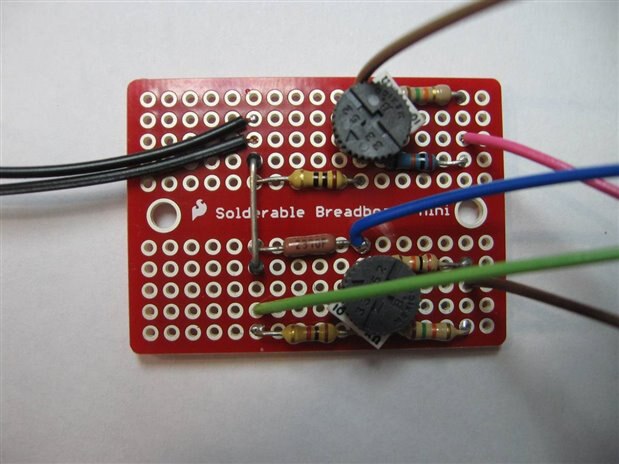
This is a simple voltage divider circuit with adjustable trimmers so that the voltage at the input and across the sense resistor can be properly displayed on the meters.
The Last Circuit that is included in the DC Load unit was not originally planned for. Fortunately my good friend DAB thought it was a good idea and now I agree. In the next section you will see pictures of the fan mounted on the back of the unit.

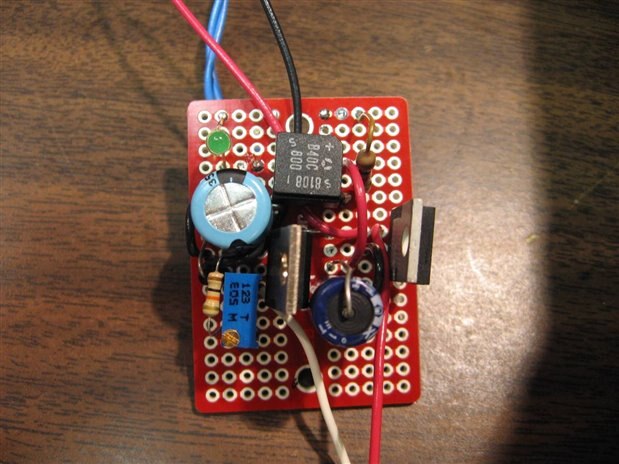
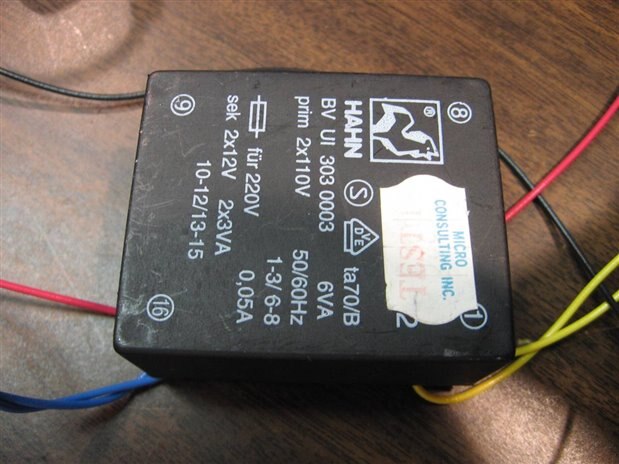
Since the fan was an after thought I had not budgeted for the power needed for the fan in my design of the power supply. I found this interesting PCB mount transformer in a Dental Sterilizer that would suit my needs. The fan control PCB therefore also includes a power supply and a regulator. I wanted the fan to be controlled by a Thermistor mounted on the MOSFET's heat sink. When the unit was assembled and tested the fan was found to turn on at 90 degrees F and stabilize at 98 degrees F while dissipating a 60 watt load. There is a resistive trimmer on the board so that the turn on temperature can be adjusted.
Here are a few over all pictures of the DC Load Unit after assembly.
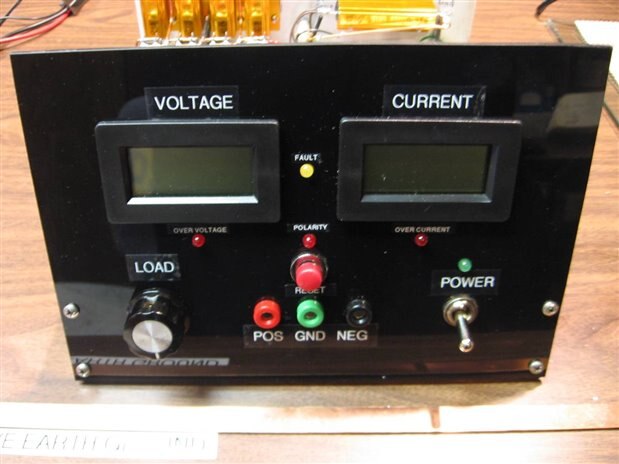
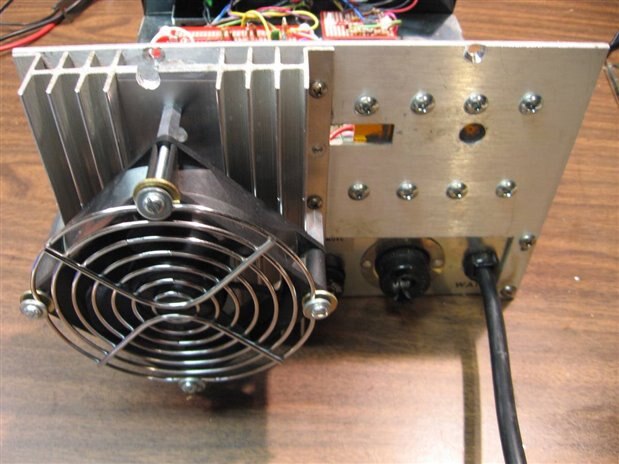
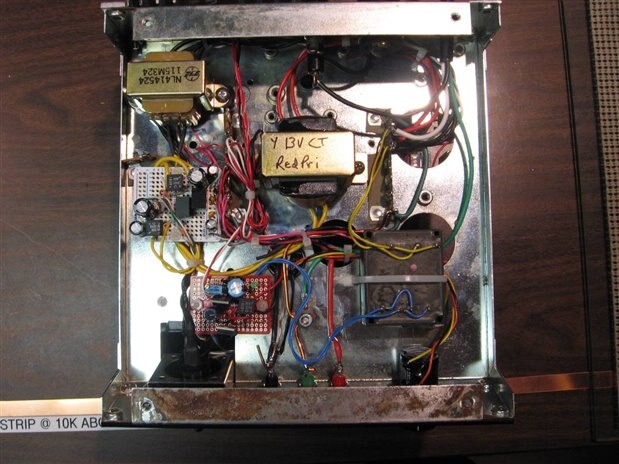
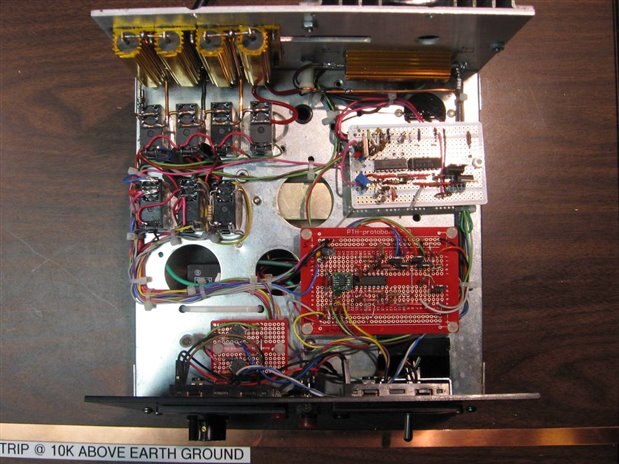
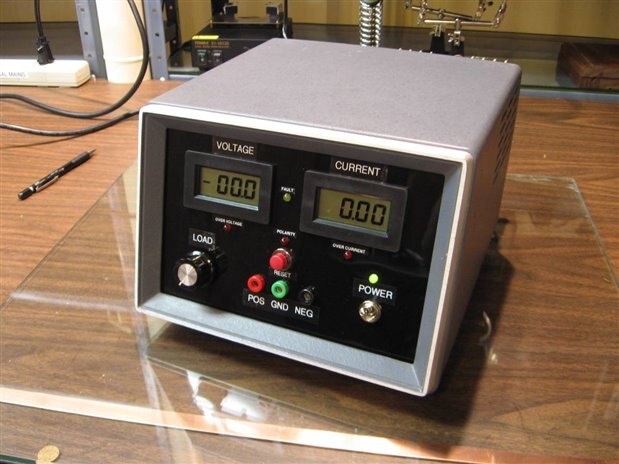
I will post one more blog on The DC Load unit in a couple days where I will do simple videos of testing the different aspects of the unit. I will test the stability of the current load over the range of the input voltage, the point at which the over voltage limit trips the cut out relay, the point at which the over current detection circuit trips the cut out relay, and the stable temperature of the unit while dissipating an input wattage.
Thank you for checking out my blog.
John
Top Comments