


In this blog post we will talk primarily about the collection of materials needed for the Load Unit and how they are assembled to make the frame work for the electronic boards and wiring that will follow. I began by selecting a suitable enclosure, which in this case was the case and chassis from an old piece of Dental Equipment called a Cavitron. Here is the unit's housing before and after it was stripped of the original electronics and fitted with a new front panel.
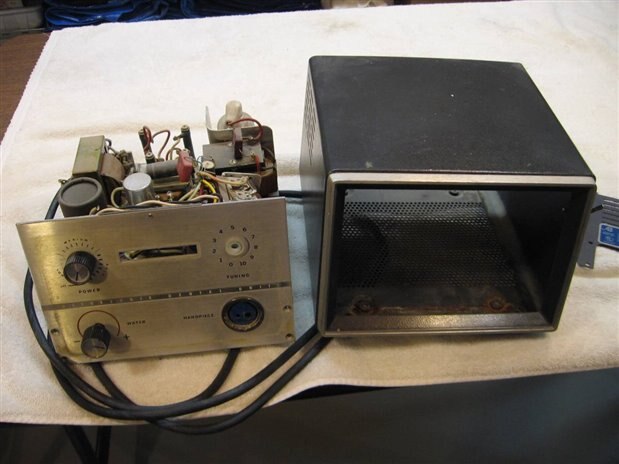
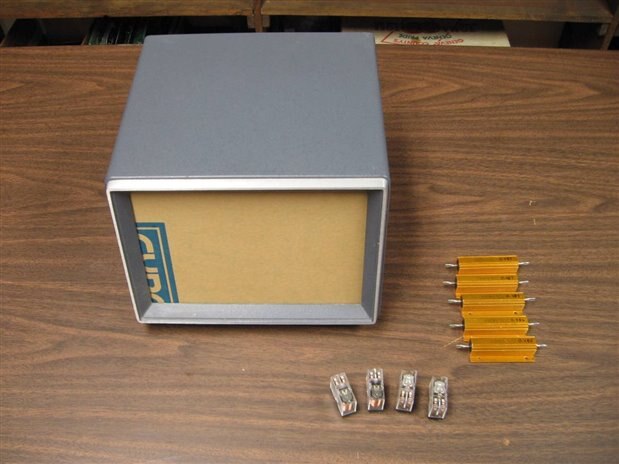
Also pictured are some of the relays and power resistors that will be used to build the unit. I have selected a piece of black opaque Plexiglas for the front control panel. I like the ability to map out the positions of the controls and instrumentation on the protective paper before cutting or drilling the panel. The protective paper is not removed until after all the holes and been cut and drilled. Here is a picture of my template for cutting the front panel of the unit.
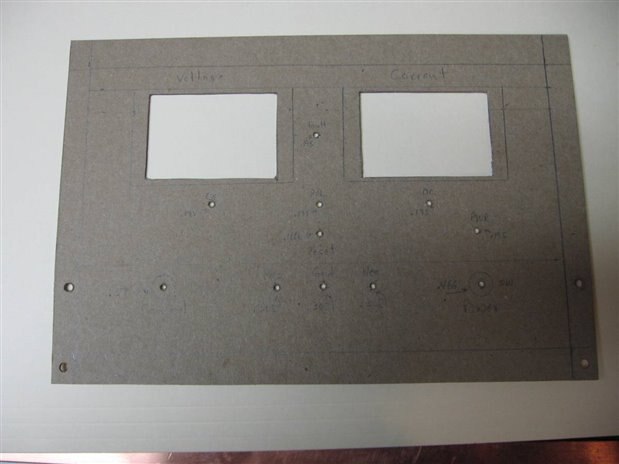
Pilot holes are drilled at each position and the actual size hole needed is noted on the template. After a bit of cutting (I used a coping saw for the rectangle holes) and drilling the paper is pealed off and the controls and instruments are installed. Incidentally the original 3mm aluminum front panel will be recut and used as the back cover. This will serve as a heat sink for the power resistors and a solid mount for the MOSFET heat sink. You can see it in place in the second picture following.
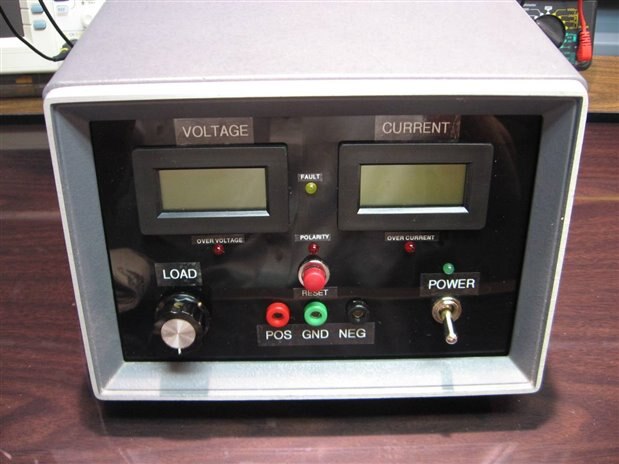
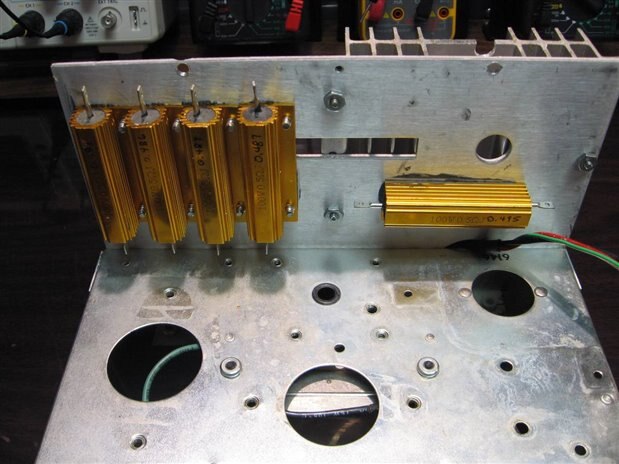
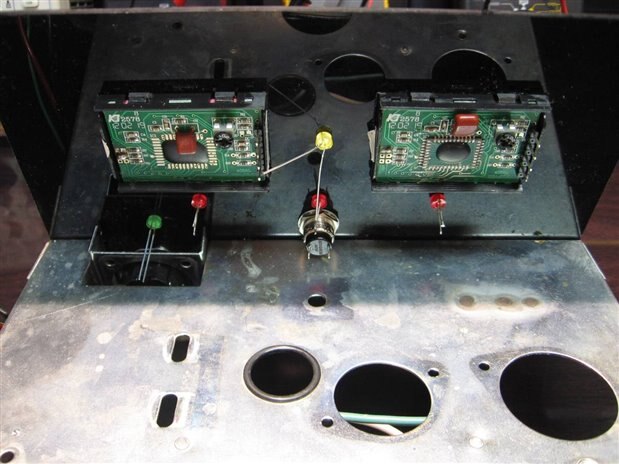
The Meters that will be used were purchased a while ago on a whim and have been sitting in my meters box for a while. Pre-selection testing revealed that they had a quirk whereby the 9 volt power supply for their electronics had to be isolated from the voltage under test. This had prevented me from using them earlier but with adequate room in this case it will be only a slight inconvenience to add a 9 volt isolated power source. You can see the back side of the meters in the second picture down. The power resistors are oversized at 100 watts each but here again the room in the case made it easy to mount them and if I am going to err it will be on the side of over engineering. The resistor that is mounted horizontally will serve as the current sense resistor for the circuitry.
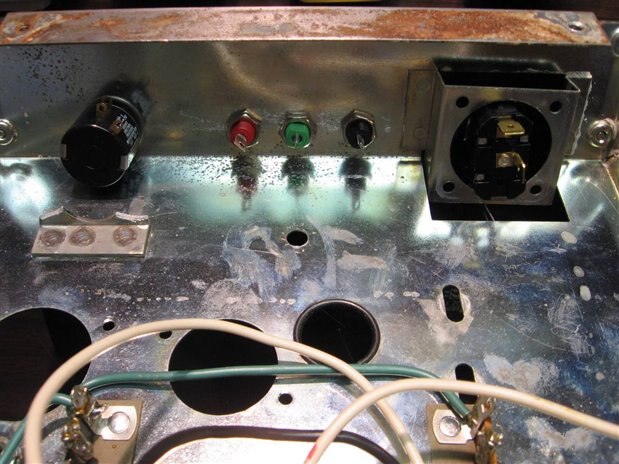
At this point externally it may look like the finished product but it is just the shell as there are no boards and the wiring between components has just begun. Here is the inside with more of the components mounted and waiting for wiring to be completed.
The assembly continues with the addition of the relays that will control the addition and subtraction of power resistors. It is important to control wiring of the components so that we do things in the proper sequence. I have also learned that if I go slowly and let my mind think things over I can often come up with improved placement and wiring arrangement. The relays are 12 volt DC DPDT 10 A which means that using them with the two relay poles in parallel will more than cover my projected 7 amp max current.
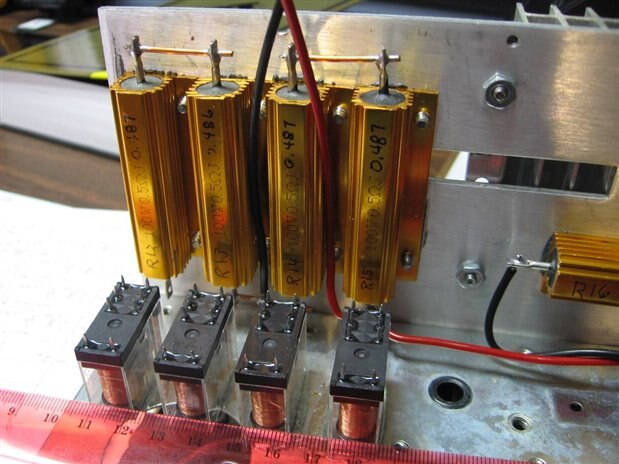
Finally we will begin to wire components together always being mindful of not getting ahead of ourselves.
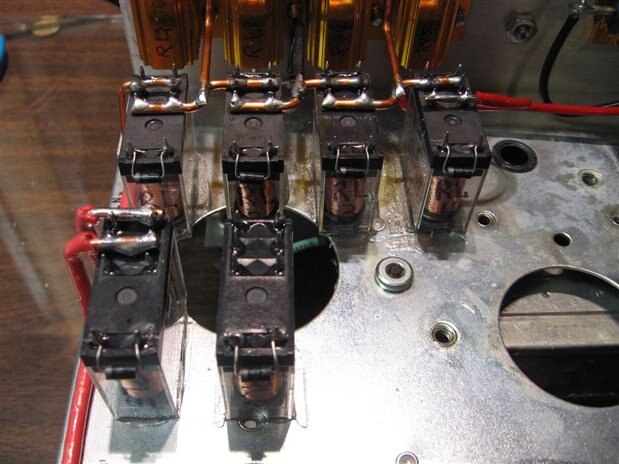
As you can see I have used 12 GA copper wire for the main test rail in the unit. Since we are dealing with fairly low resistances in the resistors, relays, and control MOSFET it is important that we minimize the resistance in the wiring. The rest of the controls circuits and boards will be wired with 22GA or 24GA stranded wire. Also notice that the components have been labeled ,where appropriate, to aid in the wiring that will follow.
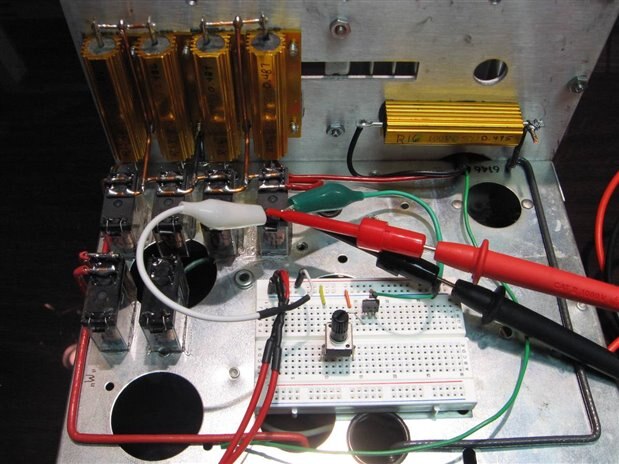
Another important part of the process is continual testing. Here is a little test jig that is being used to make certain that the relays are functioning properly and closing at the correct voltage. There is nothing worse than getting to the end of a project only to discover that one of the components, now buried in wiring, is not working.
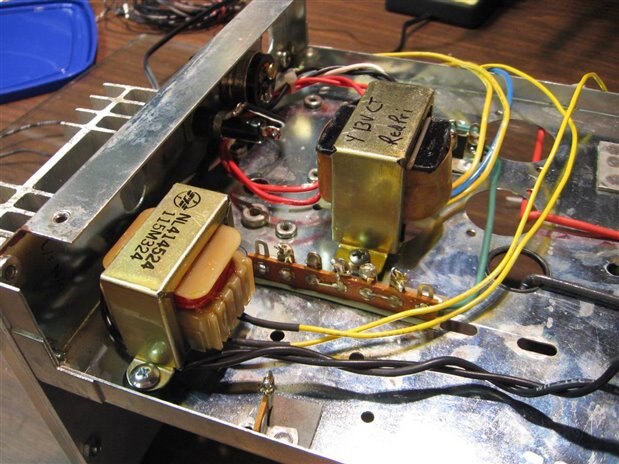
The power transformers can illustrate the need for continual testing as assembly continues. The transformer at the left is for the 9 volt isolated supply that is needed by the LCD meters. It was originally designed to be circuit board mounted so the pin type leads went straight down. I have it mounted up on stand offs and I had to bend the leads to 90 degrees and add the yellow and black wires. I did not notice it until I tested the installed transformer that I had twisted one of the primary pins and the wire that was soldered to it from the internal primary winding had been broken by the twist. At this point it was fairly simple to remove the transformer and recover and re-solder the broken wire. If I had waited for the final test, boards and other components would have been in the way of the repair.
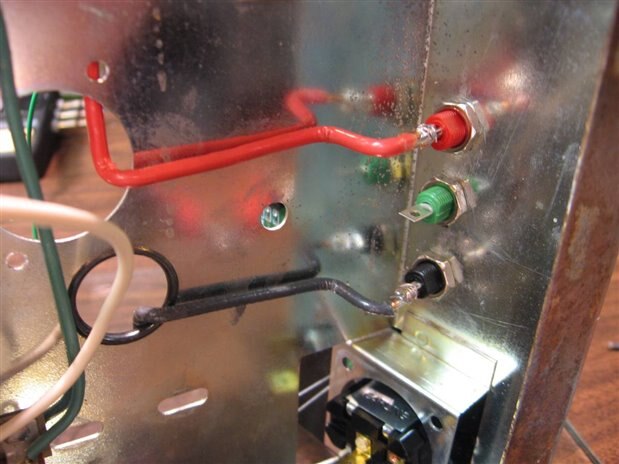
Making good connections between large gauge wires and smaller connectors can be accomplished by laying the heavy gauge wire next to the connector and then lashing it down with 24 GA solid copper wire before applying the solder. Soldering connections like these requires a high temperature, high wattage gun and a minimal time on the connection. We want to be there with the heat and the solder and then off the connection before the heat has time to melt or damage the connector or the wires insulation.
In the next Episode I will discuss my procedures for planning and fabrication of the circuit boards that will be used in the Load Unit.
Thank You
John
Top Comments