element14 Community
element14 Community
    Register Log In
  • Site
  • Search
  • Log In Register
  • Community Hub
    Community Hub
    • What's New on element14
    • Feedback and Support
    • Benefits of Membership
    • Personal Blogs
    • Members Area
    • Achievement Levels
  • Learn
    Learn
    • Ask an Expert
    • eBooks
    • element14 presents
    • Learning Center
    • Tech Spotlight
    • STEM Academy
    • Webinars, Training and Events
    • Learning Groups
  • Technologies
    Technologies
    • 3D Printing
    • FPGA
    • Industrial Automation
    • Internet of Things
    • Power & Energy
    • Sensors
    • Technology Groups
  • Challenges & Projects
    Challenges & Projects
    • Design Challenges
    • element14 presents Projects
    • Project14
    • Arduino Projects
    • Raspberry Pi Projects
    • Project Groups
  • Products
    Products
    • Arduino
    • Avnet & Tria Boards Community
    • Dev Tools
    • Manufacturers
    • Multicomp Pro
    • Product Groups
    • Raspberry Pi
    • RoadTests & Reviews
  • About Us
  • Store
    Store
    • Visit Your Store
    • Choose another store...
      • Europe
      •  Austria (German)
      •  Belgium (Dutch, French)
      •  Bulgaria (Bulgarian)
      •  Czech Republic (Czech)
      •  Denmark (Danish)
      •  Estonia (Estonian)
      •  Finland (Finnish)
      •  France (French)
      •  Germany (German)
      •  Hungary (Hungarian)
      •  Ireland
      •  Israel
      •  Italy (Italian)
      •  Latvia (Latvian)
      •  
      •  Lithuania (Lithuanian)
      •  Netherlands (Dutch)
      •  Norway (Norwegian)
      •  Poland (Polish)
      •  Portugal (Portuguese)
      •  Romania (Romanian)
      •  Russia (Russian)
      •  Slovakia (Slovak)
      •  Slovenia (Slovenian)
      •  Spain (Spanish)
      •  Sweden (Swedish)
      •  Switzerland(German, French)
      •  Turkey (Turkish)
      •  United Kingdom
      • Asia Pacific
      •  Australia
      •  China
      •  Hong Kong
      •  India
      • Japan
      •  Korea (Korean)
      •  Malaysia
      •  New Zealand
      •  Philippines
      •  Singapore
      •  Taiwan
      •  Thailand (Thai)
      • Vietnam
      • Americas
      •  Brazil (Portuguese)
      •  Canada
      •  Mexico (Spanish)
      •  United States
      Can't find the country/region you're looking for? Visit our export site or find a local distributor.
  • Translate
  • Profile
  • Settings
Personal Blogs
  • Community Hub
  • More
Personal Blogs
John Wiltrout's Blog It's Not Just the ESD (Static)
  • Blog
  • Documents
  • Mentions
  • Sub-Groups
  • Tags
  • More
  • Cancel
  • New
  • Share
  • More
  • Cancel
Group Actions
  • Group RSS
  • More
  • Cancel
Engagement
  • Author Author: jw0752
  • Date Created: 18 May 2017 8:11 PM Date Created
  • Views 882 views
  • Likes 6 likes
  • Comments 14 comments
  • emdr_machine
  • soldering_mosfets
Related
Recommended

It's Not Just the ESD (Static)

jw0752
jw0752
18 May 2017

I had a very challenging time last night. I have been working on producing a decent prototype of a machine I described in a previous blog.


https://www.element14.com/community/people/jw0752/blog/2017/04/17/prototyping-an-emdr-machine


The construction had been proceeding very well until last night as I neared completion and initial testing.
 

image


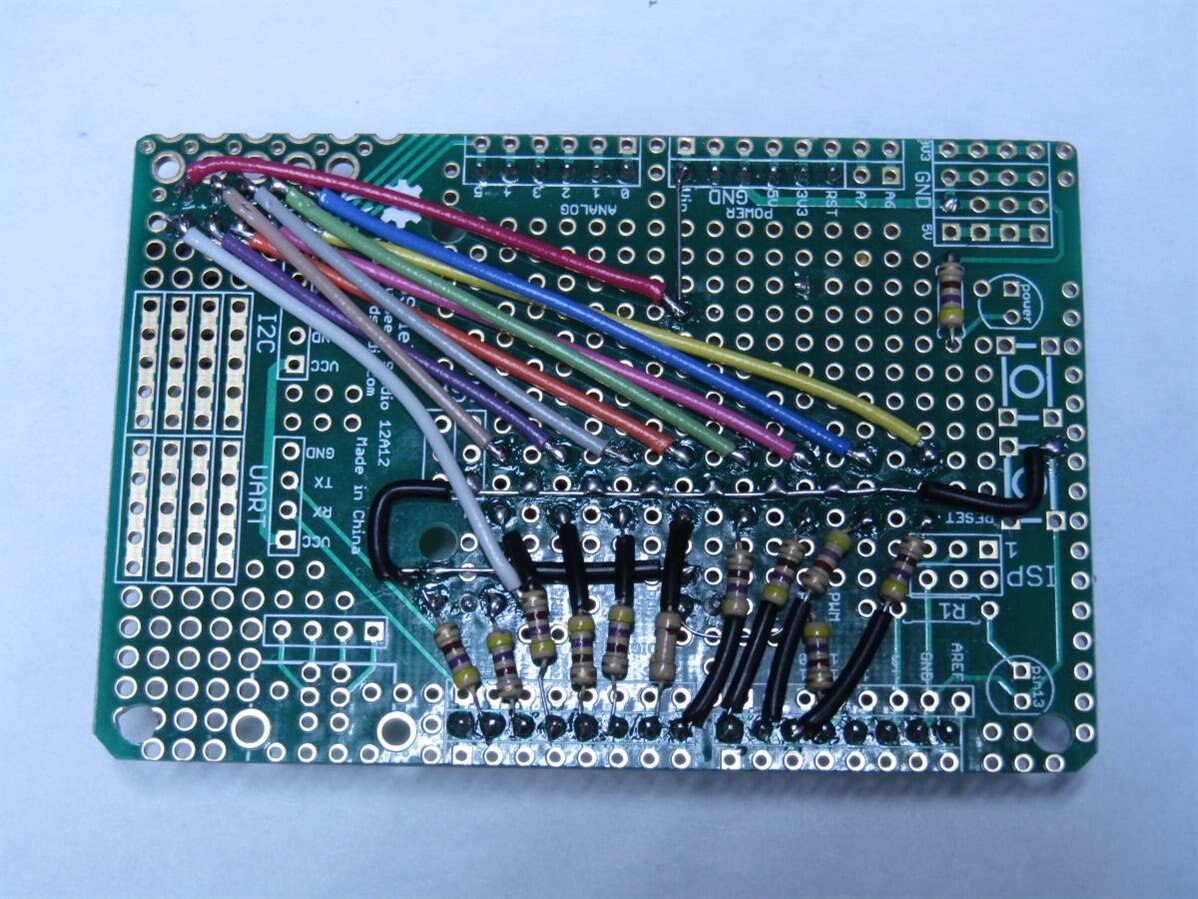
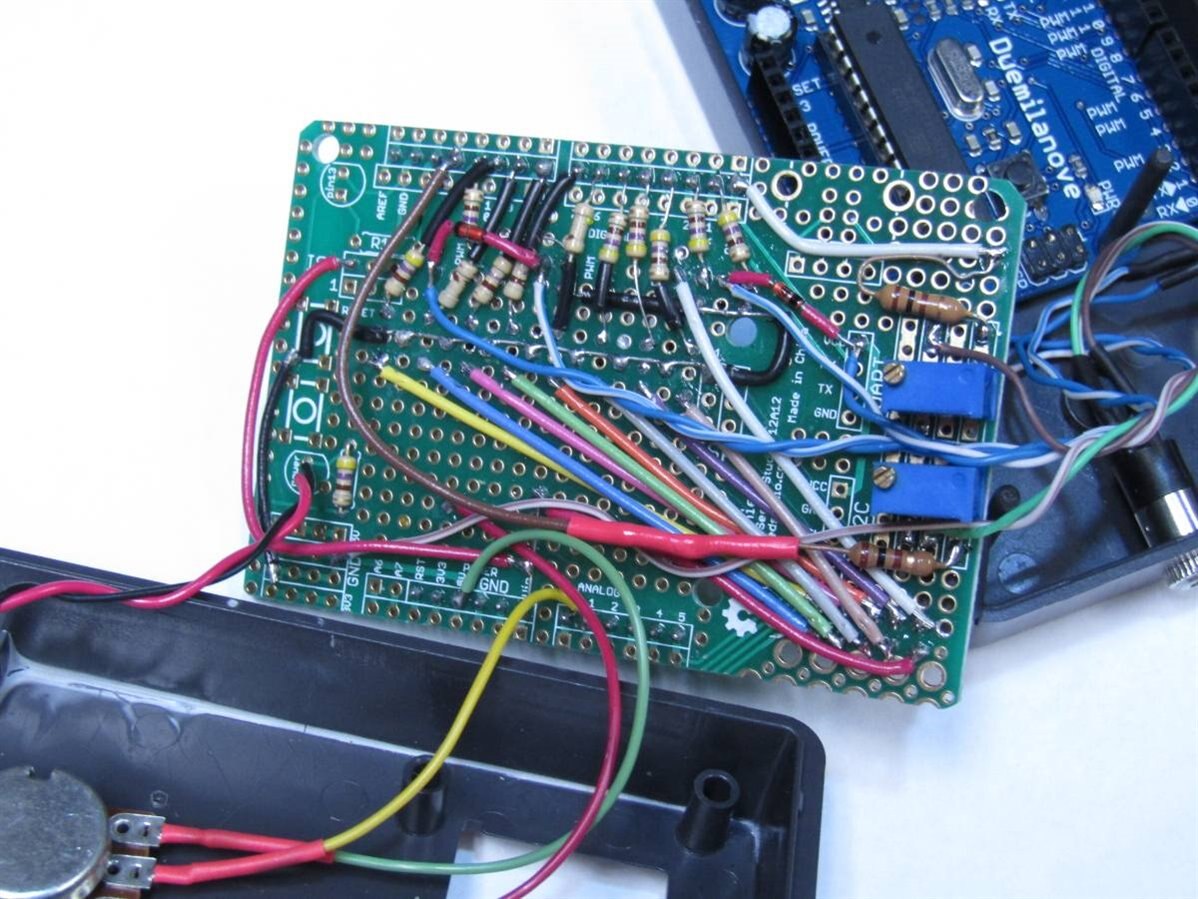
To power the LED Scanner I had decided to use the 2N7000 400mA  logic level MOSFETs. These, eleven in all,  had all been soldered into the board. and all the necessary connections had been made to the reverse side of the board. It was all neat and pretty except for one thing. It didn't work properly. It looked like most of the MOSFETs were showing a partial short from D to S.
 

image


image


A quick check with the meter showed that this was the case. 10 of the 11 MOSFET had from 10 to several K ohms of short between their drains and sources. My initial thought was that I had been careless with handling them and that static had gotten them. I hated what I had to do but I began to peal back the wiring from their contacts and with all the care and grounding straps I could find I replaced them one by one. At last reassembled I once again applied power and voila! Same problem, same appearance of partially shorted MOSFETS. So we dove back in for another go at it. This time I monitored the status of the MOSFETS as I went along. To my surprise they were being killed by me as they were being installed. At this point there was no way that static was to blame. Too many precautions and ground wires. It dawned on me at this point I was perhaps heat damaging them as I soldered them in. Because of space considerations the MOSFETs had been pulled down fairly tight to the board leaving about 3 mm of lead before entering the board. My solder iron does not have temperature control and runs at about 325 C. The data sheet for the 2N7000 says that it can tolerate 300 C on a 1/16 inch lead for 10 seconds. I think, from my experience, this is a bit optimistic. My usual technique is to minimize time on the contact but obviously something was damaging these parts. I got out the heat sink clips for leads and carefully began to replaced the remaining bad FETs. I continued to monitor them as I installed them. Since I was tacking wires and resistors to their solder pads It was necessary to make extra certain that time on the pad was minimized. I also sprayed coolant on the heat sink clips. Despite these precautions I still managed to kill a couple more. Finally after 6 hours and lots of frustration I had the machine up and running properly.


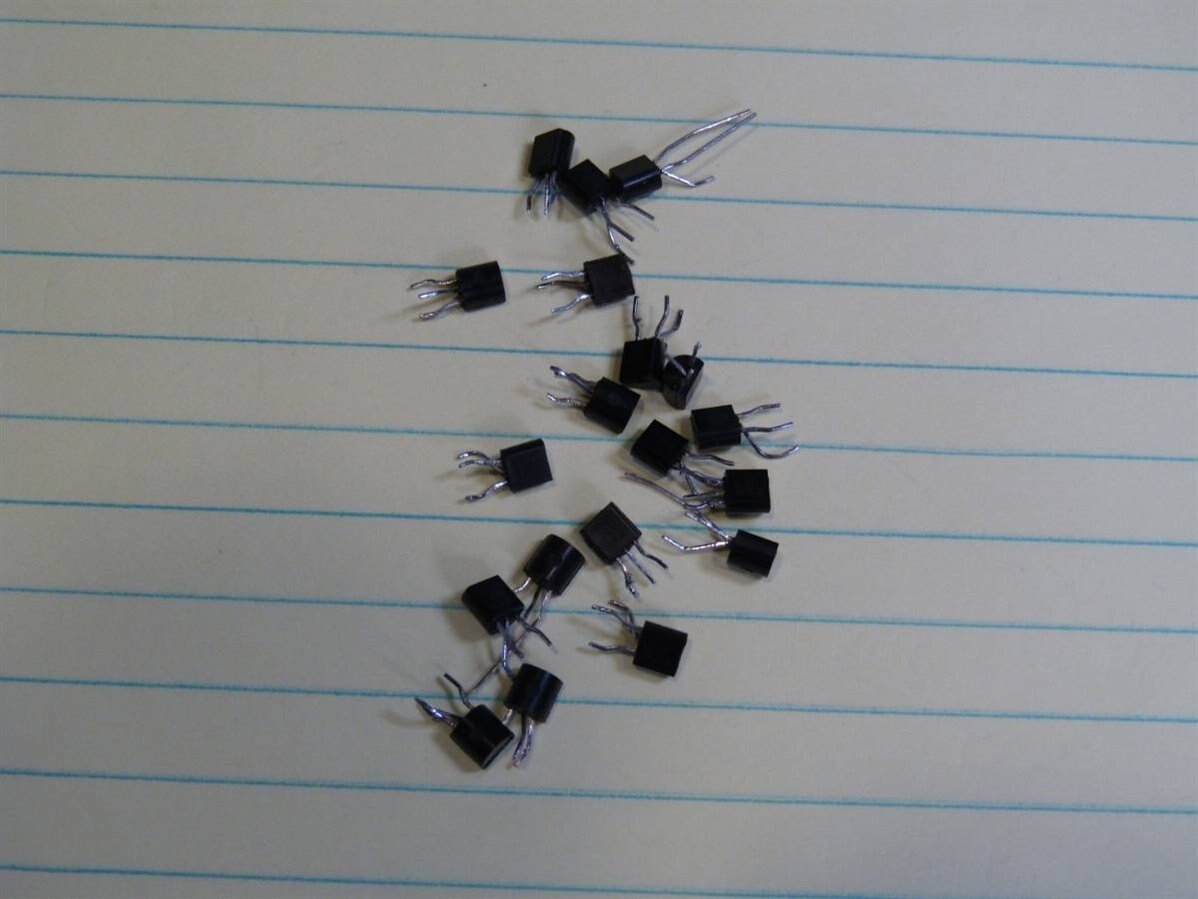
In all I killed 19 of the 2N7000 MOSFETS
 

image


Fortunately for the pocket book they are not expensive and while I did not have any left to spare after this debacle I did have exactly enough to complete the job.

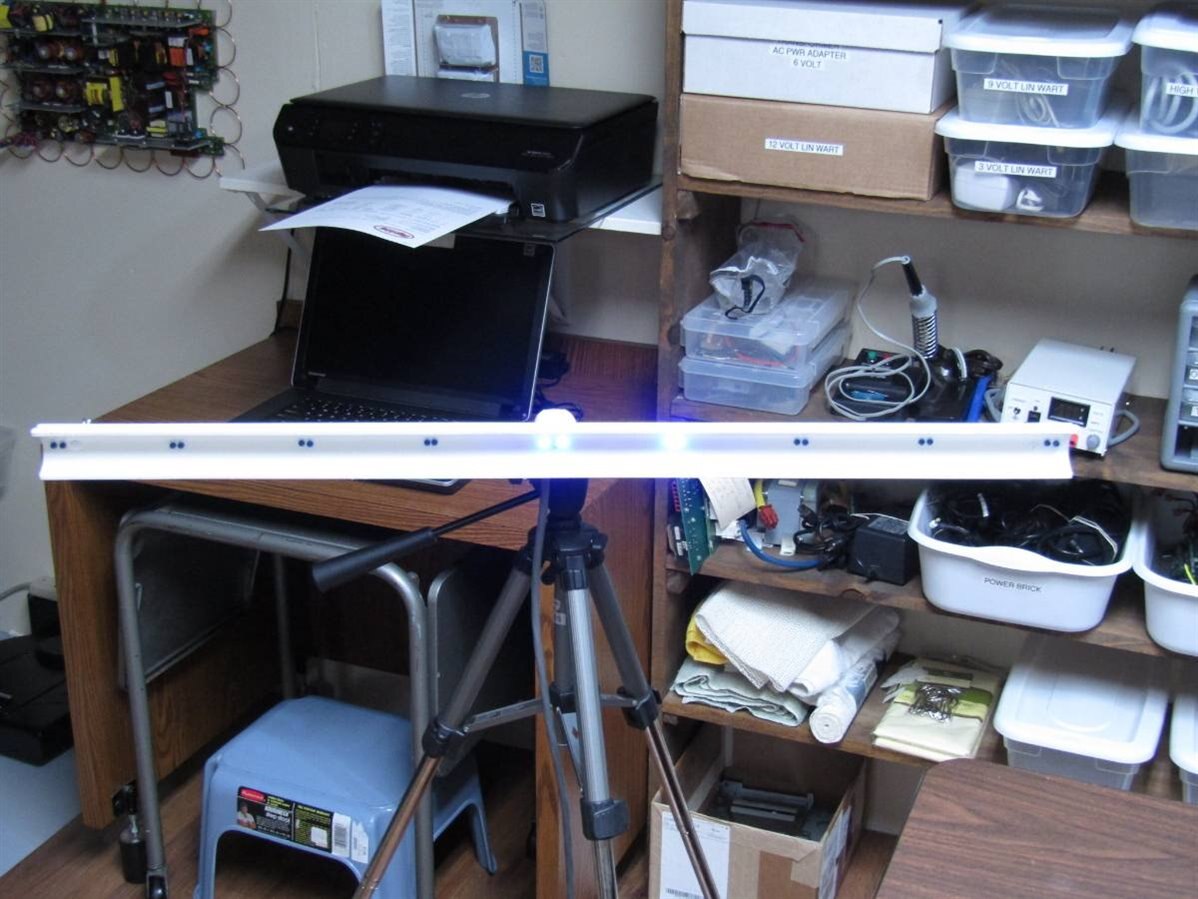
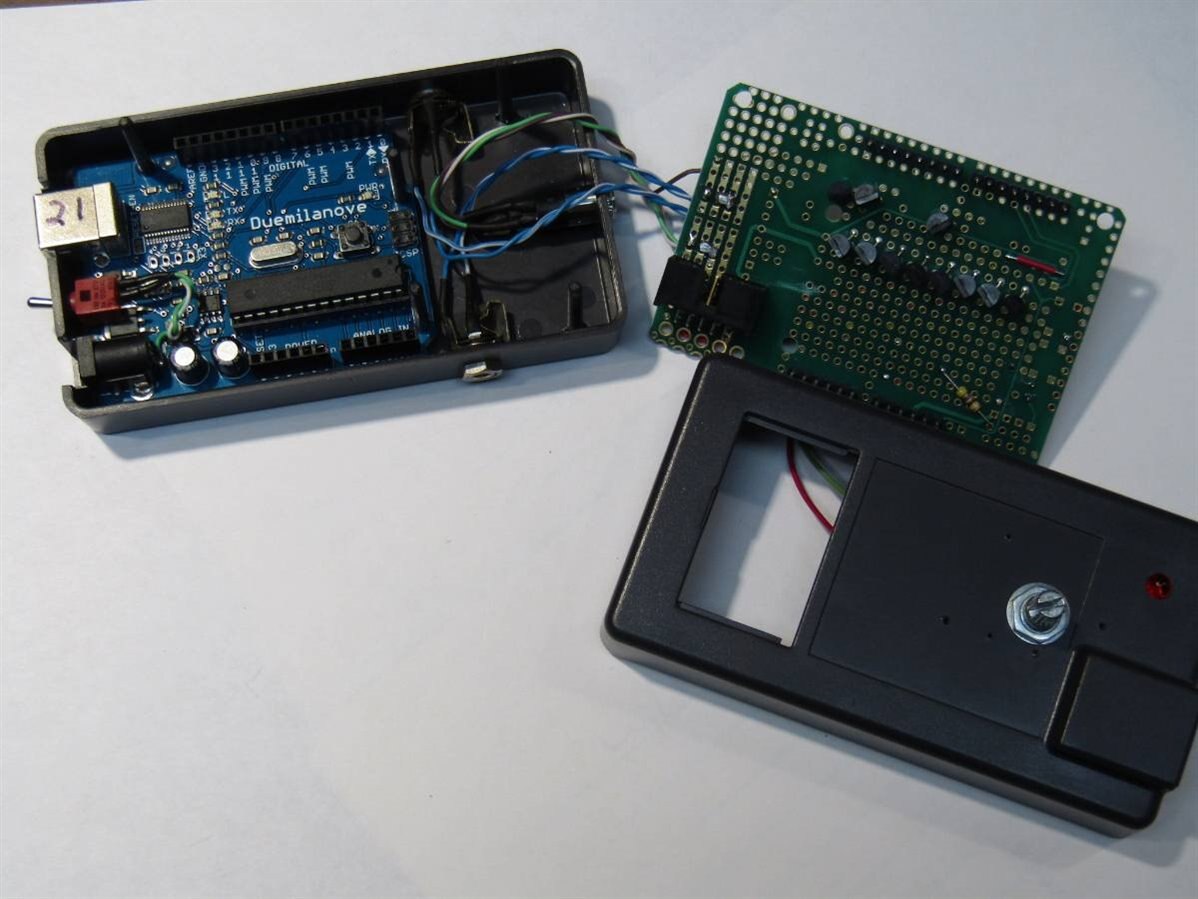
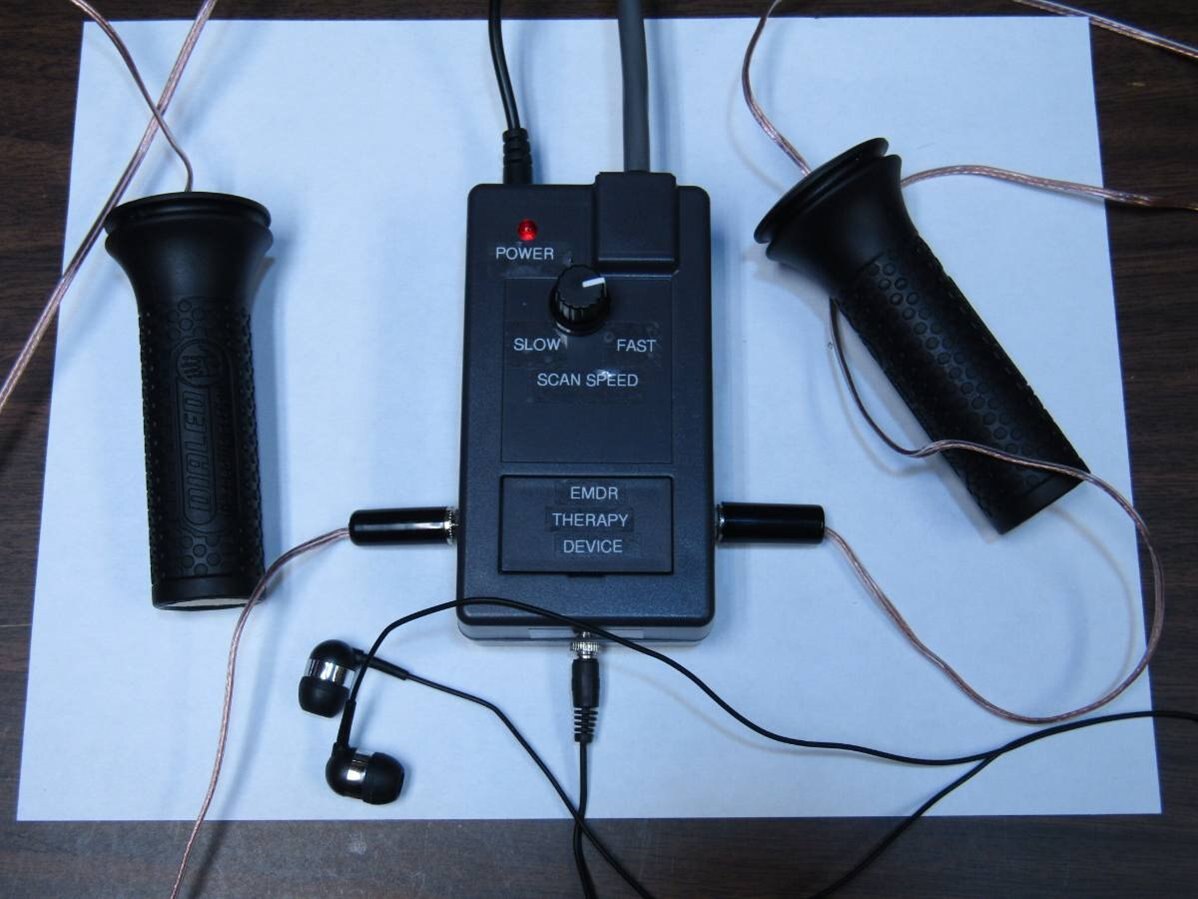
Here is a picture of the completed project:
 

image


image


Here is a short video showing how the lights scan back and forth while hand held tactile devices buzz periodically in the patient's hands and a tone is emitted in the patient's ear as the light on the bar hits each end. I personally question the therapeutic value of this device but then what do I know, I am a technician who can't even seem to install eleven MOSFETs without Killing 19 of them.


You don't have permission to edit metadata of this video.
Edit media
x
image
Upload Preview
image


John

  • Sign in to reply

Top Comments

  • rachaelp
    rachaelp over 8 years ago +5
    After having to spend so long reworking your board to replace all the broken FET's are you thinking it might be time to invest in a temperature controlled soldering iron? With the amount of stuff you build…
  • shabaz
    shabaz over 8 years ago in reply to jw0752 +5
    Hi John, I found this photo on the internet of how some parts used to ship, because they were especially static-sensitive:
  • jw0752
    jw0752 over 8 years ago in reply to rachaelp +4
    Hi Rachael, Yes the thought crossed my mind. I am at this moment running some experiments to control the power to my present iron though this will only control the high temp and not really provide any…
Parents
  • shabaz
    shabaz over 8 years ago

    Hi John,


    What a beautifully constructed machine, inside and out. The whole project, it looks fantastic!!

    Regarding the 2N7000, it might not be you, maybe the supplier isn't looking after them correctly or they are faulty in some way, e.g. faulty batch sold cheaply.


    To be honest for personal-use prototypes even basic ESD precautions can be slightly relaxed, because often ESD damage won't be noticeable except over time, and as a percentage of failures in a production environment, e.g. a few percent, which would be easily noticeable in production quantities and would impact yield. Because you're just making one item (with just a handful of parts), it would be surprising to have it fail near-100% of the time, and I know you're extremely good with your work methods, so this is unexpected.

    Having said that, for prototypes I try to order the assembly so that the gate-source resistors are soldered first, so that the MOSFETs have something to prevent charge building up as soon as they are soldered to the board. Another approach could be to have some copper wire strand wrapped around the gate and source (or all three pins if it is easier), and solder the MOSFET to your board (and resistors), and then unwrap the wire after the MOSFET area of the circuit is all soldered in.

    I work on carpet, and even if I don't clip the wrist strap on, I just occasionally touch the nearest earthed object, and I've not had noticeable ESD issues in prototypes yet (I'm sure I am damaging some slightly, bit it's not noticeable just yet).

    One other thing is that the iron is earthed here (through 1M resistance), but I don't know in the US if soldering irons have the same thing.


    The temperature of your iron is about right, provided the tip isn't too large (I am guessing the tip size is just fine since the soldering looks quite neat). As a data point, the tip I generally use is about 2mm diameter, and for me I feel comfortable with the temperature set to about 330 degrees (and normal leaded solder). With a large tip the heat transferred is bigger, but the 2-3mm or so tip should be really good with through-hole parts.


    EDIT: 3mm of wire between MOSFET body and the circuit board does seem a bit too short, I've not done them pushed in so much, usually I leave the body of the MOSFET/BJT higher up on the board. Also as rachaelp says, the temperature-controlled irons make a big difference.

    • Cancel
    • Vote Up +4 Vote Down
    • Sign in to reply
    • More
    • Cancel
  • jw0752
    jw0752 over 8 years ago in reply to shabaz

    Thanks Shabaz,

    I appreciate your insights and the fact that we seem to have similar techniques makes me feel better about the failure I experienced. I have to admit that it threw me for a loop as suddenly all the craft I thought I had was failing me. I have some more of the 2N7000 coming and I will be doing a little experimenting with them when they arrive.

    John

    • Cancel
    • Vote Up +3 Vote Down
    • Sign in to reply
    • More
    • Cancel
  • shabaz
    shabaz over 8 years ago in reply to jw0752

    Hi John,


    I found this photo on the internet of how some parts used to ship, because they were especially static-sensitive:

    image

    • Cancel
    • Vote Up +5 Vote Down
    • Sign in to reply
    • More
    • Cancel
Comment
  • shabaz
    shabaz over 8 years ago in reply to jw0752

    Hi John,


    I found this photo on the internet of how some parts used to ship, because they were especially static-sensitive:

    image

    • Cancel
    • Vote Up +5 Vote Down
    • Sign in to reply
    • More
    • Cancel
Children
  • balearicdynamics
    balearicdynamics over 8 years ago in reply to shabaz

    Hi Shabaz, in many other cases the plastic where the pin of the static risky components are boxed is anti-static material. I have used it in past to make the first tests for custom tablet pens image


    Enrico

    • Cancel
    • Vote Up +2 Vote Down
    • Sign in to reply
    • More
    • Cancel
  • jc2048
    jc2048 over 8 years ago in reply to shabaz

    image


    Here's some antistatic tube from the mid seventies. This is before the plastic type became common and they used extruded aluminium. Wonder if those CMOS parts still work?

    • Cancel
    • Vote Up +4 Vote Down
    • Sign in to reply
    • More
    • Cancel
element14 Community

element14 is the first online community specifically for engineers. Connect with your peers and get expert answers to your questions.

  • Members
  • Learn
  • Technologies
  • Challenges & Projects
  • Products
  • Store
  • About Us
  • Feedback & Support
  • FAQs
  • Terms of Use
  • Privacy Policy
  • Legal and Copyright Notices
  • Sitemap
  • Cookies

An Avnet Company © 2025 Premier Farnell Limited. All Rights Reserved.

Premier Farnell Ltd, registered in England and Wales (no 00876412), registered office: Farnell House, Forge Lane, Leeds LS12 2NE.

ICP 备案号 10220084.

Follow element14

  • X
  • Facebook
  • linkedin
  • YouTube