


Earlier this summer I took a Radio Controlled Aircraft class at our local community college (Portland Community College - PCC). The class was advertised as a beginner's class to learn about regulations and techniques relating to flying radio controlled aircraft including drones. I found that the class of 8 had only 3 newbies including myself. The others were taking it as an opportunity to have a "safe" place to fly (the school gymnasium) for a couple of hours a week. It was a fun class and I got to learn a lot about RC aircraft. The instructor had about every model of drone that DJI makes (Spark, Mavic, Phantoms, etc). And others were flying helicopters and fixed wing aircraft and micro drones. Because of the enclosed environment these aircraft were all electric powered.
I decided after a couple of weeks that I wanted to get my own personal drone and after a little research I purchased a Tello which is a Chinese drone made by Ryze that uses DJI technology. It is a small lightweight drone that falls into the "toy" class so it does not need to be registered and doesn't require a license to fly (technically you need an FAA license for drones over 0.5 pounds, but the license only costs $5 for 2 years). It has quite an impressive feature set for an inexpensive drone - it was $99 when I bought it, but is only $84 now. Here is a link to it on Amazon: https://www.amazon.com/Tello-CP-PT-00000252-01-Quadcopter-Drone/dp/B07BDHJJTH/ref=sr_1_1?ie=UTF8&qid=1532660177&sr=8-1&k…

Tello dimensions: 8" diagonally across the propeller guards and 1.5" high. Weight is 87 grams.
I thought I'd share my experience with this drone over a series of blogs and discuss some of the tradeoffs associated with the Tello.
Why I chose the Tello
When I started researching drones I came across a number of articles from this year's CES (Consumer Electronics Show) about the incredible price/performance of the Tello.
What caught my attention was the fact that it uses a Movidius Myriad VPU (Vision Processing Unit) for both its flight controller and video processor. I have been playing with the Intel Neural Compute Stick and the Google AIY Vision Kit which both use the Movidius VPU, so the possibility of customizing the drone is appealing. It turns out that there is quite a large community of "hackers" that are tweaking the Tello. I'll get to that in another blog post.
Here are some of the differentiating features for the under $100 price point:
1) High resolution camera: HD video 1280x720 @ 30 fps, 5M pixel photos 2592x1936
2) Long flight time: 13 minutes
3) Hover control (position/altitude hold): Uses down looking camera and IR sensors (no GPS)
4) Auto takeoff and landing
5) Intelligent flight modes (can fly circles and do flips), no homing due to lack of GPS
The drone uses standard 802.11n wifi (2.4GHz) for control and video transmission. This can be both good news and bad news. It does not use a dedicated controller. It is typically controlled with a phone or tablet using an iOS (>=9.0) or Android (>=4.4.0) app. I use my iPhone 6 to control it. I'll describe my setup later.
Sample Pictures using Tello Camera
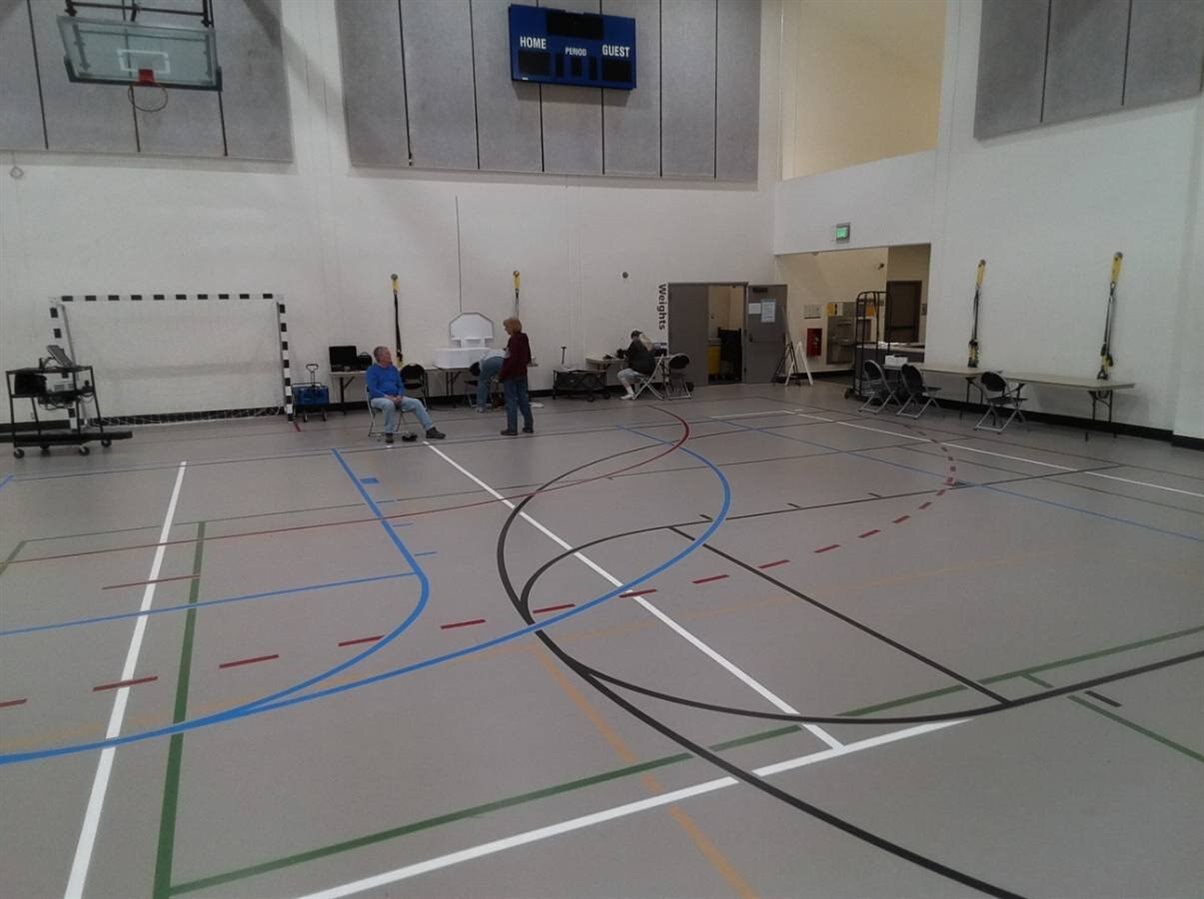
Inside the PCC Gymnasium during class

The front of my house taken from the street
Video of Tello flying
In the backyard - taking off, doing flips (forward, back, left, right) and landing
Video taken with the Tello camera during flips
Flipping is an Intelligent Flight Mode, so the Tello is in full control. You can get a feel for its control loop by the time it takes to stabilize and how far the position moves after the flip.
Top Comments