element14 Community
element14 Community
    Register Log In
  • Site
  • Search
  • Log In Register
  • Community Hub
    Community Hub
    • What's New on element14
    • Feedback and Support
    • Benefits of Membership
    • Personal Blogs
    • Members Area
    • Achievement Levels
  • Learn
    Learn
    • Ask an Expert
    • eBooks
    • element14 presents
    • Learning Center
    • Tech Spotlight
    • STEM Academy
    • Webinars, Training and Events
    • Learning Groups
  • Technologies
    Technologies
    • 3D Printing
    • FPGA
    • Industrial Automation
    • Internet of Things
    • Power & Energy
    • Sensors
    • Technology Groups
  • Challenges & Projects
    Challenges & Projects
    • Design Challenges
    • element14 presents Projects
    • Project14
    • Arduino Projects
    • Raspberry Pi Projects
    • Project Groups
  • Products
    Products
    • Arduino
    • Avnet & Tria Boards Community
    • Dev Tools
    • Manufacturers
    • Multicomp Pro
    • Product Groups
    • Raspberry Pi
    • RoadTests & Reviews
  • About Us
    About the element14 Community
  • Store
    Store
    • Visit Your Store
    • Choose another store...
      • Europe
      •  Austria (German)
      •  Belgium (Dutch, French)
      •  Bulgaria (Bulgarian)
      •  Czech Republic (Czech)
      •  Denmark (Danish)
      •  Estonia (Estonian)
      •  Finland (Finnish)
      •  France (French)
      •  Germany (German)
      •  Hungary (Hungarian)
      •  Ireland
      •  Israel
      •  Italy (Italian)
      •  Latvia (Latvian)
      •  
      •  Lithuania (Lithuanian)
      •  Netherlands (Dutch)
      •  Norway (Norwegian)
      •  Poland (Polish)
      •  Portugal (Portuguese)
      •  Romania (Romanian)
      •  Russia (Russian)
      •  Slovakia (Slovak)
      •  Slovenia (Slovenian)
      •  Spain (Spanish)
      •  Sweden (Swedish)
      •  Switzerland(German, French)
      •  Turkey (Turkish)
      •  United Kingdom
      • Asia Pacific
      •  Australia
      •  China
      •  Hong Kong
      •  India
      •  Japan
      •  Korea (Korean)
      •  Malaysia
      •  New Zealand
      •  Philippines
      •  Singapore
      •  Taiwan
      •  Thailand (Thai)
      •  Vietnam
      • Americas
      •  Brazil (Portuguese)
      •  Canada
      •  Mexico (Spanish)
      •  United States
      Can't find the country/region you're looking for? Visit our export site or find a local distributor.
  • Translate
  • Profile
  • Settings
Arduino
  • Products
  • More
Arduino
Documents Back to School Wishlist - featuring Arduino and Raspberry Pi!
  • Blog
  • Forum
  • Documents
  • Quiz
  • Events
  • Polls
  • Files
  • Members
  • Mentions
  • Sub-Groups
  • Tags
  • More
  • Cancel
  • New
Join Arduino to participate - click to join for free!
Actions
  • Share
  • More
  • Cancel
Engagement
  • Author Author: dychen
  • Date Created: 26 Aug 2022 3:37 PM Date Created
  • Last Updated Last Updated: 28 Mar 2023 12:22 PM
  • Views 28622 views
  • Likes 10 likes
  • Comments 33 comments
Related
Recommended

Back to School Wishlist - featuring Arduino and Raspberry Pi!


It's fall again and students are headed back to school. Raspberry Pi and Arduinos are great tools for experimenting and learning; every engineering student should have one, or both! For this wishlist, we've put together some interesting accessories and starter kits that will get you on your way with Pi and Arduino projects.

Let's get started with the basics!

Breadboard
For most projects, you'll need a breadboard. They'll let you tweak your circuits without having to solder. Note: some of the starter packs below already contain breadboards.
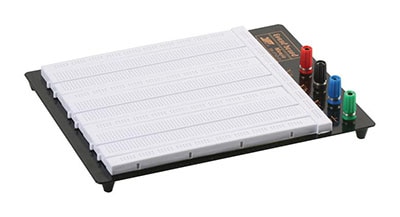
Breadboard

Buy Now


Jumper Kit
To wire things up on the breadboard, you'll need wires of different lengths. Rather than cutting and stripping wires youself, jumper kits come in convenient lengths and colors for easy organization.
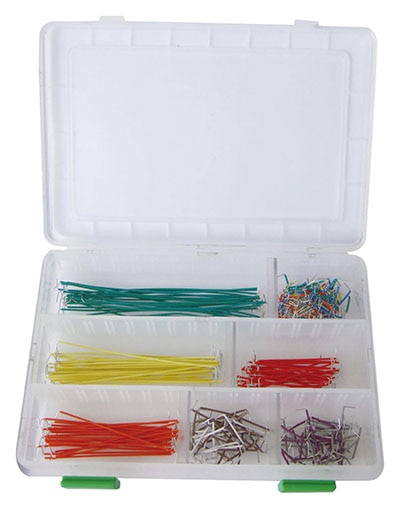
Jumper Kit

Buy Now

Arduino UNO
Most of you already know the Arduino - it's essentially a microcontroller that you can program to do almost anything. Arduinos have a variety of available shields, which let you add sensors, motors, displays, and pretty much anything else you need for your project.
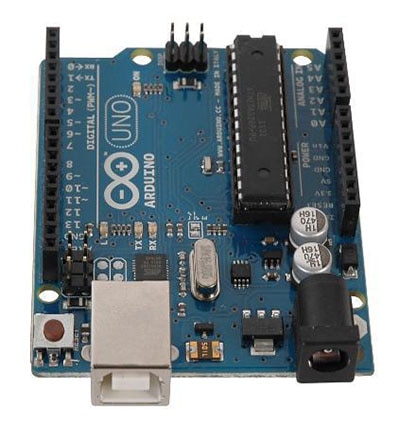
Arduino UNO

Buy Now

Raspberry Pi
Raspberry Pi is a fully programmable single board Linux computer. Where Arduinos have available shields, you can get HATs (Hardware Attached on Top) for Pi. HATs also let you expand your Pi with whatever you need for your project, and there's a HAT available for pretty much everything.

Raspberry Pi kit

Buy Now

Raspberry Pi Education Parts Kit
Assembled by the Raspberry Pi Foundation, this Education Parts Kit contains pretty much everything you need to get started, including breadboard, LEDs, a variety of sensors, resistors, capacitors, and jumpers.
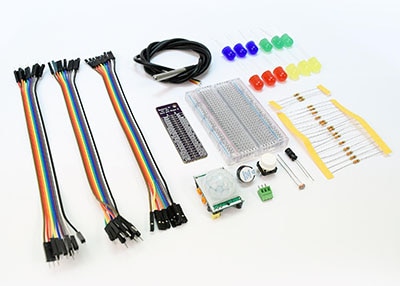
Pi Education Parts Kit

Buy Now


Grove Kits
Now let's look at some kits. Grove is a prototyping system by SeeedStudio that takes a modular approach to electronics. The Grove system starts with a base unit (HAT or Shield), which provides a bunch of Grove connectors that you can add modules to. SeeedStudio calls the base unit the "stem", and the modules, the "twigs". Grove connectors make it a little easier to add and swap modules in your project.

Grove Starter Kit for Arduino 
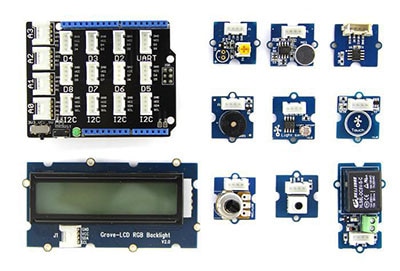
Grove Starter Kit

Buy Now

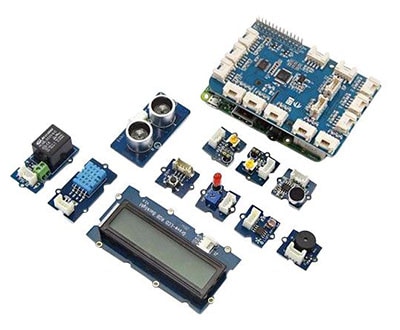
GrovePi Starter Kit for Raspberry Pi

GrovePi Starter Kit

Buy Now

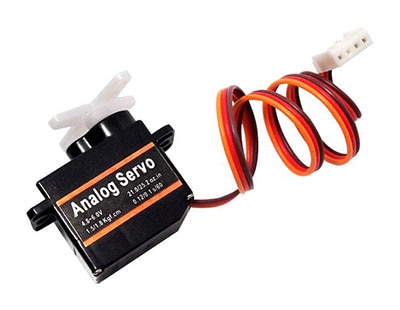
Servo Motor

Servo Motor

Buy Now

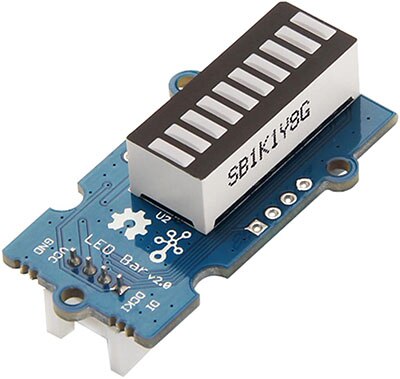
LED Segment

Segment LED

Buy Now

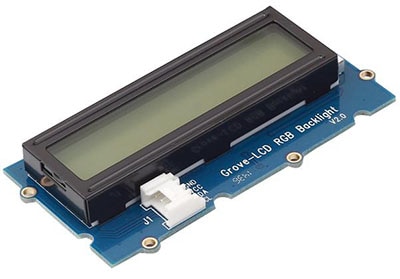
LCD Display

LCD Display

Buy Now

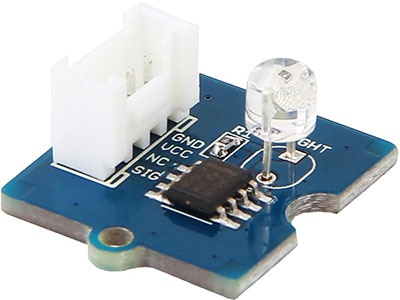
Light Sensor

Light sensor

Buy Now

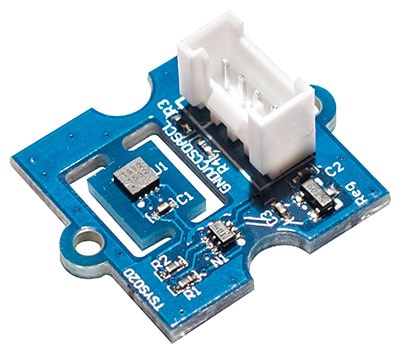
Temperature Sensor

Temperature Sensor

Buy Now

Sensor Board, Temperature, Humidity, Pressure and Gas Sensor, for Arduino
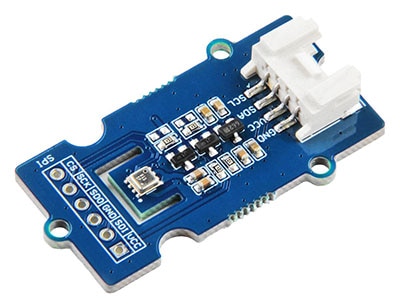
BME680 Sensor Board

Buy Now

For more Grove-compatible products, click here.

Other Cool Kits for Pi/Arduino

Arduino Starter Kit
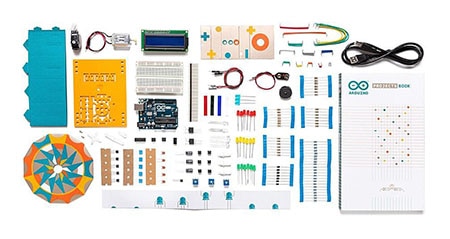
Arduino Starter Kit

Buy Now

Arduino Starter Kits are available in different languages.

Arduino Student Kit
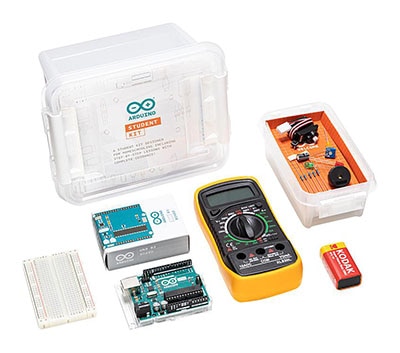
Arduino Student Kit

Buy Now


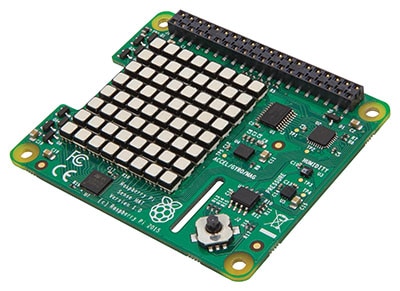
Pi Sense HAT

Pi Sense HAT

Buy Now


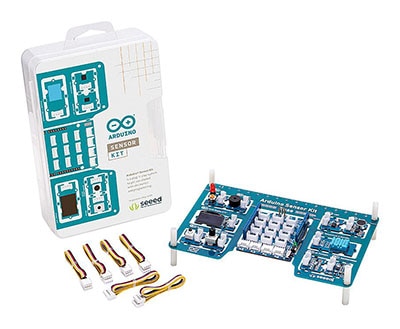
Arduino Sensor Kit

Arduino Sensor Kit

Buy Now


Tinkerkit Braccio Robot Arm

Tinkerkit Braccio Robot Arm

Buy Now


  • back to school
  • education
  • raspberry pi
  • wishlist
  • arduino
  • Share
  • History
  • More
  • Cancel
  • Sign in to reply
  • me_Cris
    me_Cris over 3 years ago

    I first started using Arduino, at the advice of my teacher, because we had no boards in the lab, and I was using the Proteus simulator. Together with some colleagues we bought some small kits. The Arduino Uno was the base, the version with a DIP microcontroller, so that I could change it easily if I destroy it, plus I could make connections quite easily, with jump wires, on the board with the female pin bar. Step by step I learned how to use the board, starting from the power supply, PWM/ADC pin functionality, I2C connection with other modules. I remember that it took me quite a long time to make a circuit with led matrix or 7 segment display, LCD display, there were many things involved, many wires, resistors, if something didn't work I redid the circuit. I only had one breadboard, I filled it quickly, then what to do, if I wanted to do another project, I had to empty the breadboard. Then I got my hands on second breadboard and third, I was a bit fed up with making and unmaking circuits all day long. There are some really basic stuff that we should start with, extender boards, proto board, maybe even multiplexers like 74HC595, hardware stuff, mother/father pins/wires, test board. You also recover parts from scrap boards, you can't always buy all the parts, resistors, capacitors, LEDs, diodes, we can take them from scrap boards. I could actually find quite a few ULN2003 or ULN2803 in TV receivers, 7 segment displays as well. Later I learned to make homemade PCBs, and most of them were of the type of modules, with displays, to which I added an RTC DS3231, a temperature and humidity sensor DHT11, LDR, ultrasonic HC SR04, sensor, usual stuff. For projects with sensors, we can add an SD card module, to record the readings and later we can add them to an excel and create graphs to be able to observe the evolution. Then, there are electromechanical components, a dc motor, servomotor, parts that produce movement.
    Depending on the project we propose to realize, we also choose our board, there are quite a few Arduino boards, but maybe the budget we have also matters. To an Arduino Uno. Mega, Nano mostly lack wireless connectivity, so modules with Bluetooth HC05, Wi-Fi or GSM must be at hand. Besides these, maybe we can add a display, LCD 16x2, 20x4 and so on, TFT/OLED to make them more colorful.
    Modules such as PAJ7620 or VL53L1X can bring remote control, through gestures, such as ultrasonic. I would be interested in a PAJ7620, a feature that is also used in the automotive field, controlling the infotainment system.
    https://wiki.keyestudio.com/KS0458_Keyestudio_PAJ7620_Gesture_Recognition_Sensor_Module
    I think a GSM/GPS module would work.
    There are enough modules, something new always appears.

    https://www.optimusdigital.ro/en/sensors/1326-ina219-i2c-current-sensor-with-i2c-interface.html

    https://www.optimusdigital.ro/en/others/990-ac-voltage-sensor-module.html


    Raspberry Pi is a more developed, more complex, more powerful but also more expensive board. I don't know them very well, what are the differences between the models on the market, but I noticed that there are quite a few Raspberry Pi boards that don't have an ADC block, which I don't think is something difficult to add. So, for an RPi I would mention an ADC module from the start, I saw that the most popular are ADS1015/ADS1115 and MCP3008. Of course, the RPi is more of a development board itself, a single board computer, so I don't think it was made for breadboard projects. Here we could use RPi Pico, I saw it is quite friendly.
    Also for the RPi I have to mention a case plus cooling elements, radiator and fan. Those integrated on the board can reach quite high temperatures and there is a risk of destroying them if they are not cooled.
    As electronic modules, I noticed that video cameras are used more often, the PCA9685 PWM module, which has more channels. I don't know to mention anything else more important, there are many modules compatible with Arduino, so you have plenty to choose from.
    https://www.adafruit.com/product/815

    I would also mention some stuff that does not have much to do with Arduino or RPi, but helps a lot, such as multimeter, soldering iron, adjustable voltage power supply, hand tools.

    Given the energy crisis, I think that projects like home automation, environmental sensors and smart electric panels will be more popular.

    From me:

    https://drive.google.com/file/d/1ylQeMokW7ybVGlOpifmpB-1dc3eQp9bt/view?usp=sharing

    https://drive.google.com/file/d/1fqxCe_1y9ygpc0VRRgdkv0a1WWviEKRN/view?usp=sharing

    https://drive.google.com/file/d/1DRqMU4BW39Ush5N5W-TmMvCy5B6PEEvo/view?usp=sharing

    https://drive.google.com/file/d/1_uOWh1LdRBWefGLQrF361GIcU0SVGnj8/view?usp=sharing

    imageimageimageimageimageimage

    • Cancel
    • Vote Up 0 Vote Down
    • Sign in to reply
    • More
    • Cancel
  • shabaz
    shabaz over 3 years ago in reply to beacon_dave

    Good question. I'm not sure. I didn't study computer science, but as far as I'm aware, at the place where I studied, the computer scientists did a course in digital electronics and it was not too different as a subset of what the electronics engineering students studied in that area. Microcontroller programming formed part of lab exercises. It wasn't a topic in it's own right.

    I think at uni level, choice of microcontroller makes no significant difference, since it's a small part of the studies, and we learned C on a Unix box basically. Microcontroller interaction was in practical labs and final year projects. If we had to drive an LCD then we had to do it from scratch; no microcontroller libraries existed that we were aware of.

    We used a 68HC11 dev-board for those labs at the time, and so naturally a lot of students (me included) ended up using that for end-of-year project work too. We had no libraries (like Arduino) and what you're saying is right, it forces you to look at the data sheets. We had 68HC11 reference manuals to refer to and they were easy to understand, Motorola documentation teams wrote well.

    The electronics engineers got to study C too, and other languages like (say) Matlab were just a part of topics such as signal processing, as a means to an end. The computer scientists would have learned a lot more about software of course, but I don't know what they were taught.

    Electronics engineering students also got to learn about computer architectures (including x86, MIPS, PowerPC and so on at the time) rather than programming them.

    Operating systems teaching was largely ignored for EE students (although of course we had to use Unix etc to get work done, we didn't study OS architecture). My final-year project happened to be related to real-time operating systems so I got to spend some months studying and working with those (and writing one), and learned a bit in that area, but not everyone did a computing-related project. This could have changed nowadays however, I don't have any up-to-date information.

    • Cancel
    • Vote Up 0 Vote Down
    • Sign in to reply
    • More
    • Cancel
  • beacon_dave
    beacon_dave over 3 years ago

    I think there perhaps needs to be some sort of suitable constructor kit to allow you to build a framework or chassis to attach the sensors and actuators onto. The robot arm and roving robot kit are great but perhaps a bit limited in what you can do beyond what they were designed for. 

    One problem that crops up is if you only have enough materials to build one thing at a time then you have to tear it down and start over with the next. You end up with nothing to show for your hard work at the end of it and you can't easily revisit what you were working on previously without tearing down the current project.  

    Perhaps the likes of the Pico has an advantage here in that it is priced such that you could almost treat it as a consumable. No longer do you have to remove it from one project to use it on the next. Multiple projects can then start to interact with each other.   

    I'm not sure if anyone has done it or not but are there carriers that will adapt the Grove modules to fit the likes of T-slot extrusion or Fischertechnik, Lego, Meccano constructor kits ? Not everyone has access to a 3D printer at home yet.

    Access to good structured training guides are important as well. Learn a bit, build a bit, experiment a bit, play a bit.

    • Cancel
    • Vote Up 0 Vote Down
    • Sign in to reply
    • More
    • Cancel
  • beacon_dave
    beacon_dave over 3 years ago in reply to shabaz

    Which platform do you think encourages the best coding skills however ?

    I felt I learnt a lot more when I hopped from an UNO 328P board to an Atmel Xplained Mini 328P board. It got me closer to the nuts and bolts and forced me to start looking at the data sheets more closely and finding all sorts of interesting peripherals, which Arduino had tended to abstract away from.

    I noticed that the likes of Cornell Uni moved away from AVR to PIC32MX250 in 2015 and appear to have stuck with it.

    • Cancel
    • Vote Up 0 Vote Down
    • Sign in to reply
    • More
    • Cancel
  • beacon_dave
    beacon_dave over 3 years ago in reply to robogary

    "...Be mindful, if Arduino gets buried, it will rise from the grave like a zombie and hunt down those who buried it :-)..."

    In that case you need to read Lorrainbow's book... 

    https://www.oreilly.com/library/view/save-the-world/9781260457605/

    ...plenty of projects involving how to protect yourself against zombies (and cookie thefts).

    • Cancel
    • Vote Up 0 Vote Down
    • Sign in to reply
    • More
    • Cancel
  • shabaz
    shabaz over 3 years ago

    I actually think it's doing kids a favor to teach them Python rather than C, since they can do more diverse stuff with it (and can later specialize in C if they wish to go the embedded route).

    There are less MicroPython examples, and some things will be very hard to achieve in MicroPython compared to C, since Python was never intended
    for embedded use, but I can't see it's necessary to use C if a child isn't specializing in software/hardware development. Even code camps for kids
    do not teach C (at least not as a first language). They often teach JavaScript.

    I hated Python initially, but have slowly realized how useful it is. Back when I was learning computers, BASIC had that instant response
    which C doesn't have, but Python does (as does JavaScript).

    Plus, Python is great for maths problems, so it would come in handy for maths lessons, and Physics I expect. Some calculators now come with
    MicroPython, kids are already learning it, and it's low-hanging fruit to extend that with fun science and engineering projects, without them needing
    to learn another programming language which isn't used in many disciplines anyway. That low-hanging fruit will come as more and more people create those fun projects using MicroPython.

    Arduino doesn't fit into this all that much, unless they evolve. Sure there are plenty of Arduino examples, especially using the diverse amount of Arduino shields, but all the firms producing all that are exactly that: they are business; just because there are a lot of sweets/candy doesn't mean it's good for kids. Hence the reason why I'm questioning why Arduino is considered good for schools, without even discussing Pico and Python (and the Arduino support is already there in Pico as Mike mentioned, for those who are already experienced with that).

    • Cancel
    • Vote Up 0 Vote Down
    • Sign in to reply
    • More
    • Cancel
  • dougw
    dougw over 3 years ago

    It took me about 7 years to get on the Arduino train, but once the eco system outstripped all other eco systems it became inevitable. The ubiquitous availability of libraries and examples is a growing snowball that cannot be stopped. Arduino is useful for students to learn since they will always be able to solve their problems with minimal effort.

    However there is a significant issue for educators - trying to set challenges that require innovative thought, because almost anything they ask for can just be copied from an example that has already been developed. 

    It is this accelerating giant mass of examples that creates a barrier for any other eco system to gain any market share. I don't see much point in debating whether this elephant is in the room. The Pi Pico is an example of how to tackle this issue - it is Arduino compatible and very low cost. It remains to be seen if micropython examples will grow to rival the Arduino Juggernaut.

    I was quicker to jump on the Raspberry Pi wagon, but although it rapidly achieved critical mass, it has not quite made the leap to light speed. The Raspberry Pi 4 and beyond could grow with a push into the tablet and smart phone markets. There is an untapped aspect of the smart phone market that needs exploiting - the embedded smart phone. A Pi app store is also sorely needed to take Raspberry mainstream.

    Where are we today? I do many MCU projects which implies I don't want to tie up my time for years developing a big Raspberry Pi software application. I keep hoping the heavy lifting on Raspberry Pi software development will be performed by the large mass of Raspberry Pi users. This is not happening as quickly as I expected, but I will keep plugging away on Pi projects. On the Arduino front, I like the wide variety of MCUs available - they are all useful for specific applications, even the UNO still has relevant projects. Raspberry Pi and Arduino products have added a very nice dimension to my life.

    • Cancel
    • Vote Up 0 Vote Down
    • Sign in to reply
    • More
    • Cancel
  • robogary
    robogary over 3 years ago in reply to DAB

    I had FORTRAN in university. The programming wasnt too bad, but the heavy boxes of punch cards are what would kill you  :-) 

    • Cancel
    • Vote Up 0 Vote Down
    • Sign in to reply
    • More
    • Cancel
  • DAB
    DAB over 3 years ago in reply to shabaz

    In its day, FORTRAN was a useful language.

    A little easier to use than C at the time, but it was very clunky when you got to a large size program, hence its demise.

    • Cancel
    • Vote Up 0 Vote Down
    • Sign in to reply
    • More
    • Cancel
  • feiticeir0
    feiticeir0 over 3 years ago

    Because it took me 3 years to pass electronics 101 (from my Computer Science Engineering degree -  this was 2001), I always thought that Arduino was a great way to force me to learn some basic electronics.

    It helped that It was C programming and I hadn't to be messing around with diodes, and chips, and using some "obscure software" (for me) to program a chip, etc... (fun fact: Assembly programming was fun for me) .

    Now I'm programming LoRa, self-balancing robots and doing Machine Learning on the Pico and ESP32. It was a fun ride, from the basic led blink to today, where I can use Python (and still C) to interface with Video Cameras and microphones. Still struggle some times to know what IC I should use or what's the best way to save power and try not to blow up something.

    Granted, the Internet is not what it was 20 years ago. And I'm using it to create some interactive Geocaches. People love them.

    Then it came along the Raspberry PI. Confession: Always loved it more than the Arduino because It run a full S.O. And because I wasn't new to Linux - 25+ years working with it - it was love at first sight.

    Why would I use an Arduino if I could use a Raspberry PI ? There are some drawbacks, of course, and the power consumption is not the same, but still. I was happy to learn electronics with a Raspberry PI and Python - blink a LED, interface with some sensor, have a Halloween background sound, etc..

    Now, we can run a full desktop with it, connect two monitors, bluetooth everything and still learn programming and electronics. We can even run ML models on it using TFLite and TinyML . Damn, they are scientists that are using it to map the cosmic background noise from the Big Bang. Even identifying birds with BirdNet.

    From giant clocks, to giant cameras, Water Cooling, robots and LED cubes, Geocaches.... I've done a lot.  I'm old... Slight smile

    Those two are the disruptors and have created a cult. Even some clones.

    Thank you and let the younger generation learn with them.

    imageimage

    imageimage

    image

    image

    • Cancel
    • Vote Up 0 Vote Down
    • Sign in to reply
    • More
    • Cancel
<>
element14 Community

element14 is the first online community specifically for engineers. Connect with your peers and get expert answers to your questions.

  • Members
  • Learn
  • Technologies
  • Challenges & Projects
  • Products
  • Store
  • About Us
  • Feedback & Support
  • FAQs
  • Terms of Use
  • Privacy Policy
  • Legal and Copyright Notices
  • Sitemap
  • Cookies

An Avnet Company © 2026 Premier Farnell Limited. All Rights Reserved.

Premier Farnell Ltd, registered in England and Wales (no 00876412), registered office: Farnell House, Forge Lane, Leeds LS12 2NE.

ICP 备案号 10220084.

Follow element14

  • X
  • Facebook
  • linkedin
  • YouTube