element14 Community
element14 Community
    Register Log In
  • Site
  • Search
  • Log In Register
  • Community Hub
    Community Hub
    • What's New on element14
    • Feedback and Support
    • Benefits of Membership
    • Personal Blogs
    • Members Area
    • Achievement Levels
  • Learn
    Learn
    • Ask an Expert
    • eBooks
    • element14 presents
    • Learning Center
    • Tech Spotlight
    • STEM Academy
    • Webinars, Training and Events
    • Learning Groups
  • Technologies
    Technologies
    • 3D Printing
    • FPGA
    • Industrial Automation
    • Internet of Things
    • Power & Energy
    • Sensors
    • Technology Groups
  • Challenges & Projects
    Challenges & Projects
    • Design Challenges
    • element14 presents Projects
    • Project14
    • Arduino Projects
    • Raspberry Pi Projects
    • Project Groups
  • Products
    Products
    • Arduino
    • Avnet & Tria Boards Community
    • Dev Tools
    • Manufacturers
    • Multicomp Pro
    • Product Groups
    • Raspberry Pi
    • RoadTests & Reviews
  • About Us
    About the element14 Community
  • Store
    Store
    • Visit Your Store
    • Choose another store...
      • Europe
      •  Austria (German)
      •  Belgium (Dutch, French)
      •  Bulgaria (Bulgarian)
      •  Czech Republic (Czech)
      •  Denmark (Danish)
      •  Estonia (Estonian)
      •  Finland (Finnish)
      •  France (French)
      •  Germany (German)
      •  Hungary (Hungarian)
      •  Ireland
      •  Israel
      •  Italy (Italian)
      •  Latvia (Latvian)
      •  
      •  Lithuania (Lithuanian)
      •  Netherlands (Dutch)
      •  Norway (Norwegian)
      •  Poland (Polish)
      •  Portugal (Portuguese)
      •  Romania (Romanian)
      •  Russia (Russian)
      •  Slovakia (Slovak)
      •  Slovenia (Slovenian)
      •  Spain (Spanish)
      •  Sweden (Swedish)
      •  Switzerland(German, French)
      •  Turkey (Turkish)
      •  United Kingdom
      • Asia Pacific
      •  Australia
      •  China
      •  Hong Kong
      •  India
      •  Japan
      •  Korea (Korean)
      •  Malaysia
      •  New Zealand
      •  Philippines
      •  Singapore
      •  Taiwan
      •  Thailand (Thai)
      •  Vietnam
      • Americas
      •  Brazil (Portuguese)
      •  Canada
      •  Mexico (Spanish)
      •  United States
      Can't find the country/region you're looking for? Visit our export site or find a local distributor.
  • Translate
  • Profile
  • Settings
Arduino
  • Products
  • More
Arduino
Documents Back to School Wishlist - featuring Arduino and Raspberry Pi!
  • Blog
  • Forum
  • Documents
  • Quiz
  • Events
  • Polls
  • Files
  • Members
  • Mentions
  • Sub-Groups
  • Tags
  • More
  • Cancel
  • New
Join Arduino to participate - click to join for free!
Actions
  • Share
  • More
  • Cancel
Engagement
  • Author Author: dychen
  • Date Created: 26 Aug 2022 3:37 PM Date Created
  • Last Updated Last Updated: 28 Mar 2023 12:22 PM
  • Views 28623 views
  • Likes 10 likes
  • Comments 33 comments
Related
Recommended

Back to School Wishlist - featuring Arduino and Raspberry Pi!


It's fall again and students are headed back to school. Raspberry Pi and Arduinos are great tools for experimenting and learning; every engineering student should have one, or both! For this wishlist, we've put together some interesting accessories and starter kits that will get you on your way with Pi and Arduino projects.

Let's get started with the basics!

Breadboard
For most projects, you'll need a breadboard. They'll let you tweak your circuits without having to solder. Note: some of the starter packs below already contain breadboards.
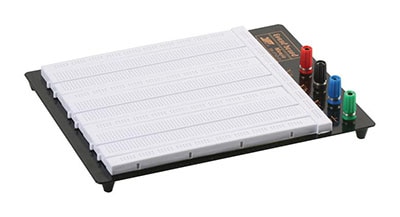
Breadboard

Buy Now


Jumper Kit
To wire things up on the breadboard, you'll need wires of different lengths. Rather than cutting and stripping wires youself, jumper kits come in convenient lengths and colors for easy organization.
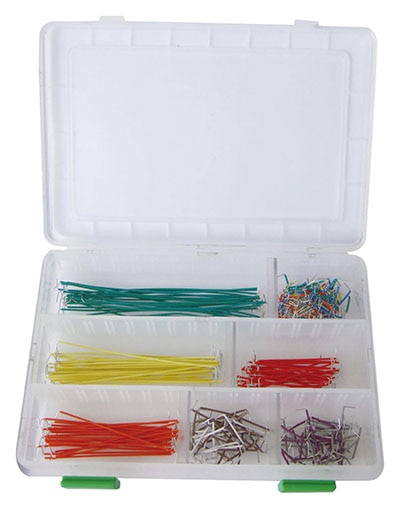
Jumper Kit

Buy Now

Arduino UNO
Most of you already know the Arduino - it's essentially a microcontroller that you can program to do almost anything. Arduinos have a variety of available shields, which let you add sensors, motors, displays, and pretty much anything else you need for your project.
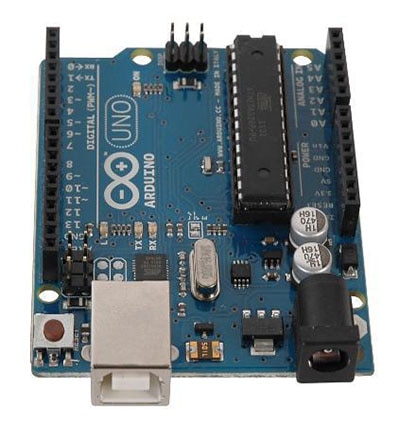
Arduino UNO

Buy Now

Raspberry Pi
Raspberry Pi is a fully programmable single board Linux computer. Where Arduinos have available shields, you can get HATs (Hardware Attached on Top) for Pi. HATs also let you expand your Pi with whatever you need for your project, and there's a HAT available for pretty much everything.

Raspberry Pi kit

Buy Now

Raspberry Pi Education Parts Kit
Assembled by the Raspberry Pi Foundation, this Education Parts Kit contains pretty much everything you need to get started, including breadboard, LEDs, a variety of sensors, resistors, capacitors, and jumpers.
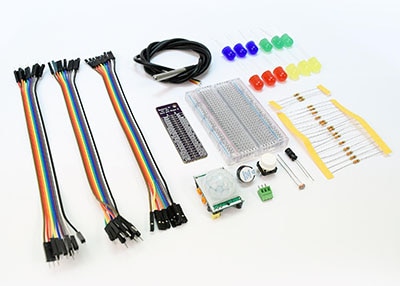
Pi Education Parts Kit

Buy Now


Grove Kits
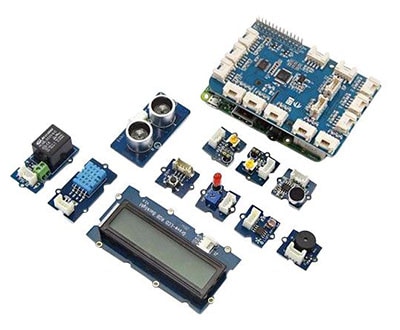
Now let's look at some kits. Grove is a prototyping system by SeeedStudio that takes a modular approach to electronics. The Grove system starts with a base unit (HAT or Shield), which provides a bunch of Grove connectors that you can add modules to. SeeedStudio calls the base unit the "stem", and the modules, the "twigs". Grove connectors make it a little easier to add and swap modules in your project.

Grove Starter Kit for Arduino 
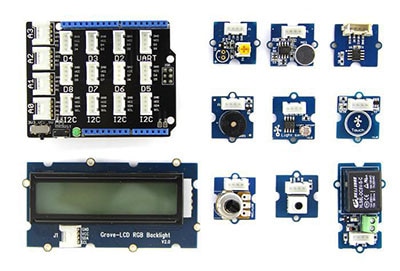
Grove Starter Kit

Buy Now

GrovePi Starter Kit for Raspberry Pi

GrovePi Starter Kit

Buy Now

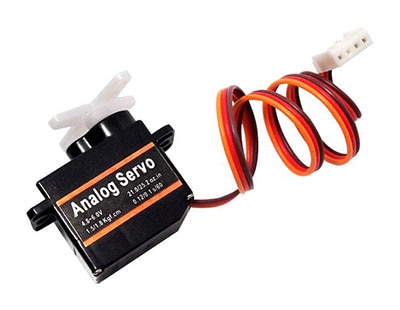
Servo Motor

Servo Motor

Buy Now

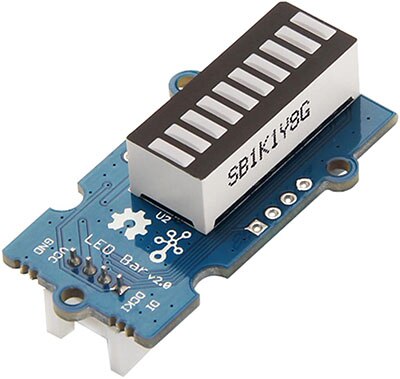
LED Segment

Segment LED

Buy Now

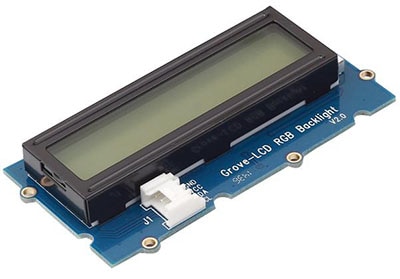
LCD Display

LCD Display

Buy Now

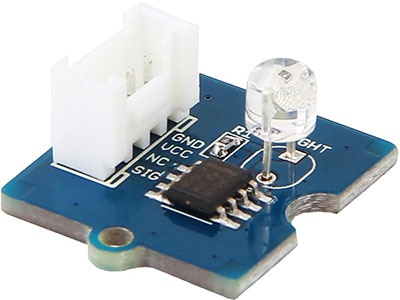
Light Sensor

Light sensor

Buy Now

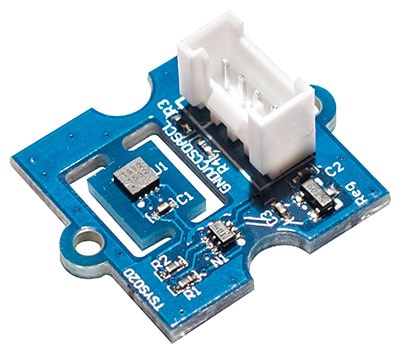
Temperature Sensor

Temperature Sensor

Buy Now

Sensor Board, Temperature, Humidity, Pressure and Gas Sensor, for Arduino
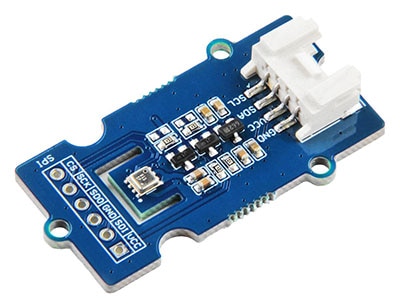
BME680 Sensor Board

Buy Now

For more Grove-compatible products, click here.

Other Cool Kits for Pi/Arduino

Arduino Starter Kit
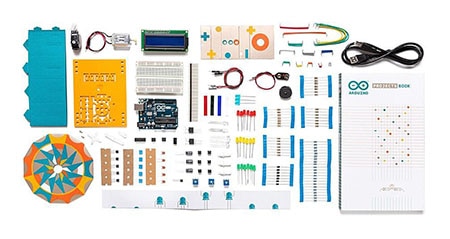
Arduino Starter Kit

Buy Now

Arduino Starter Kits are available in different languages.

Arduino Student Kit
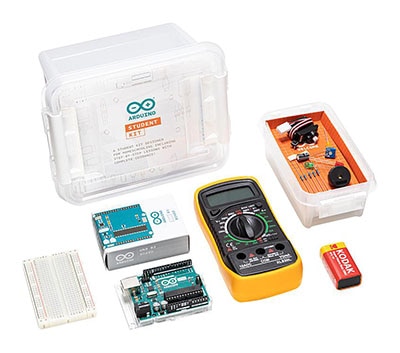
Arduino Student Kit

Buy Now


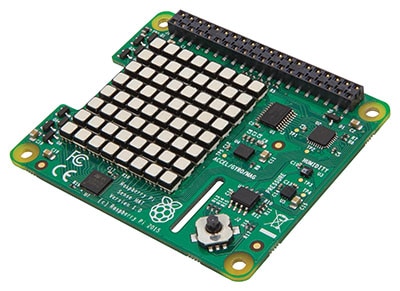
Pi Sense HAT

Pi Sense HAT

Buy Now


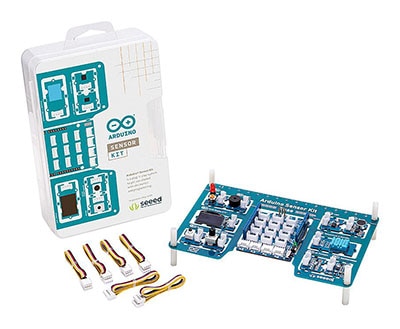
Arduino Sensor Kit

Arduino Sensor Kit

Buy Now


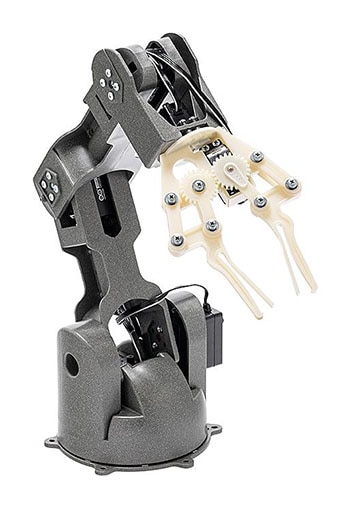
Tinkerkit Braccio Robot Arm

Tinkerkit Braccio Robot Arm

Buy Now


  • back to school
  • education
  • raspberry pi
  • wishlist
  • arduino
  • Share
  • History
  • More
  • Cancel
  • Sign in to reply
  • robogary
    robogary over 3 years ago in reply to ralphjy

    I'm partial to keeping Nanos on hand for projects. The Unos are too big and I dont like the header sockets because the wires pop out too easy, but I guess that keeps cost down. For beginner projects and gadgets , Arduinos still have plenty of speed and memory. 

    • Cancel
    • Vote Up 0 Vote Down
    • Sign in to reply
    • More
    • Cancel
  • sgresty
    sgresty over 3 years ago

    My first Arduino project was measuring the characteristics of an RC circuit to determine the time constant at the start of my second year of my physics degree. Now a year on, I’ve done many small Arduino projects with my biggest being a magnetic field scanner to produce a plot of any magnetic field. I am also working on other Arduino projects which are still in progress.

    One thing I would say is missing is some 28BYJ-48 stepper motors and their ULN2003 drivers as these are easy to put together and are very useful!

    Plot from RC circuit

    Plot from RC circuit

    Version one of magnetic field scanner
    Version one of magnetic field scanner
    Version 2 of magnetic field scanner
    Version 2 of magnetic field scanner

    • Cancel
    • Vote Up 0 Vote Down
    • Sign in to reply
    • More
    • Cancel
  • ralphjy
    ralphjy over 3 years ago in reply to shabaz

    It's a tribute to the Uno that the term Arduino has become somewhat synonymous with it.  I would agree that the Uno doesn't make a lot of sense as a starter board anymore because there are many boards at that price point with more memory, faster processor speed, and smaller form factor.  And with the focus on IoT, I would also pick a board with a radio (WiFi/BLE).  I will admit that I do keep a couple of Unos handy for legacy 5V applications and use it with an ESP-01 (ESP8266).  There are many more capable Arduinos now (even with RP2040s).  I would also consider ESP32s as starter MCU boards.

    • Cancel
    • Vote Up 0 Vote Down
    • Sign in to reply
    • More
    • Cancel
  • kmikemoo
    kmikemoo over 3 years ago in reply to robogary

    robogary  I LOVE the analogy.  I DO depend on the mature ecosystem of the Arduino (stealing an oft used ST phrase) to get my tasks done.  Most of what I do is more PLC-ish than computer-ish and the Arduino suits that application well.  I expect the Arduino to be in my toolbox for quite a while.

    The Arduino thinks like I do.   Lather. Rinse. Repeat.  LaughingLaughing   That's funny given that I'm bald.

    • Cancel
    • Vote Up 0 Vote Down
    • Sign in to reply
    • More
    • Cancel
  • shabaz
    shabaz over 3 years ago in reply to robogary

    Hehe I expect Fortran is still taught in some universities. It was taught to Chem-Eng students for ages, not sure why.

    I can see the writing on the wall for things to get much better with Python within say a couple of years or so (it still won't replace C on microcontrollers for real products of course, because Python doesn't have precise control for hardware, nor does it have the speed today, but for learning and experiments it could still become very attractive, and that's a space Arduino has occupied for a long time). The Arduino libraries for sure are reliable from what I can tell.

    Today MicroPython is still missing many basic features (I can't even flush the UART with MicroPython, that capability is non-existent, I discovered today).
    On the other hand, it's great being able to test things as I code immediately; I feel for prototyping and general experimentation, that's really attractive.

    • Cancel
    • Vote Up 0 Vote Down
    • Sign in to reply
    • More
    • Cancel
  • shabaz
    shabaz over 3 years ago in reply to kmikemoo

    Sorry, it was a provocative comment, the Arduino has done a lot! : )

    And it's been available when there was absolutely nothing like it.

    That's a great point - I didn't realize Pico supports Arduino libraries too! 

    Pico has its own problems of course, like poor ADC. But I I definitely don't miss the gapped pin header on the Uno, so there's ups and downs with both!

    • Cancel
    • Vote Up 0 Vote Down
    • Sign in to reply
    • More
    • Cancel
  • robogary
    robogary over 3 years ago in reply to shabaz

    I'll stir the pot with you on python and Arduino C. 

    In support of the Arduino, the libraries and examples in the IDE are robust. I seem to have a talent to break the libraries doing wacky stuff but the support resources are plentiful. 

    Pi Pico with python has some applications that are just so easy & magical with all the python libraries. Python seems to handle text, ML, and embedded IC networks well. It has a negative side that some IO intensive applications don't suit it well. There are so many libraries and users need to be experienced in each library to leverage, the analog interface doesnt lend itself to building systems easily. 

    I'd never toss away any tool in my toolbox unless it was broken. I threw away Fortran and Cobol. Thonny python and python 3 dont have robust built in IDE examples to get students going on an idea that inspires them.  Students can surf, but its luck if they get some example that works perfect first time. 

    Be mindful, if Arduino gets buried, it will rise from the grave like a zombie and hunt down those who buried it  :-)   

    • Cancel
    • Vote Up 0 Vote Down
    • Sign in to reply
    • More
    • Cancel
  • kmikemoo
    kmikemoo over 3 years ago in reply to shabaz

    Think Donkey from Shrek:  You cut me deep, shabaz !  Real deep.  LaughingJoy

    While playing with the thermistors of Experimenting With Thermistors, I have rediscovered my love of Arduino.  While I'm using the Raspberry Pi Pico as my remote nodes, I'm back into the Arduino IDE and loving it.  My base node started as an Uno and will soon be a Mega.  I need more memory.

    Quite seriously though, I think your recommendation to move to the Pico is brilliant.  The price point alone is enough incentive.  You can treat it like an Arduino or you can use C, Python or MicroPython.  The flexibility is great.  At $4 a pop, you can start with four for the price of a single, knock-off Arduino Uno.  How can you lose?

    • Cancel
    • Vote Up 0 Vote Down
    • Sign in to reply
    • More
    • Cancel
  • shabaz
    shabaz over 3 years ago

    That's a nice large breadboard : ) 

    I'm going to be controversial now.. If I had the choice, I personally would think the time for Arduino has gone, for any schoolkid or student. There's much nicer choices now with the Pi Pico - the choice of Python, which is more useful for a wide range of tasks beyond electronics work, and the Pico SDK for students who wish to learn C programming (the Pico SDK is very mature), and there's the Raspberry Pi for learning Linux and C/C++, Python, JavaScript or any language they desire.

    When I had to pick a coding book for young kids, I chose a Python book that they could type on their home computer; I didn't choose C. I know Arduino is much loved, but what benefit is there any more, when the Pi Pico has excellent C libraries anyway, and also supports Python? There are lots of Pico boards/shields now, so it's not as if we still need to stick with old-school 5V Arduino shields.

    • Cancel
    • Vote Up 0 Vote Down
    • Sign in to reply
    • More
    • Cancel
  • robogary
    robogary over 3 years ago

    The kit is pretty complete. I didnt notice any of the IR sensors used for line following., and a couple standard size continuous servos would be handy. 

    • Cancel
    • Vote Up 0 Vote Down
    • Sign in to reply
    • More
    • Cancel
<>
element14 Community

element14 is the first online community specifically for engineers. Connect with your peers and get expert answers to your questions.

  • Members
  • Learn
  • Technologies
  • Challenges & Projects
  • Products
  • Store
  • About Us
  • Feedback & Support
  • FAQs
  • Terms of Use
  • Privacy Policy
  • Legal and Copyright Notices
  • Sitemap
  • Cookies

An Avnet Company © 2026 Premier Farnell Limited. All Rights Reserved.

Premier Farnell Ltd, registered in England and Wales (no 00876412), registered office: Farnell House, Forge Lane, Leeds LS12 2NE.

ICP 备案号 10220084.

Follow element14

  • X
  • Facebook
  • linkedin
  • YouTube