


Why GaN Is Accelerating the Evolution of AC/DC Converters
AC/DC converters are indispensable in modern electronics, converting commercial AC power into stable DC voltages required by most electronic loads. These converters are found everywhere—from consumer adapters and chargers to industrial and telecom power systems.
As product designers pursue smaller size, higher efficiency, and better thermal performance, conventional silicon (Si) switching devices are reaching their physical limits. This is where gallium nitride (GaN) power devices are rapidly gaining adoption.
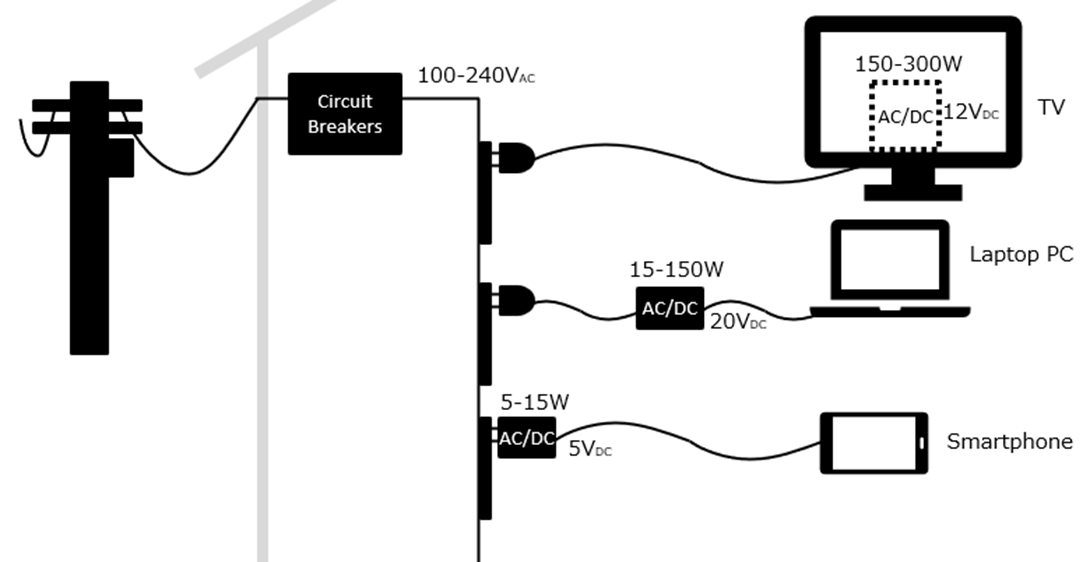
[Figure 1: Examples of AC/DC converters used in home and office applications]
Unlike traditional Si devices, GaN switches significantly faster and with lower switching loss. This enables:
- Higher switching frequencies
- Reduced heat generation
- Smaller passive components
- Higher power density without sacrificing efficiency
As a result, GaN has become a key enabler for next‑generation compact AC/DC converter designs, particularly in notebook adapters, USB‑PD chargers, and industrial power supplies.

GaN vs. Silicon: Switching Loss and Frequency Advantages
The most important advantage of GaN lies in its low switching loss at high frequencies. While conventional Si devices typically operate around 100 kHz, GaN devices can comfortably switch in the 200 kHz to 500 kHz range while maintaining high efficiency.
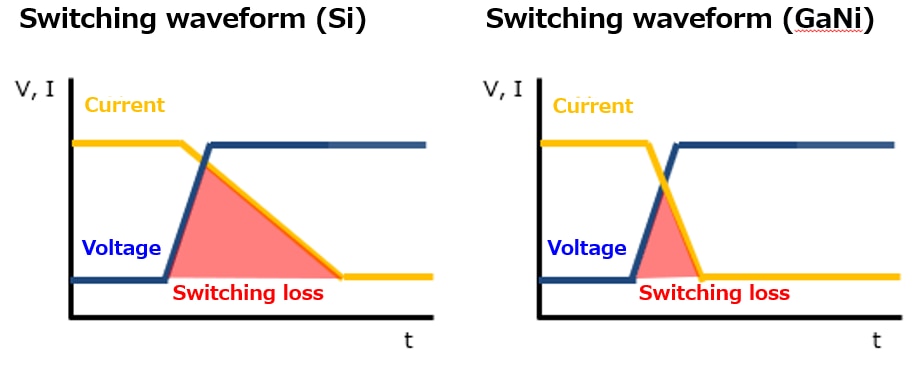
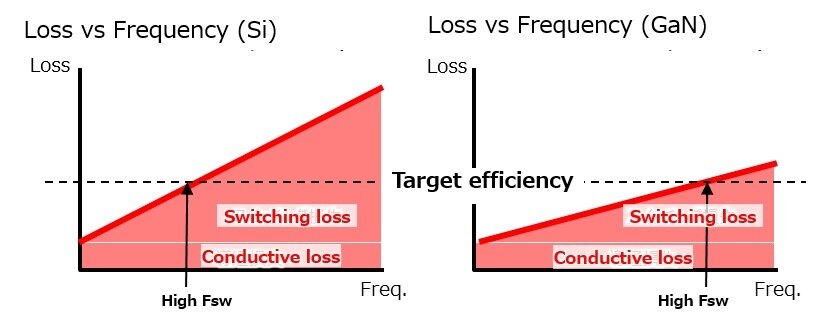
[Figure 2: Switching waveforms comparison – GaN vs. Silicon]
At higher switching frequencies:
- Magnetic components (inductors, transformers) can be smaller
- Output capacitors must handle higher ripple current frequencies
- Component selection becomes critical for maintaining low ripple voltage
This shift in operating frequency fundamentally changes the requirements for output capacitors.
The Role of Output Capacitors in High‑Frequency AC/DC Designs
The output capacitor plays a vital role in smoothing the DC output by absorbing ripple current generated by switching operation. The resulting ripple voltage must remain within strict limits—typically less than ±5% of the output voltage—to ensure stable system operation.

[Figure 3: Output ripple voltage concept and waveform]
The ripple voltage relationship is straightforward:
ΔV = ΔI × Z
Where:
- ΔV is ripple voltage
- ΔI is ripple current
- Z is the impedance of the capacitor at the switching frequency
Therefore, low impedance at high frequency is the key requirement for output capacitors in GaN‑based AC/DC converters.
Why Polymer Capacitors Outperform Electrolytic Capacitors with GaN
Traditional liquid electrolytic capacitors struggle at high switching frequencies due to increasing impedance. In contrast, Panasonic solid polymer capacitors exhibit extremely low impedance in the 100 kHz to 1 MHz range, making them ideal for GaN power supplies.

[Figure 4: Impedance vs. Frequency – Polymer vs. Electrolytic Capacitors]
This performance advantage comes from Panasonic’s low‑ESR conductive polymer electrolyte technology, which delivers:
- Much lower ESR than liquid electrolytic capacitors
- Superior ripple voltage suppression
- Excellent high‑frequency characteristics
As a result, polymer capacitors can achieve the same—or better—ripple performance with significantly smaller capacitance values, enabling further downsizing.
High Ripple Current Capability and Thermal Stability
Low ESR not only reduces ripple voltage but also allows polymer capacitors to tolerate higher ripple currents without excessive self‑heating.
In addition, because the electrolyte is solid rather than liquid, Panasonic polymer capacitors offer:
- Stable performance at low temperatures
- No electrolyte drying or leakage
- Minimal ESR degradation over long operating life
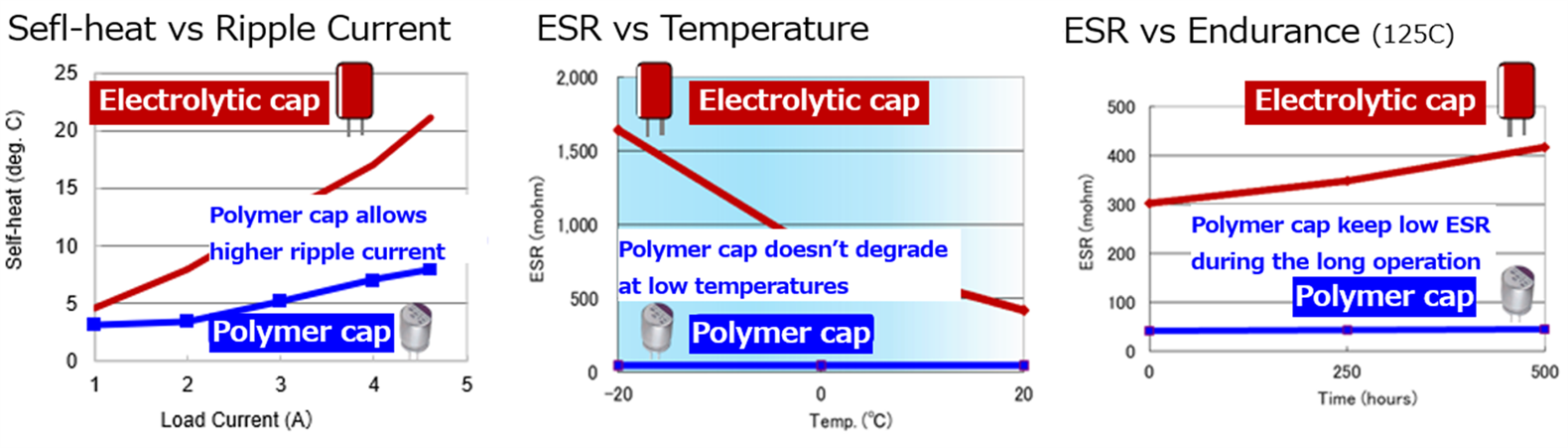
[Figure 5: Ripple current vs. self‑heating, ESR vs. temperature, and endurance characteristics]
These characteristics are especially valuable in industrial and telecom applications where long life and wide temperature operation are mandatory.
Real‑World Comparison: Polymer vs. Electrolytic Capacitors in a GaN AC/DC Converter
To illustrate the impact in practice, consider a high‑frequency AC/DC converter operating between 200 kHz and 400 kHz.
Test Overview
- Output power: 150 W
- Output voltage: 48 V
- Allowable ripple: ±400 mV
- Operating temperature: –30 °C to +65 °C
- Expected lifetime: 50,000 hours
Capacitor Comparison
- Electrolytic: 63 V, 390 µF × 3
- Polymer: 63 V, 33 µF × 1–3

[Figure 6: Capacitor characteristic comparison]
|
Even though the conductive capacitor has a smaller capacitance, its excellent frequency characteristics suppress ripple voltages to the same level. |
↓
|
When looking at the lowest operating temperature -30°C, it shows a possibility to design only with a single conductive capacitor. And this will be stable even at the end of life (after 50,000 hours). = Reduced mounting area / cost / longer life |
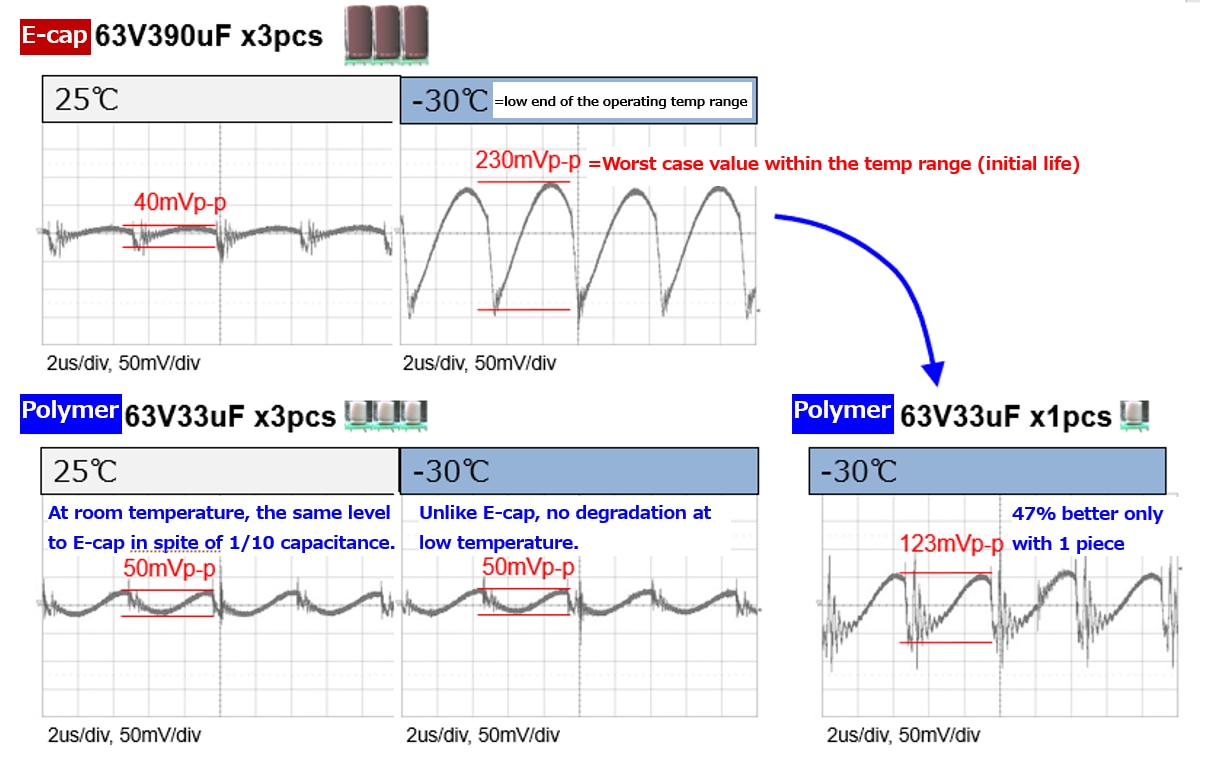
[Figure 7: Output ripple voltage comparison results]
Key Results
- At low temperature (–30 °C), a single polymer capacitor achieved 47% lower ripple voltage than the electrolytic solution
- At room temperature, polymer capacitors delivered comparable ripple performance with only 1/10 the capacitance
- No low‑temperature degradation, unlike electrolytic capacitors
Result:
 Reduced mounting area
Lower component count
Longer operational life
Improved reliability
Reduced mounting area Lower component count Longer operational life Improved reliability
Panasonic Polymer Capacitor Portfolio for GaN Power Supplies
Panasonic offers one of the industry’s most comprehensive polymer capacitor lineups, supporting voltages up to 100 V and optimized for high‑frequency power conversion.
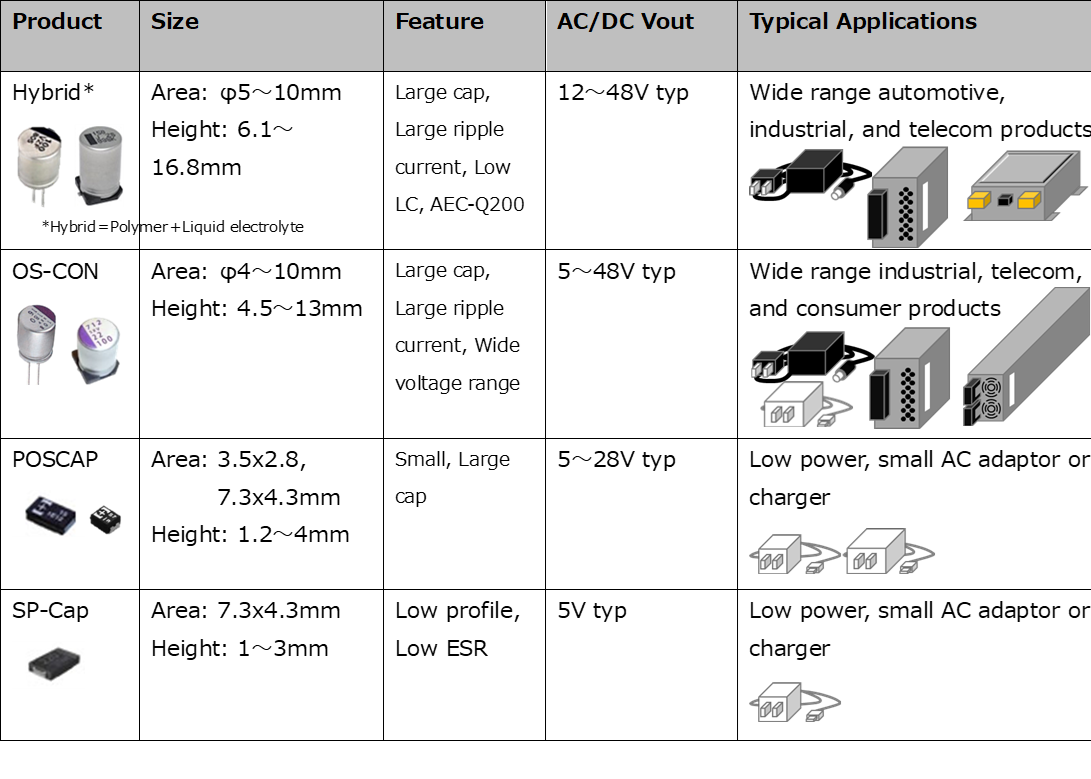
[Figure 8: Panasonic polymer capacitor product lineup table]
Key Series Highlights
- Hybrid Capacitors: Large capacitance, high ripple current, AEC‑Q200 qualified
- OS‑CON: Wide voltage range, excellent frequency characteristics
- POSCAP: Compact SMD packages for space‑constrained designs
- SP‑Cap: Ultra‑low ESR and low‑profile solutions
These products are widely used in:
- Consumer electronics (chargers, adapters)
- Industrial power supplies
- Telecom and networking equipment
- 48 V power distribution systems
 Explore Panasonic Polymer Capacitors on Farnell to find the optimal solution for your GaN‑based AC/DC design.
Proven Adoption in GaN Reference Designs
Panasonic polymer capacitors are already validated in leading GaN reference platforms from major IC manufacturers.
65 W GaN AC/DC Converter Evaluation Board
- IC: MasterGaN4
- Application: USB‑PD, industrial and consumer electronics
- Output capacitors: Panasonic Hybrid & OS‑CON polymer capacitors
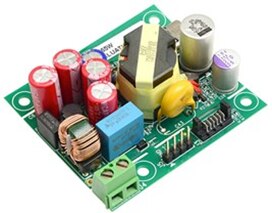
[Figure 9: 65 W GaN reference board image]
250 W GaN AC/DC Converter Evaluation Board
- IC: MasterGaN1
- Topology: LLC
- Output capacitors: Panasonic Hybrid polymer capacitors
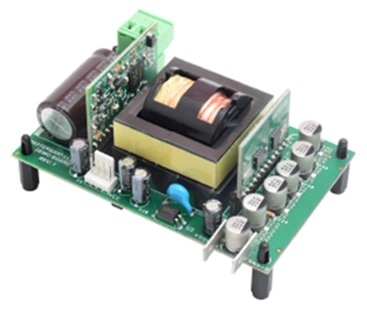
[Figure 10: 250 W GaN reference board image]
These real‑world designs demonstrate how polymer capacitors enable compact, efficient, and reliable GaN power supplies.
Conclusion: Polymer Capacitors Are Essential for the GaN Era
As GaN adoption continues to accelerate, power supply designers must rethink passive component selection. Panasonic polymer capacitors provide the low impedance, high ripple current capability, and long‑term reliability required for high‑frequency GaN‑based AC/DC converters.
By enabling:
- Smaller form factors
- Higher efficiency
- Longer lifetime
- Reduced system cost
Panasonic polymer capacitors play a critical role in next‑generation power electronics.
 Start your GaN power design today—discover Panasonic Polymer Capacitors on Farnell.