


NFC - The Dawn of an Economic and Monetary Revolution
It doesn’t take Pink Floyd’s song “Money” to make you think about the disadvantages of our monetary system. Looking at the hard facts itself already proves: money is a dirty thing, literally in fact. In an unpublished survey, quoted by The Wall Street Journal, researchers at New York University have identified more than 3.000 kinds of bacteria on $1 bill. But is there, in fact, an alternative to the solid currency? Yes, there is and in terms of the dawn of an economic and monetary revolution we have to cast an eye on the future orientated Scandinavians. Denmark proposed this year a new law that would allow Danish business operators to refuse cash as payment for goods and services and demand only electronic payment as the means for bartering goods and services (LINK). Actually already half of the adult population of Denmark uses a mobile-initiated account-to-account (mA2A) immediate payment service that is offered by the country’s biggest bank. This development has to be seen in the context of the digital wallet and its increasing popularity as well as the unstoppable rise of the SmartPhone technology. And mobile payments are growing quickly: Forrester Research predicts they will balloon to $142 billion by 2019 in the United States, almost tripling from $52 billion in 2014.
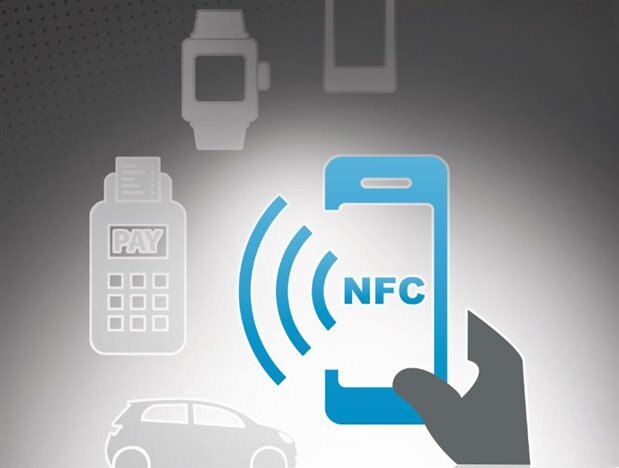
The so-called digital wallet revolution started with NFC (Near Field Communication) technology and along with it NFC has finally gone mainstream. The number of smartphones and tablets with NFC technology is growing extremely fast. Everyone has heard about Google Wallet and Apple Pay but might not know what the technology behind it contains and what else it might be useful for than just being a wallet replacement.
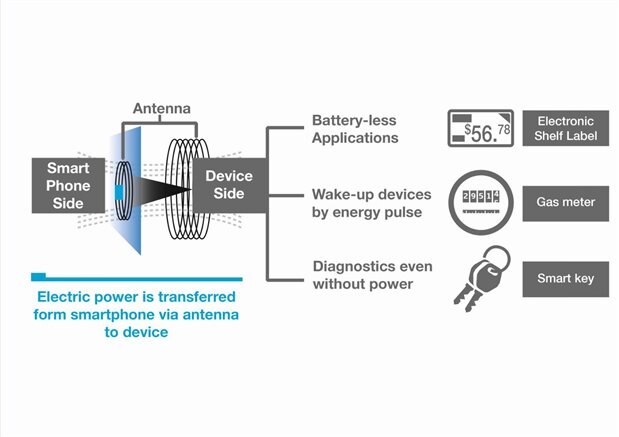
Like Bluetooth and WiFi NFC works on the principle of sending information over radio waves. Near Field Communication is another standard for wireless data transitions which makes it necessary to establish and define specifications which devices have to adhere in order to communicate with each other properly. NFC is based on older RFID (Radio-frequency identification) ideas, which uses electromagnetic induction in order to transmit information. This is the one major difference between NFC and Bluetooth/WiFi, as it can be used to induce electric currents within passive components as well as just send data. This means that passive devices don’t require their own power supply, and can instead be powered by the electromagnetic field produced by an active NFC component when it comes into range.
NFC – a Technology with a Vast of Opportunities
With the growth of interactive advertising, contactless payment systems, and the introduction of digital payment methods, NFC is the wireless standard best poised to make our smartphones an even more viable part of our world than it already is. But not only the customer benefits from the easy to use NFC technology. There is a huge potential for local retailers and merchants to integrate NFC-enabled phones into their businesses. For example, the NFC tags could track inventory and make sure it is delivered to its right destination and it could be used for loyalty programs. It can be used on a vast variety of applications. You waved your phone over a chip embedded in a wristband, or on a card next to a phone in your house that was programmed to call a particular contact. The NFC chip would prompt the phone to begin dialling that number automatically – a feature that could be handy in a household with small children or older relatives. It could also work in your car. Imagine you tossed your NFC-enabled phone into the cup holder of your car-ride. An interactive dashboard outfitted with an NFC reader in the car could detect the driver’s preferences – anything from a preferred route to work to a favourite Spotify playlist – and fire up the GPS and radio accordingly.
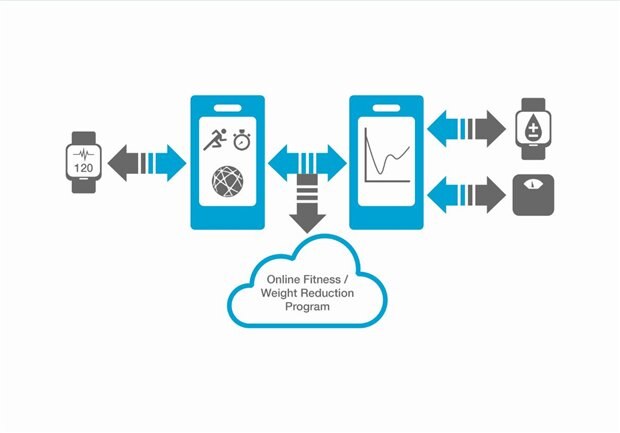
The full range of applications is vast. They can be used on audio-visual equipment such as digital cameras, headphones and speakers, on home appliances from washing machines to microwave ovens and, for health and fitness devices. Furthermore, tags can be used as a form of authentication method for protecting products and data. They can also be used on office equipment, such as printers, photocopying machines, routers and projectors, and in an industrial environment for machine tools, power tools, HVAC meters and smoke detectors. Smart keys for cars are a popular use as is digital signage based marketing.
NFC – Explaining a State of the Art Technology
But how does the Near Field Communication (NFC) work in detail? NFC refers to emerging short-range wireless communication technology that typically operates within 10cm between loosely coupled inductive circuits. Though it emerged only around ten years ago it has become instantly a significant contributor to en vogue technologies such as Ambient Intelligence (AmI), Cloud Computing (CC), Internet of Things (IoT), Ubiquitous/Pervasive Computing (Ubicomp) and Wireless Sensor Network (WSN). NFC uses the 13.56MHz frequency band and has data rates that typically ranges between 106 to 424 kbit/s.
The technology works by electromagnetic induction between two loop antennas, one in each device which may be active or passive. One device – the initiator – generates an RF field that powers the passive target, or tag. Due to the fact that power comes from the reader, also known as an initiator, targets can be quite small, in formats such as tags, key fobs and cards.
NFC and Panasonic - a 15-Year-Old Growing Relationship
Panasonic has invested for more than 15 years intellectual power and time in order to bring strategic innovations to customers’ product development process and provides the technology and engineering resources to enable manufacturers to plan and build world-class NFC solutions to meet their customer needs. With the introduction of the MN63Y1208 and the MN63Y1210A it introduced the industry’s first NFC-tag IC with built-in serial interface based on both JISX6319-4 (Felica) and ISO/IEC 14443 Type B standards with many benefits, including: stable communication with endurance rated at 100,000,000 times; high-security with access restriction by encrypted communication path and authentication; support of tunnel communication mode, enabling fast high-capacity data communication; and automatic NFC communication standard switching to meet worldwide market demand.
NFC is well established and likely to be available for many years to come. Because its nature is to start other software processes it will remain backwards compatible as smartphone technology evolves. The slow rise of the Internet of Things will rely on NCF to start communication processes, reducing the complexity for consumers while allowing ever more complicated tasks to be achieved. NFC enables you to interact between the physical world and the virtual world, but, of course, it is one thing to have NFC. It is another thing to do interesting things with it.
For further input, you can download the white paper here:
For more information on Panasonic and NFC technology please compare: