


Usually Formula 1 racing cars speed around the Circuit de Barcelona-Catalunya at speeds of up to 315 km / h. Last August however, the "Formula SAE" race, in which students from all over the world compete, took place there at just 120 kilometers per hour, according to the rules set up by the American Society of Automotive Engineers (SAE).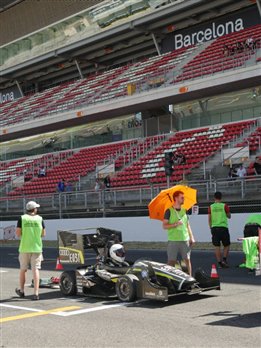
Formula Student (FS) is Europe's most established educational motorsport competition for racing cars. Backed by industry and high-profile engineers, the competition aims to develop enterprising and innovative young engineers and encourage more young people to take up a career in engineering. A separate class for electric vehicles was introduced back in 2010 in order to advance the innovation process and prepare prospective young engineers for future technologies such as electric drive trains. The competition is seen as one of the world’s best training grounds and is supported by over 250 volunteer judges from motorsport and the wider engineering industry.
In 2016, over ten competitions were organized around the world. Seven were held in Europe (United Kingdom, Germany, Italy, Austria, Czech Republic, Hungary and Spain) and the other five took place in the United States, Brazil, Australia, Japan and Korea. The competitions are conducted under very similar rules and regulations, allowing the teams to participate in several different competitions with little or no modifications to their work. Each team is tasked with producing a combustion or electric prototype (and this year, 2017, even autonomous cars) of a single-seat race car for autocross or sprint racing, and presenting it to a hypothetical manufacturing firm. The car must be low cost, easy to maintain and reliable, with excellent acceleration, braking, and handling performance.
But back to Formula Student Spain, Circuit de Bacelona-Catalunya. The temperature is 35° Celsius, there is barely any shade and the asphalt is burning hot. After three days of blood, sweat and electric volts, all the effort has finally paid off with a third place for TU Munich’s eb016 racing car (electrical racing car) – leaving more than 37 other participants’ cars behind. Tufast, a group of around 70 technology and engineering students from the Technical University of Munich, has worked for over a year on its race cars. Some of the students have even taken the entire year off to work full time on the project. And the Circuit de Barcelona-Catalunya successfully proves that nearly 9,000 hours of work and proprietary electronics pays off. The eb016 is an engineering success thanks to its own ECU as well as own inverter, LV System and BMS – all built from scratch – plus its adaptive aerodynamics and an active rear axle steering system. All of this is contained in less than 170kg, with an impressive 1,000N downforce at 60km/h.
“This has been by far one of the most successful Formula Student participations in our club history” says Franz Beck, Team Manager at TuFast. “You need a fast car, but it’s equally important that it is tested and reliable, as it is not only the fastest teams with biggest budgets that win!” So what made this year’s experience different to previous ones? “Creating a successful racing car means building it on the shoulder of giants and this involves the know-how and technological experience of sponsors and partners. We are lucky enough to have sponsors from many different sectors of the automotive industry, including: Audi, Knorr Bremse and Webasto. With our Premium Sponsor Panasonic, we found a partner that not only supported us financially but importantly also with its know-how and its product range, which significantly added to our design and finally to our success!”
The planning for the design is very strict. There were moments in the design phase when Panasonic was able to give useful feedback and to support the task. “Panasonic’s team of engineers and product managers are highly experienced and helped us to avoid mistakes. This combination will create a better car each year, because fresh and creative ideas from our side mixed with years of experience from Panasonic’s side generates the best design in the end.”Cooperation between industry and university is not a one-way street though. The industry also benefits. “Formula Student is an ideal platform to test acquired engineering knowledge in practice and in competition, and at the same time develop a comprehensive understanding on many levels. Students who take part in the Formula Student competition demonstrate their capability for lateral thinking and design in a realistic engineering environment. For us at Panasonic with our strong background and expertise in the field of automotive applications, it provides an ideal environment to demonstrate the capabilities and potential of our components”, say Matthias Frey, Head of Corporate Marketing, Panasonic.
How TU München Used Panasonic Components and Solutions Can Be Demonstrated in the Following Examples:
Component Solutions - Resistors:
In E Racing such as Formula Students Electric, electronic battery control systems for charging and cell balancing need any advantages that can be gained in the critical areas of size and weight. These solutions are now driving technology and development at automotive manufacturers, as weight and power efficiency are vital to extending the range of EV road cars and meeting the commercial viability pivot point. Panasonic supported the eb016 by providing High Power Resistors (anti-surge / wide terminal) for use in designs. Lithium batteries are very susceptible to 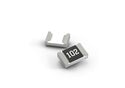 over-charging or discharging at an accelerated rate, so using the best resistors is very important. These resistors are used to improve battery efficiency and specifically for monitoring the power from the battery to the electric motor or for regenerative braking, where they monitor the current in and out of the battery. The new Panasonic Thin Film (ERA Series) and Thick Film Resistor Series (ERJPA-03 Series) are ideal for this application due to high power of up to 0.2 W and resistance values down to 0.005 Ω, which makes them ideal as balancing resistors, enabling optimum charging by equalizing voltage levels across the battery system.
For further reference please compare: Panasonic
Component Solutions - Capacitors:
Formula Student racing E-cars have a lot of power, with a maximum speed of 120 km / h available for narrow street circuits with short straights. DC-link capacitors are required for these applications on the input DC line of the inverter as the boost topology, between the battery and power module. Panasonic’s customized DC-link capacitors are ideally suited for this power boost application. They have a very long 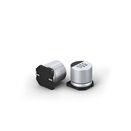 operational-life, high ripple current capability, high voltage and high capacitance by volume (CV), as well as low ESR/ESL. It is important to match modules in the equipment to reduce stray inductance and capacitance.
The other capacitor which has been used extensively within the eb016 is the ZK capacitor by Panasonic. Panasonic's Aluminium Polymer Hybrid capacitors are leading the transition from large-can lytic capacitors to smaller SMD technology, contributing to the miniaturization needs for smaller ECUs and EPS in automotive industry. With tighter space constraints and low power requirements, hybrid capacitors fit the bill with their low ESR and providing exceptional Ripple Current rating in can size at 10 mm heights. Their intrinsic conductive polymer film also increases their lifetime characteristics guaranteeing endurance and performance beyond their lytic competitors.
Within a decade of their introduction, the hybrids have won ardent support starting off in the Japanese automotive OEMs and now in the European sector. The expansion of options at the 25V and 35V lines are evident of their success in the automotive sector. The mainstreaming of this technology for the industrial sector with the miniaturization and endurance benefits extending up to 80V have pushed it as a value proposition to save costs and space."
For further reference please compare: Panasonic
Please also compare: Farnell
Video - Resistor and Capacitor by Panasonic Used by TU München:
Component Solutions – Thermal Solution:
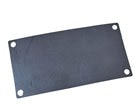
When it comes to reducing thermal resistance, many developers rely on thermal compounds. With relatively large surfaces, such as IGBTs, the bearing surface is milled on the heat sink profile to eliminate the convexity/concavity, usually because the methods available on the market to reduce larger thermal resistance gaps cannot be bridged without considerable expense. However, disadvantages with thermal compounds are as follows:
- The thermal pads can leak
- Depending on the application process, there is no reliability guarantee.
- Thermal grease can dry out
- Application is difficult and time-consuming.
“Panasonic’s PGS (Pyrolytic Graphite Sheet) looked from the start like the ideal solution to our thermal management problem. Pyrolytically produced graphite foils from Panasonic are ultra-light graphite foils whose thermal conductivity is five times higher than that of copper, and work because they are flexible and easy to cut.” adds Beck.
“This allowed us to fold the sheet into complex three-dimensional shapes and then stick it onto the heat source to distribute the excess heat over a larger scale or through good thermal coupling to distribute it to the cooling system. By using SoftPGS as an intermediate step to IGBTs and cooling systems in our converter, we were able to achieve a 30% improvement of the heat transfer compared to conventional thermal paste! This allows optimal operation of the IGBTs as well as increasing the length of time the equipment can be in use."
Video - Thermal Management Solutions by Panasonic Used by TU München:
For further reference please compare: Panasonic
Please also compare: Farnell
Application Example Grid-EYE:
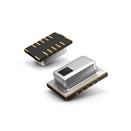
Tire temperature and the related effects are decisive factors for success in motorsport. Tire pressure is highly temperature dependent. “Tyre temperature is affected by the setup in racing. Minor changes to the output, camber and tire pressure (flexing) also change tire temperature. The optimum temperature for tires is between 26 and 38 degrees Celsius. If a tire falls below its operating temperature, it cannot build up grip and slips. If a tire exceeds its optimum operating temperature, the "tire chemistry” changes; this leads to graining and grip degradation.” Explains Beck. That’s why he and his teammate were looking for an easy to use, reliable and user-friendly solution to generate on-site data.
“We recognized the advantages offered by Grid-EYE pretty quickly. Using parameter settings - Track / Camber – we can ensure the tires are worn exactly as we would like them to be. We especially benefit from the highly differentiated temperature display spectrum, which enables us to optimize performance. A further reason to use Grid-EYE was that it has an SMD construction and is extremely small which allowed us to use it quickly and easily. "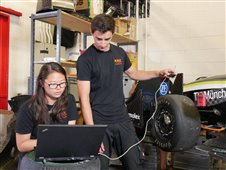
Panasonic’s infrared Grid-EYE temperature sensor is ideal for measuring the current tire temperature. The data collected by the sensor measurements enable informed decisions to be made on how to adjust the vehicle. Large fluctuations have a direct impact on the vehicle performance and the service life of tires. "
Video - Grid-EYE by Panasonic Used by TU München:
Now back in Munich, the team is looking to get in the best starting position for next year's competition. With feedback from the judges, the design of the car is going to be completely revamped, aiming at reaching more ambitious targets during the coming year. The young TU Munich team is looking forward to an even more successful season in 2017.
For further reference please compare: Panasonic
Please also compare: Farnell