


Radar: The Backbone of Advanced Driver Assistance
Radar technology is a critical sensing solution for Advanced Driver Assistance Systems (ADAS) and Autonomous Driving (AD). By using millimeter-wave radio signals, radar detects objects and obstacles around a vehicle—even in challenging conditions like rain or fog. This capability makes radar indispensable for safe and reliable driving.
How Radar Works
Radar measures distance by emitting radio waves and analyzing the time it takes for the reflected signal to return. Common automotive radar frequencies include 24 GHz, 77 GHz, and 79 GHz, with 79 GHz expected to dominate due to its superior resolution.
Unlike cameras or LiDAR, radar performs well in poor visibility. Cameras excel at color and shape recognition but struggle in bad weather, while LiDAR offers high-resolution 3D imaging but loses accuracy in rain or snow. Radar complements these sensors, creating a robust multi-sensor system for enhanced safety.
Market Trends: Why Radar Demand Is Rising
With the rise of autonomous vehicles and mandatory safety features like automatic braking, radar adoption is accelerating. Higher frequencies improve detection accuracy but also increase data processing loads, creating new challenges for electronic components.
Future radar systems demand:
- High Power: To handle increased processing loads.
- Heat Resistance: Preventing performance degradation in compact designs.
- Compact Size & Lightweight: Essential for modern automotive architectures.
Inside a Radar System: Key Components
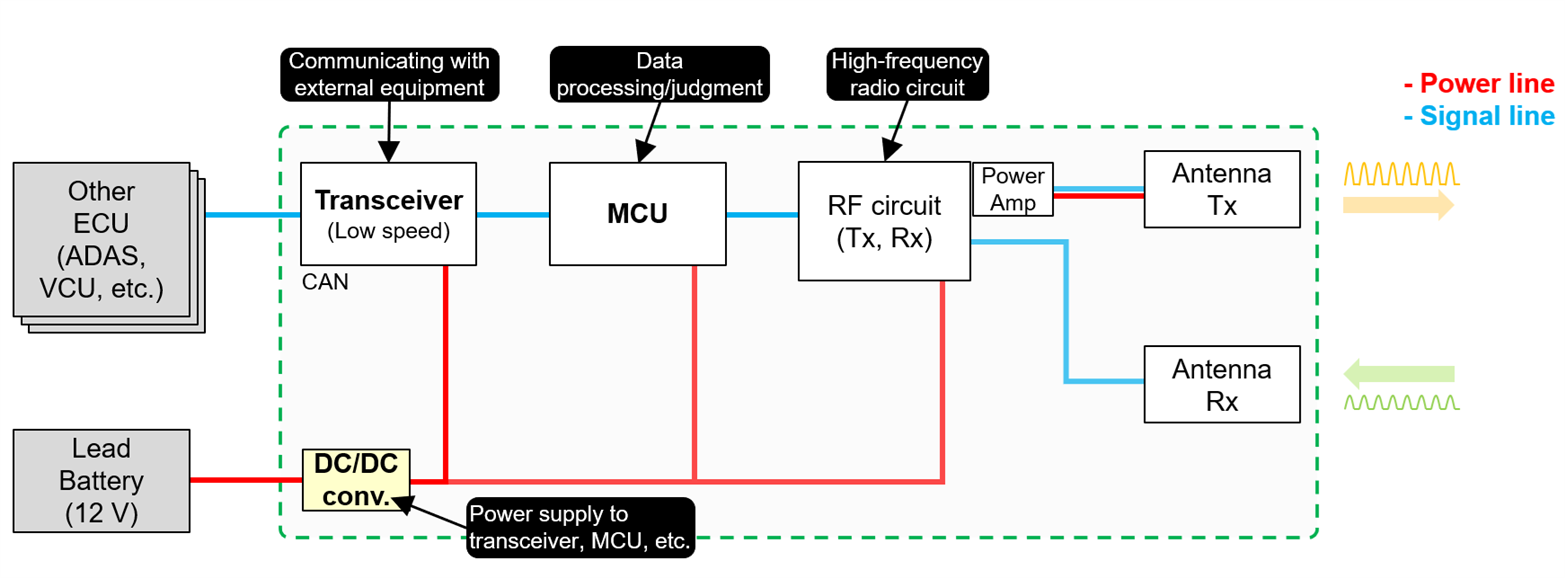
A radar unit consists of:
- High-Frequency RF Circuit: Handles millimeter-wave transmission and reception.
- Antennas: For signal transmission and reception.
- MCU (Microcontroller): Controls radar operations.
- Transceiver: Interfaces with external systems via CAN or Ethernet.
- DC/DC Converter: Regulates voltage for each component.
Panasonic Solutions for Radar Systems
Panasonic offers cutting-edge components designed for automotive radar applications:
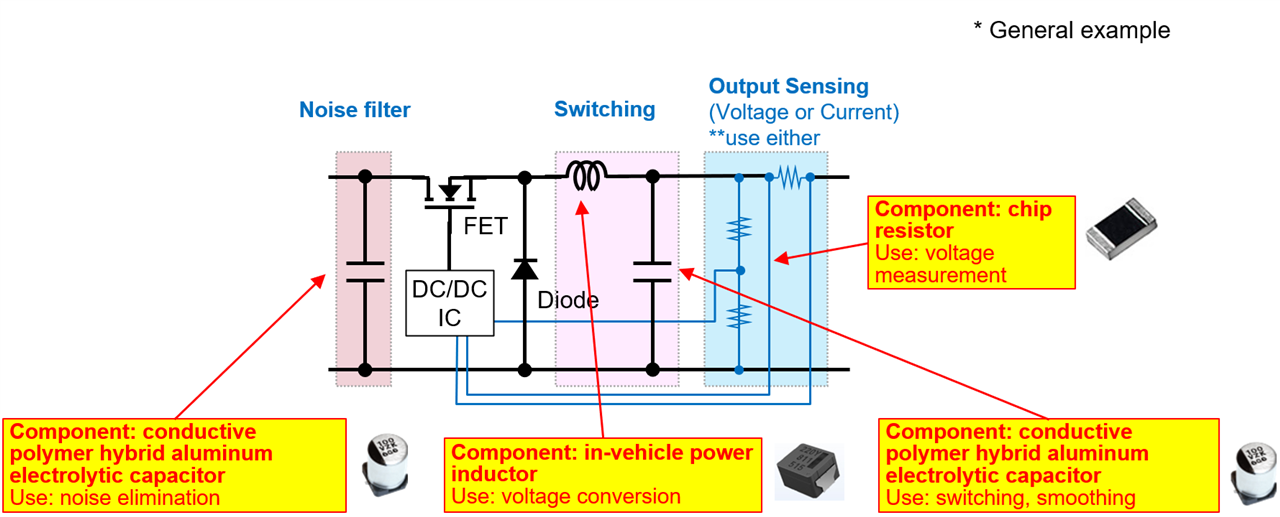
DC/DC Converter Components
-
Conductive Polymer Hybrid Aluminum Electrolytic Capacitors
- High capacitance, low ESR, excellent ripple suppression.
- Ideal for noise filtering and voltage smoothing.
Explore Capacitors →
-
Automotive Power Inductors
- Low loss, high current capability, optimized for high-frequency switching.
Explore Inductors →
- Low loss, high current capability, optimized for high-frequency switching.
-
High-Precision Chip Resistors
- Thin-film design for accurate voltage measurement and control.
Explore Resistors →
- Thin-film design for accurate voltage measurement and control.
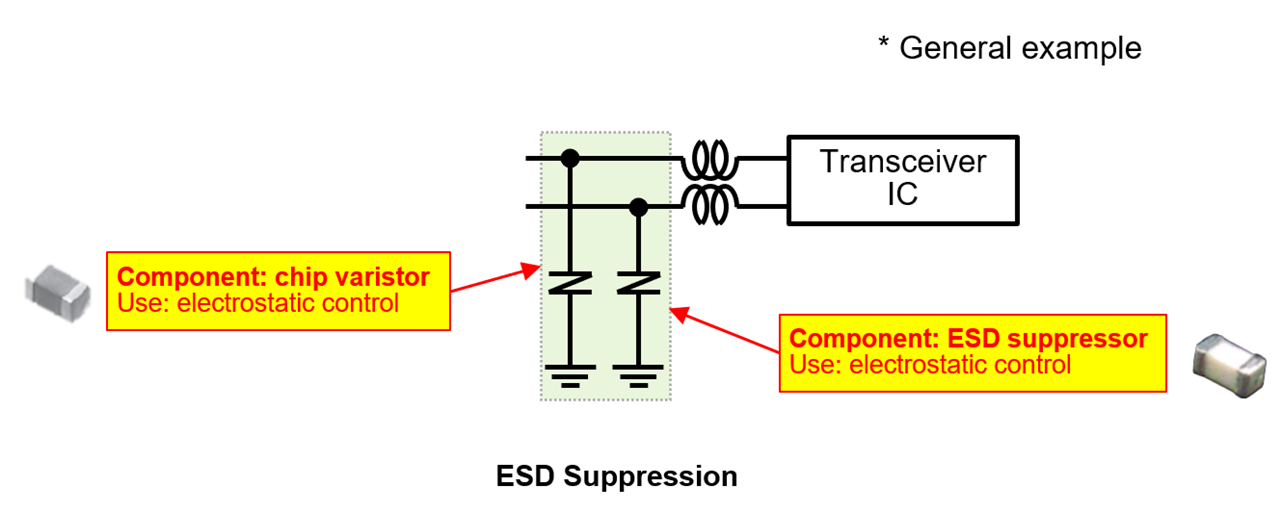
Transceiver Interface Protection
- Chip Varistors & ESD Suppressors
- Protect against electrostatic discharge and noise without compromising signal integrity.
Why Choose Panasonic for Radar Applications?
Panasonic components deliver:
- High Current Handling
- Low Loss Performance
- Compact Size
- High Precision
- Reliability in Harsh Conditions
As radar technology evolves, Panasonic continues to provide solutions that meet the demands of next-generation ADAS and autonomous driving systems.
Panasonic Components for Radar Systems
Panasonic offers a wide range of components optimized for radar applications:
| Component | Features | Large Current | Low Loss | Compact |
Small Size |
High Precision |
|---|---|---|---|---|---|---|
| Hybrid Aluminum Electrolytic Capacitors | Low ESR, High Reliability |  |
|
|
|
|
| Automotive Power Inductors | High Current, Low Loss | |
|
|
|
|
| High-Precision & High-Power Chip Resistors | High Accuracy, Heat Resistance | |
|
|||
| Chip Varistors | Compact, Lightweight | |
Ready to Design Your Radar System?
Discover Panasonic’s full lineup of automotive components for radar applications on Panasonic Industry.
Empower your ADAS design with components engineered for performance and safety.
Empower your ADAS design with components engineered for performance and safety.