


I recently purchased an unusual Adafruit product: a Pi Pico enclosure. Rather an odd product, it's really more for standalone projects because there is no space to easily attach additional hardware. The case is two-part and snaps together, but easily re-opened if desired, using fingernails to pull off the top cover. Technically, it is a waste of money (although admittedly it's not an expensive item), since you could just wrap a Pico in some paper, or maybe heatshrink tubing.
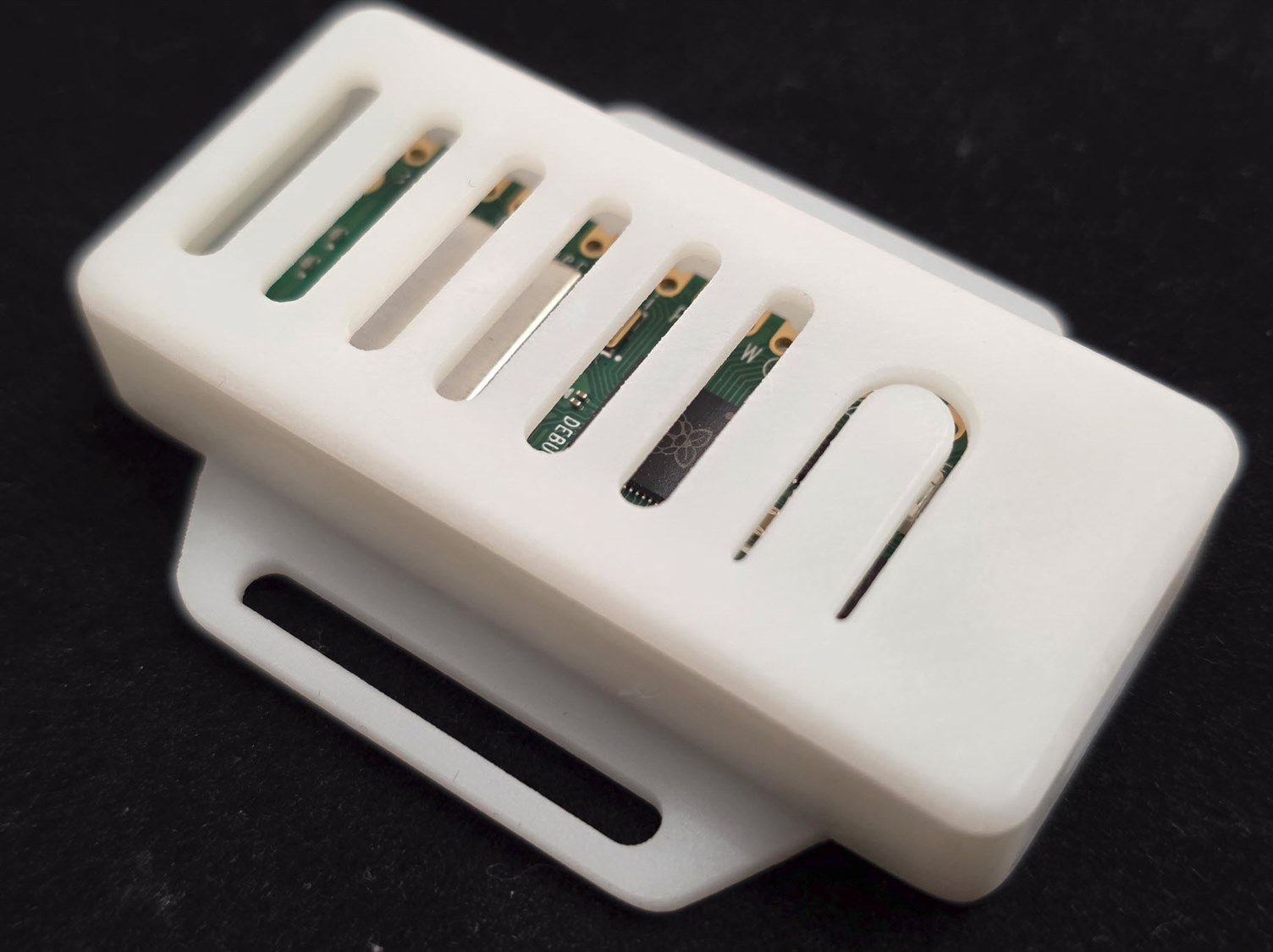
If you're using this enclosure and really need to wire the Pico to external circuitry, then, at a pinch, you could tack a few wires onto the Pi Pico connections and thread them through the cover slots.
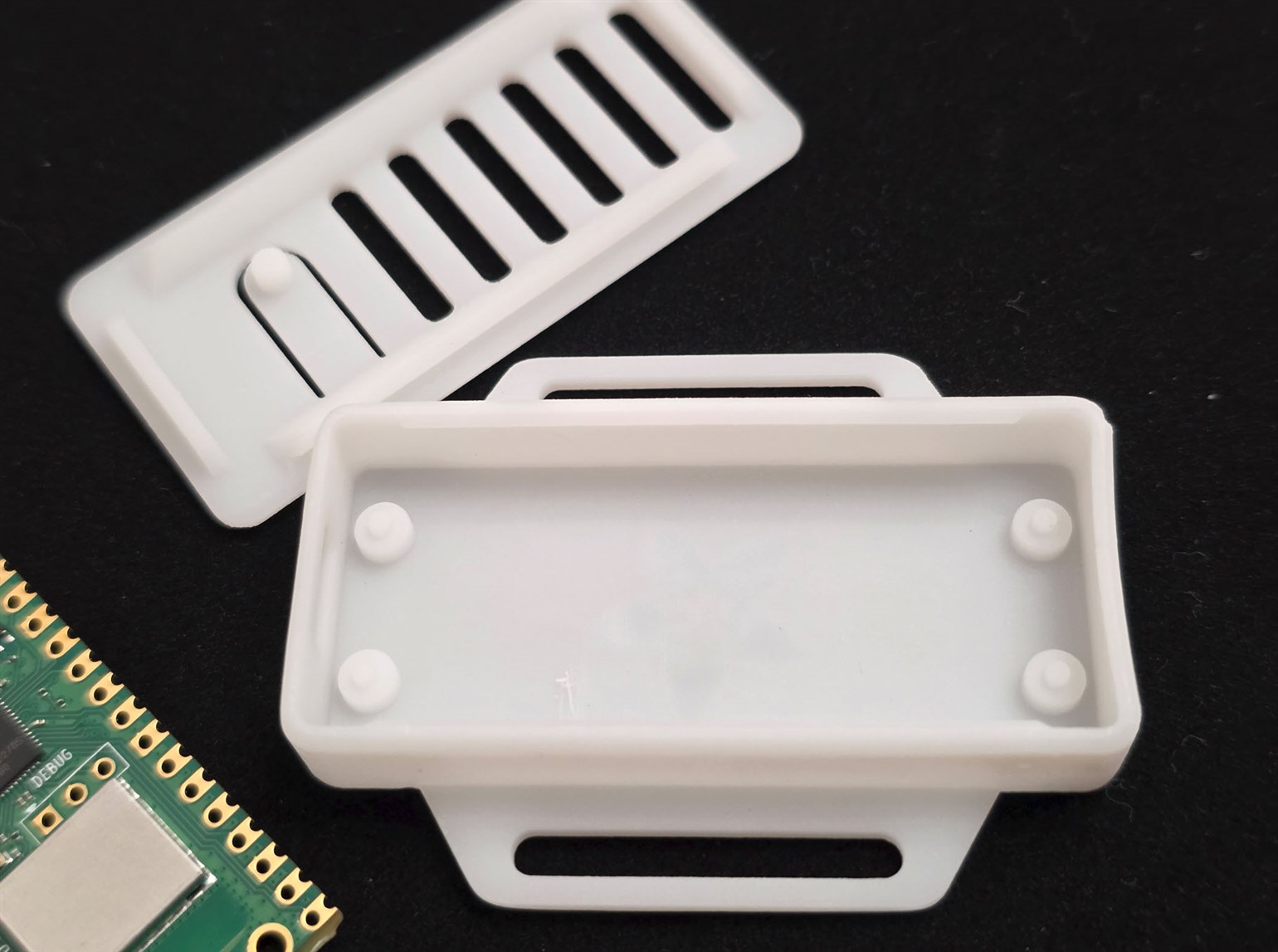
Aesthetically, the case doesn't look or feel great; it seems to be a 3D-printed item. I don't really mind that, since it doesn't need to look pretty.
The Pi Pico loosely fits in the locator pegs.
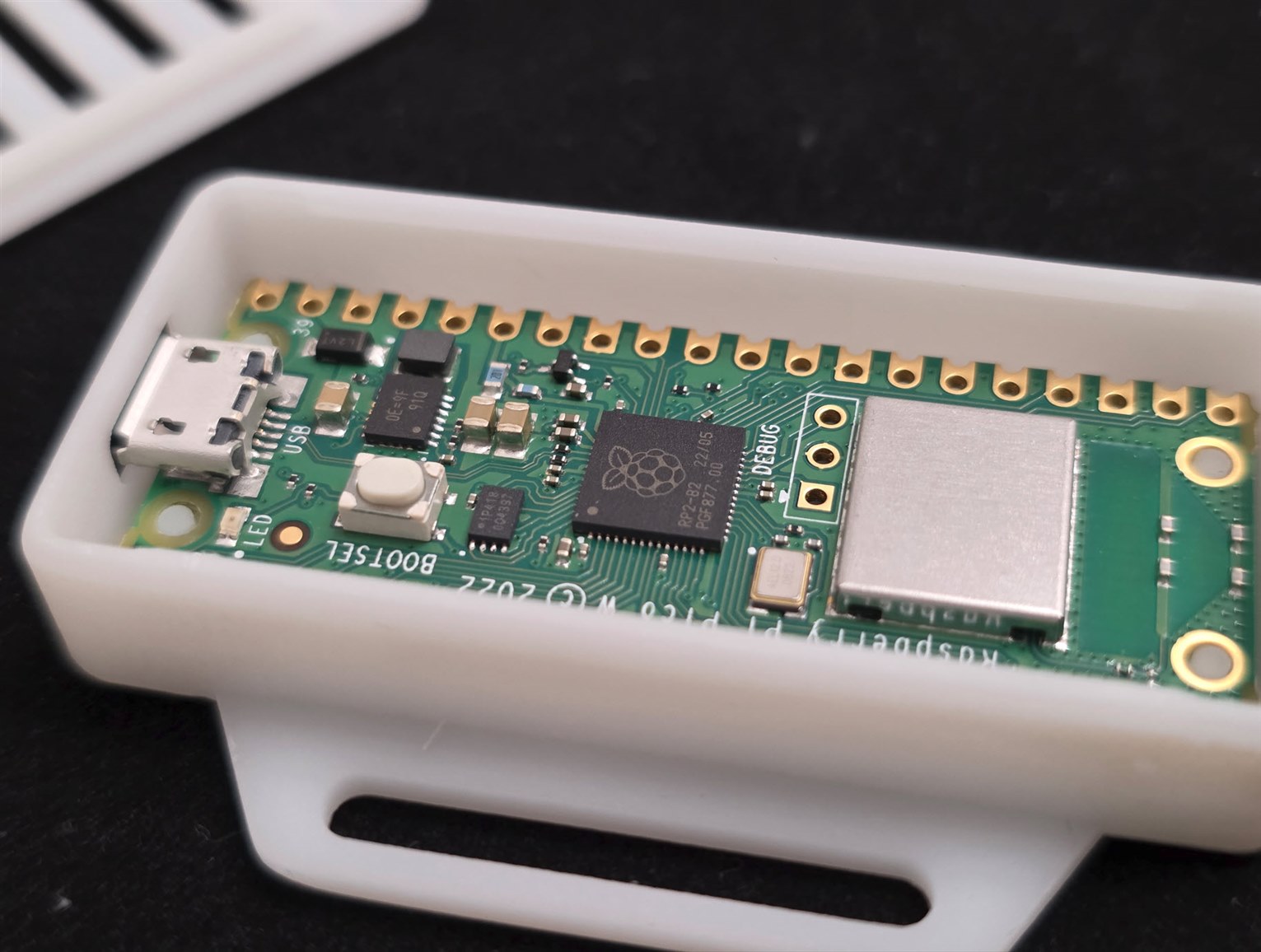
The Pi Pico rattles inside the enclosure; the Pico is only lightly held in the vertical plane at one end by the small internal bump on the Boot button lever.
USB connectors have enough clearance.
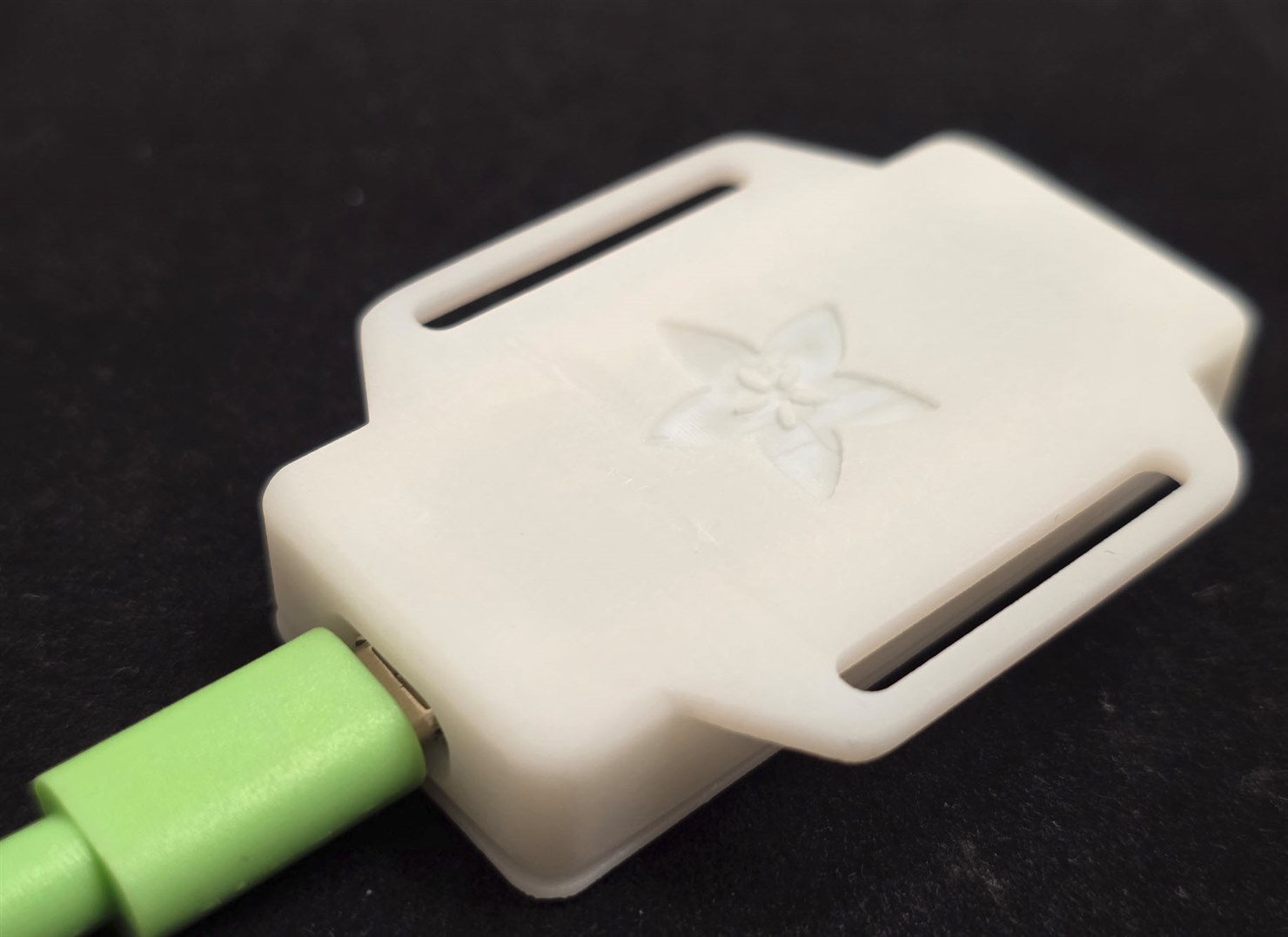
The Pi Pico's green LED is usable; it glows through the white plastic.
I think a better enclosure would have left some space to insert a few standard tact buttons, so you could wire them to Reset and a few GPIO pins.
An even better enclosure would have left space on one side, perhaps, for a small prototyping board. Adafruit was probably constrained by the cost of 3D printing, so they may have needed to keep the enclosure size small.
I will probably glue an SMD switch to poke out through one of the slots if possible, as well as an LED.
In summary, the enclosure is more than fine for what it is, but obviously, a larger enclosure would be more useful. I think this enclosure is intended for those without a 3D printer. If you have a 3D printer and some time, you'd be better off making a larger, better enclosure. Or, if you have a few tools and some time, you may as well use a larger standard project box, cut and file a small hole for a USB socket, and maybe create a 3D-printed clip to secure the Pi Pico inside the box.
Thanks for reading.
Top Comments