Sound and Vibration Measurement Hat for Raspberry Pi - Industrial Sensing

View table of contents ...  

Aren't a Member of element14?
Roadtests are an element14 member activity. If you are not a member, click here to register. Click the green Register button in the upper right corner of your browser. It takes less than a minute.

What the official roadtesters will receive (and be able to keep after their review is completed):

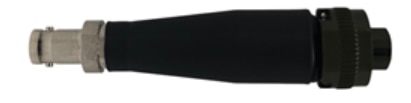
MCC172 HAT Raspberry Pi4 Model B Vibration Sensor Sensor Adapter (Mil to BNC) BNC Adapter
MCC172 Pi 4 Model B Vibration Sensor Sensor Adapter Mil to BNC BNC adapter

About the Sound and Vibration Measurement Hat for Raspberry Pi

Digilent logoThe Sound and Vibration Measurement Hat for Raspberry Pi (MCC 172 IEPE Measurement DAQ HAT) features two channels for making sound and vibration measurements from IEPE sensors like accelerometers and microphones. It features a 24-bit A/D per channel and a maximum sample rate of 51.2 kS/s/ch. Up to eight MCC HATs can be stacked onto one Raspberry Pi.

All DAQ HATs include C/C++® and PythonTm examples and open-source library. Comprehensive API and hardware documentation are also provided.

There are five devices in the MCC DAQ HAT Series. Models are available with voltage inputs, thermocouple inputs, IEPE-based sensor inputs, analog outputs, and digital I/O allowing users to configure multifunction, Raspberry Pi-based data logger solutions.

  • Two IEPE inputs
  • Two 24-bit, 51.2 kS/s A/D converters (one per channel)
  • AC coupled at ±5 V
  • 10-32 and screw terminal connections for OEM support
  • Synchronous ADC conversions between multiple boards
  • Onboard sample buffers allow high-speed acquisition
  • External digital trigger input

Datasheet

Resources, Software and Libraries

About the Vibration Sensor

The 603-Series includes alternative sensitivity models, hazardous area approved models, dual output models and models with an integral cable.

  • Sensitivity: (±10%)100 mV/g (10.2 mV/(m/s²))
  • Frequency Range: (±3dB)30 to 600000 cpm (0.5 to 10000 Hz)
  • Sensing Element: Ceramic
  • Measurement Range: ±50 g (±490 m/s²)
  • Weight: 1.8 oz (51 gm)

Specs Sheet

Product Manual

Other Information

Build an Accelerometer with a Raspberry Pi and a DAQ HAT

Important Dates

Enrollment Begins Feb 12 2022
Enrollment Ends March 15 2022
RoadTesters Selected March 17 2022
Products Shipped March 24 2022
Roadtest Begins March 31 2022
element14 Progress Report Follow Up April 30 2022
Reviews due by  May 30 2022

Terms and Conditions

Click here to read the terms and conditions

Official Roadtesters

The following applicants have been selected as official roadtesters:

RoadTest Reviews
Comments
Anonymous
  • Oooooo - can someone mount this on a lawnmower and record the data?

  • I hope so! I'm preparing my application and I will upload it within the deadline, for sure! If we're both selected we can of course work together, sharing infos and goals to speed up the learning process and present different results and applications! 

    Good luck! Fingers crossed

  • and a proto with sweep 2 Hz - 30 Hz:

  • test setup 2: a proto with an Arduino UNO, Velleman motor kit and a speaker.

  • A little DC coupled AB push-pull. Low power, with standard BJTs

    image

    This will never be able to drive a vibration motor/speaker. I just built it to get into design mode.

  • ... reading up on low frequency amplifiers in case I get selected. I will not need DC or HiFi performance Slight smile. Looking for +- 0 to 200 Hz.

  • , I submitted an application for the road test. It's still open for enrollment. 
    Maybe submit a proposal too? If we're both selected we could work together.

  • According the diagram on page 19 of the sensor manual, we can fix the sensor on a surface with a 1/4-28 UNF-2B screw, right? So, if the surface is a thin sheet metal, you can make a hole an use a male screw from the opposite side of the sensor. Otherwise you can use some kind of mechanical support in the middle.

    I'm not lucky because in Europe is not easy to find that kind of screws on local stores, but I can order some online.

    You can get inspired from the existing mounting stuffs from manufacturer website:

    https://www.pcb.com/products?m=603c01

    They are also mentioned on the Figure 4 of the manual:

    https://www.pcb.com/contentStore/docs/pcb_corporate/imi/products/manuals/603c01.pdf

    For example, you can screw the sensor on a magnet or make an adhesive mounting plate. 

  • Sure, Jan! I've made one of these speaker vibration testbed recently, either for fun and to make some DIY vibration tests on small electronics.

    When I saw this test I immediately thought it could be an interesting application, especially for having an accurate feedback on the vibration introduced (which is not so deterministic in the case of a DIY device).

  • Are you sure? I just checked the conditions.

    1.6 The Contest is NOT open to:

    1.6.1 Any person or entity who is a resident or national of any country which is subject to sanctions, embargoes or national trade restrictions of the United States of America, the European Union or the United Kingdom;

    Is Turkey under trade restrictions at the moment? 

  • thinking out loud: 

    It's possible to make a vibration table with a speaker.
    It's not the same as professional vibration testers (see this EEVBlog video):

    But to act as a low weight testbeds, you (or I) could salvage a speaker and attach a mounting plateau on it.
    Then a function generator and an amp to drive it. Most likely a custom build amp because the low frequencies involved can be below audio spectrum.

    The road test kit and sensors can then be used for 2 things:

    • to specify the behaviour of your makeshift vibration testbed
    • to measure the behaviour of your device under test, and find its resonance frequency, and its resilience to vibrations.
  • Looks like an interesting way to experiment with the MCC DAQ HAT Library for Raspberry Pi.

  • I'd like to enroll in this roadmap but unfortunately it's not available for Turkey Disappointed

  • ROFL - This road test lines up with the audio gear discussion topic. Use the DAQ hat to gather the audio data and see how it lines up with the accelerometers mounted on my floors and walls when I crank up the stereo volume really high. :-) 

  • I think this is a good roadtest to apply for if you are looking for a data acquisition system on a familiar platform (Raspberry Pi) using a high-end IEPE (integrated electronics piezo-electric) sensor. I encourage you to apply.

  • The roadtest is open for enrollment