RoadTest: Engineers needed to review the element13 Foil Headwave Aluminium aTtenuator DevKit
Author: wolfgangfriedrich
Creation date:
Evaluation Type: Electromechanical
Did you receive all parts the manufacturer stated would be included in the package?: True
What other parts do you consider comparable to this product?: ALCAN, Kirkland, Great Value, Glad
What were the biggest problems encountered?: Resident lab apprentices / test subjects did not cooperate
Detailed Review:
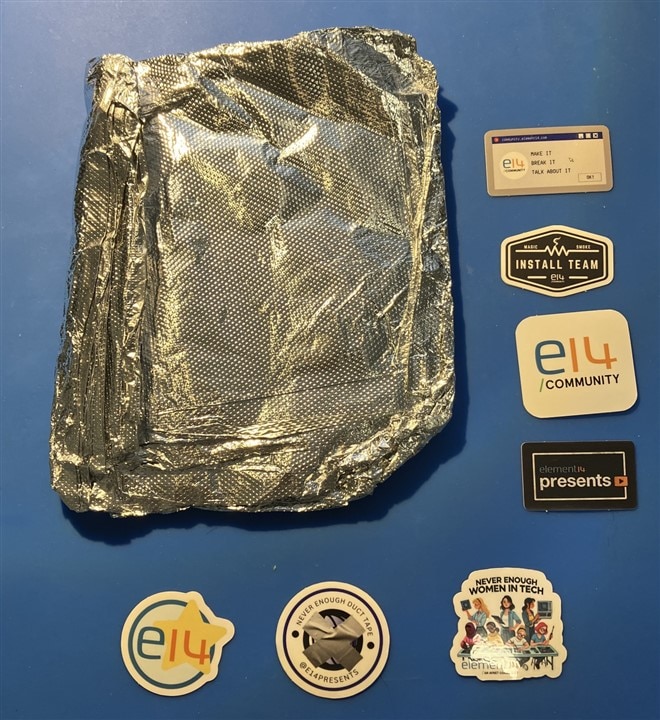
First I would like to thank element(14-1) to give me the opportunity to review the Foil Headwave Aluminium aTtenuator DevKit (FHAADK). And I would like to thank also the universe in general to provide some raw elemental aluminium to me and my fellow roadtesters. I am sure we can agree on a proper SLAFCS for this device when it catches on to be used for general purpose. The devkit arrived nicely pre-folded with some extra swag to increase to curb-appeal of various tool-boxes and vertical lab spaces.
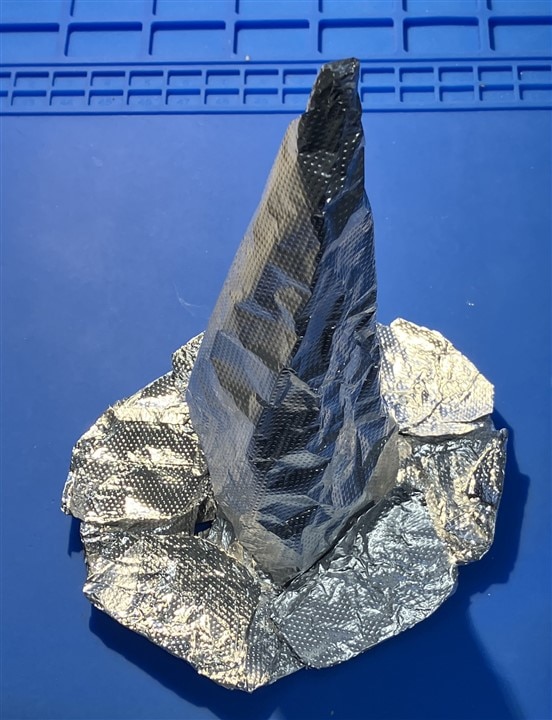
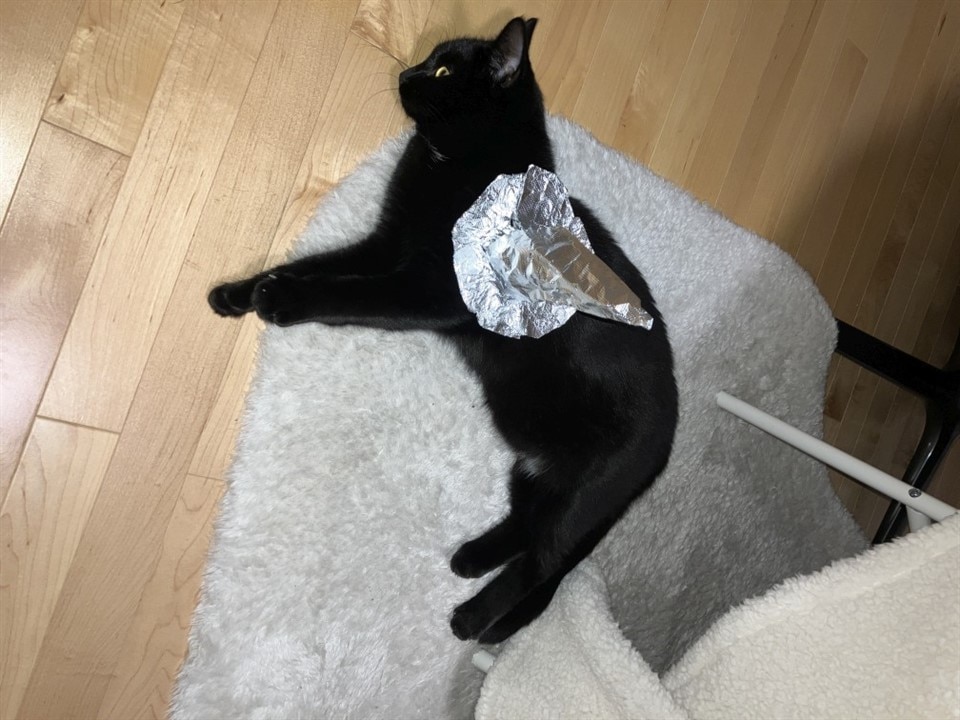
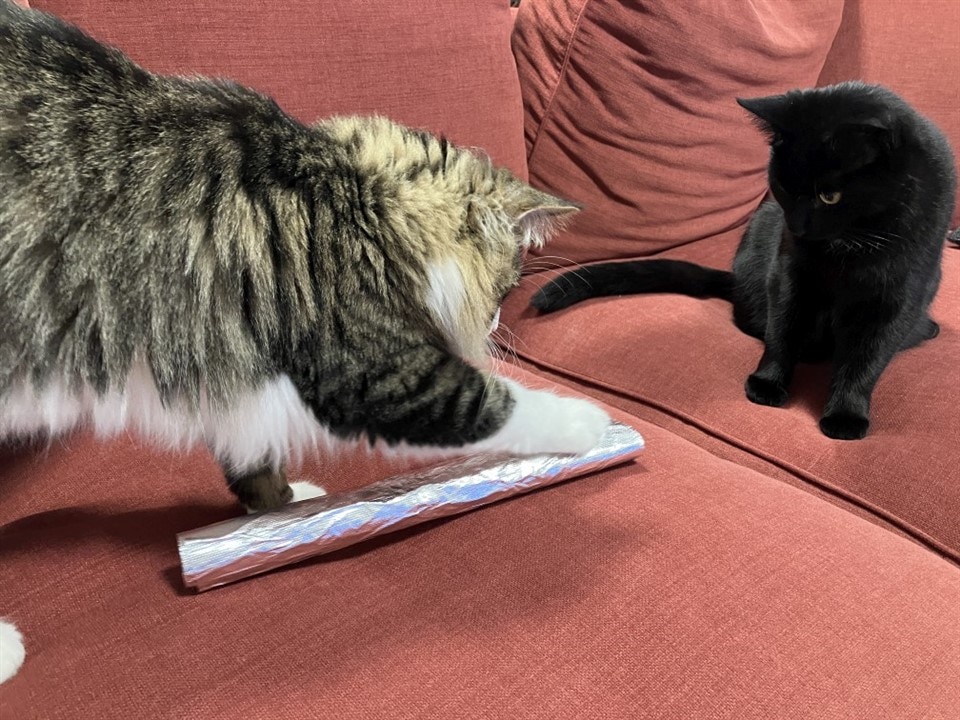
My plan of attack was similar to some of the other reviews, build some fancy/odd shaped attenuators and test them on (not-so) volunteering test subjects. I came up with 2 innovative designs, the traffic cone/wizard hat (TCWH2W) and the tail antenna tubular tester unit (TATUTU). More testing involved heat transfer science and apocalypse survival gear design.
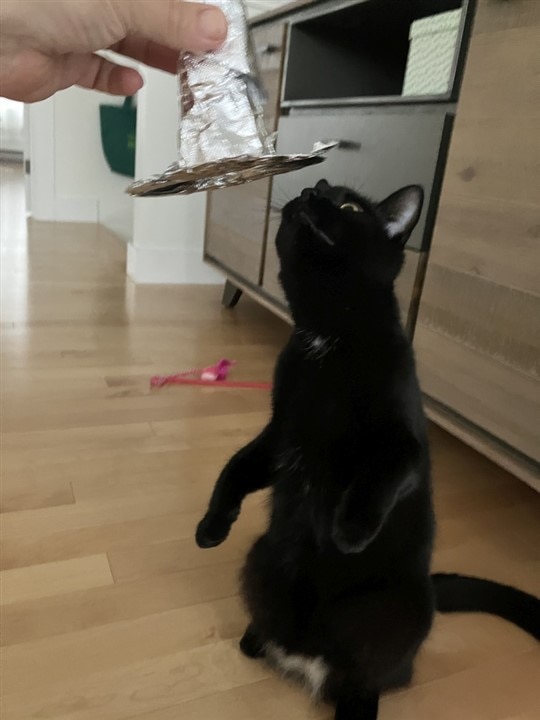
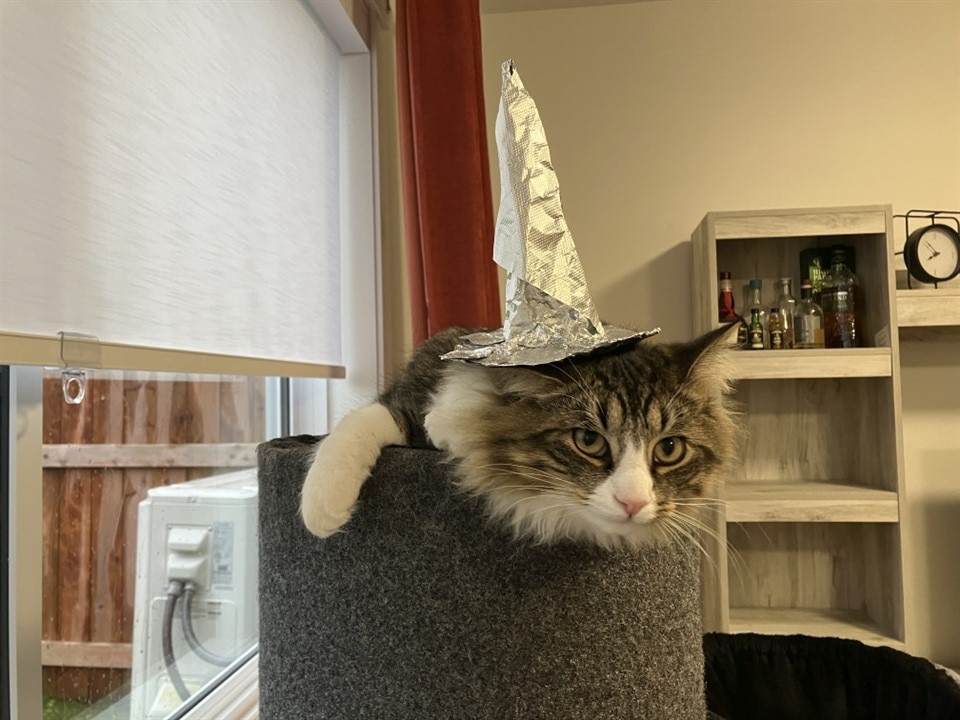
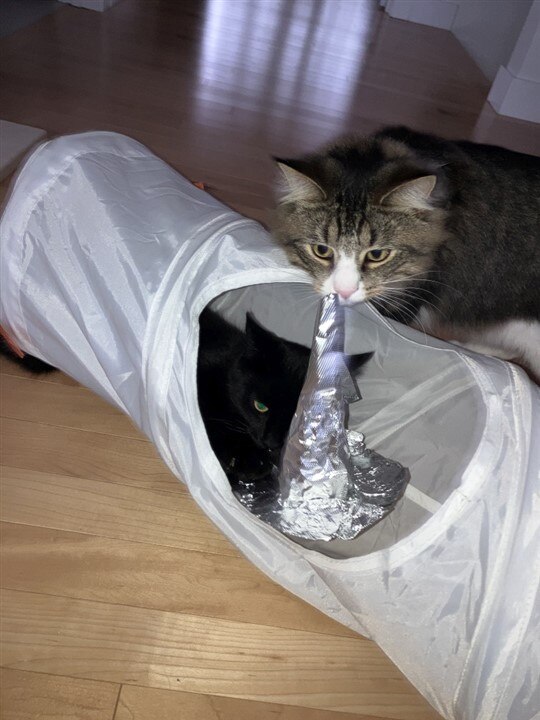
The cone shaped attenuator has the obvious advantage to reflect all perpendicular waves directly back the source and disperse waves from other directions into diffuse other directions. Also the test subjects are sometime accused of possession of less than 2 brain cells. The internal cone might be able to reflect internal brain waves back and cause an avalanche multiplier effect to increase the ratio of dedicated to random behaviour. The build was very straight forward, which cannot be said to the application process of the FHAAD device. Application of the TATUTU proved even more difficult and it could be deducted that the tail antennas only emit positively modulated perfect waves, which resist any artificial attenuation. Rumours of black furry unit bringing bad luck are thus disproven once and for all. Did I mention that I am not superstitious, it only brings bad luck!
Some pictures document best the design and application of the built devices.
| {gallery}Attenuator Test Documentation |
|---|
|
Traffic cone/Wizard hat (TCWH2W) |
|
Lucy Hat Inspection |
|
Half-successful hat application (test subject Leo not happy) |
|
The Testing struggles continue. |
|
Wrong locations did not work either. |
|
Inspection of the TATUTU. |
|
Partly tube insertion, but the test unit got destroyed. |
No furry friends were harmed during the application of the FHAADK prototypes. The tester might or might not have experienced some scratches and cuts.
Now let’s do some science.
The specific heat capacity of aluminium foil is roughly 900 J/(kg·°C) (or about 0.215 cal/(g·°C) or 0.89 J/(g·°C)). This means it takes 900 J of energy to raise the temperature of 1 kg of aluminium by 1 °C.
Because "heat transfer rate" measures how fast thermal energy moves rather than how much it stores, it is determined by the material's thermal conductivity and emissivity. Aluminium has a high thermal conductivity of approximately 230 to 237 W/(m·K), meaning it moves heat very quickly. However, due to its microscopic thickness and low emissivity (only about 3% to 5% for radiant heat), it transfers heat slowly to other objects (like your fingers), which is why it often feels safe to touch even when warm.
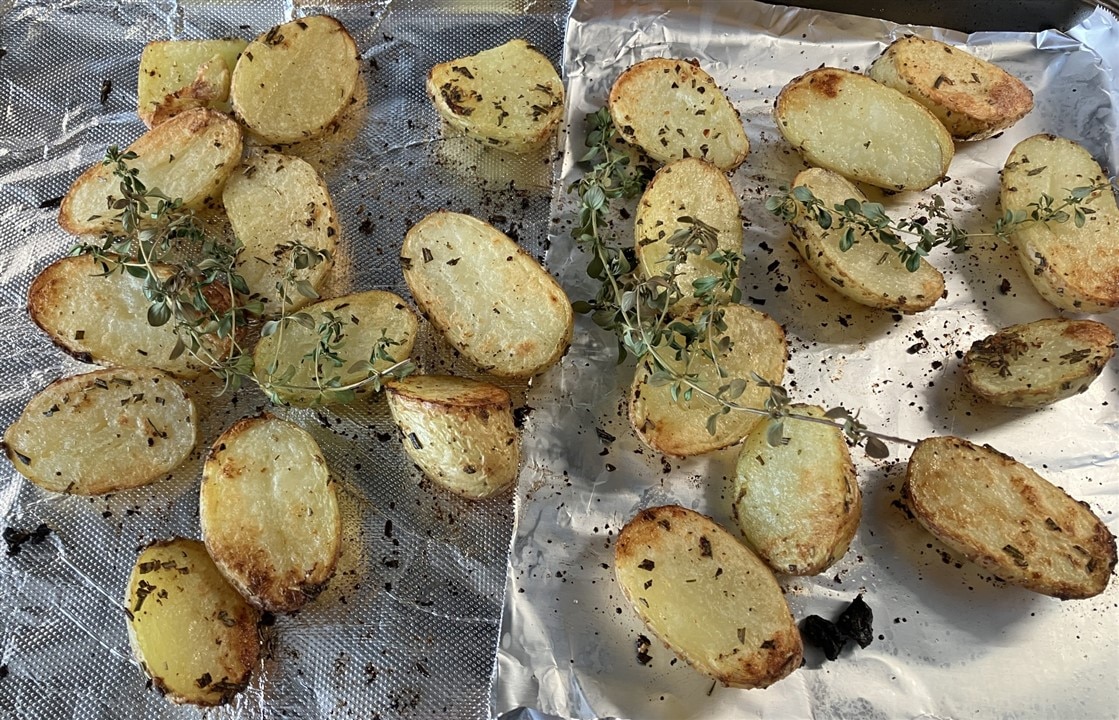
Now, the thickness of the FHAADK is 14.32 µm, as we know from [saramic]’s prior work. A very small number indeed, which means if you heat one side, the other side has almost the same temperature. This makes the devkit ideal to attenuate the presence of old grease and carbonized food and other particles on the bottom side from fresh food applied to the top side of the devkit. Added ample temperature increase on the bottom still provides tasty cooked proteins and carbs for human consumption. Additional observation: a side-by-side comparison of the perforated devkit and a flat standard aluminium attenuator showed that the perforated test sample was slightly stickier than the regular sample. This was highly unexpected and came as a surprise result. The caramelization, colour, crispiness and taste of the 2 specimen were very comparable and highly approved. Application sour crème is highly recommended.
Again, test documentation is performed best through images.
In those uncertain times, being prepared is half the battle.
With the shown effectiveness of attenuation of the devkit, the only thing left is to build the last shirt. It will be a scale prototype, but building a usable model will make things only better. We all know, bigger is better after all. The FHAADK sheets are ideal for advanced origami design and with enough patience band-aid. The last shirt is attenuating RF and heat from the outside and escape of body moisture from the inside, almost like a Fremen suit. Care instructions are: Do not wash or tumble dry. Iron at your own risk. Holes can easily be fixed with some solder and more patches of FHAADK.
Here is my contribution to the survival of humanity in case of an alien invasion.
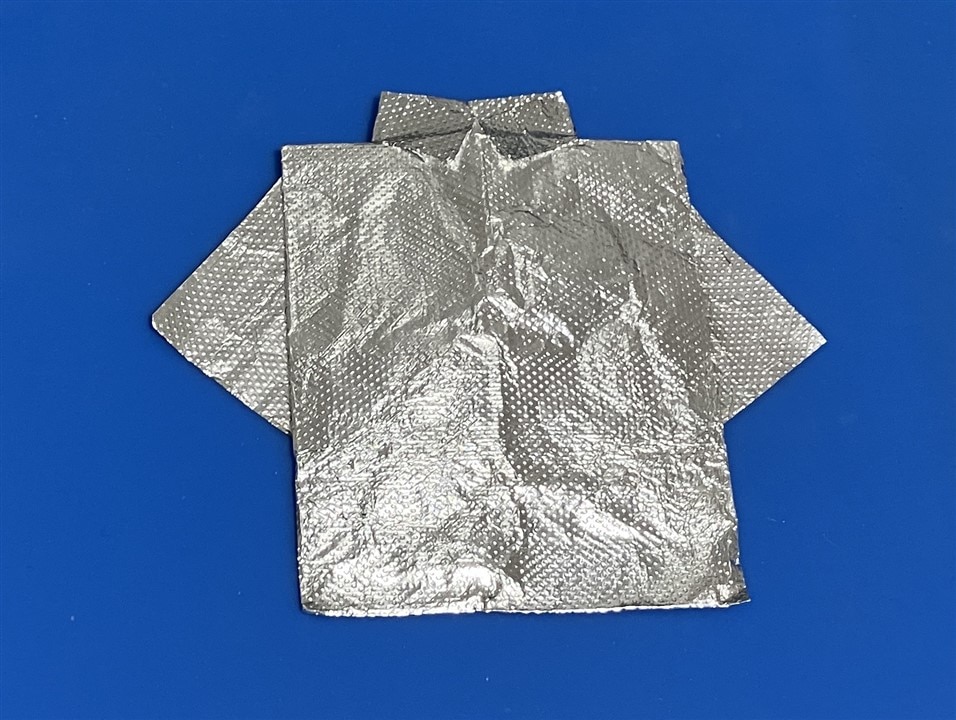
Of course, being un-prepared is the other half. There is nothing to add....
Glossary:
FHAADK: Foil Headwave Aluminium aTtenuator DevKit
SLAFCS: Six Letter Acronym For Cool Stuff
TATUTU: Tail Antenna TUbular Tester Unit
TCWH2W: traffic cone/wizard hat two words