element14 Community
element14 Community
    Register Log In
  • Site
  • Search
  • Log In Register
  • Community Hub
    Community Hub
    • What's New on element14
    • Feedback and Support
    • Benefits of Membership
    • Personal Blogs
    • Members Area
    • Achievement Levels
  • Learn
    Learn
    • Ask an Expert
    • eBooks
    • element14 presents
    • Learning Center
    • Tech Spotlight
    • STEM Academy
    • Webinars, Training and Events
    • Learning Groups
  • Technologies
    Technologies
    • 3D Printing
    • FPGA
    • Industrial Automation
    • Internet of Things
    • Power & Energy
    • Sensors
    • Technology Groups
  • Challenges & Projects
    Challenges & Projects
    • Design Challenges
    • element14 presents Projects
    • Project14
    • Arduino Projects
    • Raspberry Pi Projects
    • Project Groups
  • Products
    Products
    • Arduino
    • Avnet & Tria Boards Community
    • Dev Tools
    • Manufacturers
    • Multicomp Pro
    • Product Groups
    • Raspberry Pi
    • RoadTests & Reviews
  • About Us
  • Store
    Store
    • Visit Your Store
    • Choose another store...
      • Europe
      •  Austria (German)
      •  Belgium (Dutch, French)
      •  Bulgaria (Bulgarian)
      •  Czech Republic (Czech)
      •  Denmark (Danish)
      •  Estonia (Estonian)
      •  Finland (Finnish)
      •  France (French)
      •  Germany (German)
      •  Hungary (Hungarian)
      •  Ireland
      •  Israel
      •  Italy (Italian)
      •  Latvia (Latvian)
      •  
      •  Lithuania (Lithuanian)
      •  Netherlands (Dutch)
      •  Norway (Norwegian)
      •  Poland (Polish)
      •  Portugal (Portuguese)
      •  Romania (Romanian)
      •  Russia (Russian)
      •  Slovakia (Slovak)
      •  Slovenia (Slovenian)
      •  Spain (Spanish)
      •  Sweden (Swedish)
      •  Switzerland(German, French)
      •  Turkey (Turkish)
      •  United Kingdom
      • Asia Pacific
      •  Australia
      •  China
      •  Hong Kong
      •  India
      • Japan
      •  Korea (Korean)
      •  Malaysia
      •  New Zealand
      •  Philippines
      •  Singapore
      •  Taiwan
      •  Thailand (Thai)
      • Vietnam
      • Americas
      •  Brazil (Portuguese)
      •  Canada
      •  Mexico (Spanish)
      •  United States
      Can't find the country/region you're looking for? Visit our export site or find a local distributor.
  • Translate
  • Profile
  • Settings
Transportation & Automotive
  • Technologies
  • More
Transportation & Automotive
Forum 超级电容与电池的比较
  • Blog
  • Forum
  • Documents
  • Quiz
  • Polls
  • Members
  • Mentions
  • Sub-Groups
  • Tags
  • More
  • Cancel
  • New
Join Transportation & Automotive to participate - click to join for free!
Actions
  • Share
  • More
  • Cancel
Forum Thread Details
  • Replies 0 replies
  • Subscribers 82 subscribers
  • Views 4402 views
  • Users 0 members are here
Related

超级电容与电池的比较

chenchen924
chenchen924 over 14 years ago

相对铅酸电池、镍镉电池、锂离子电池,超级电容具有节能、超长使用寿命、安全、环保、宽温度范围、充电快速、无需人工维护等优点。本文介绍超级电容与其他储能产品的性能比较,例如与各种电池的比较,替代的可能性。
image
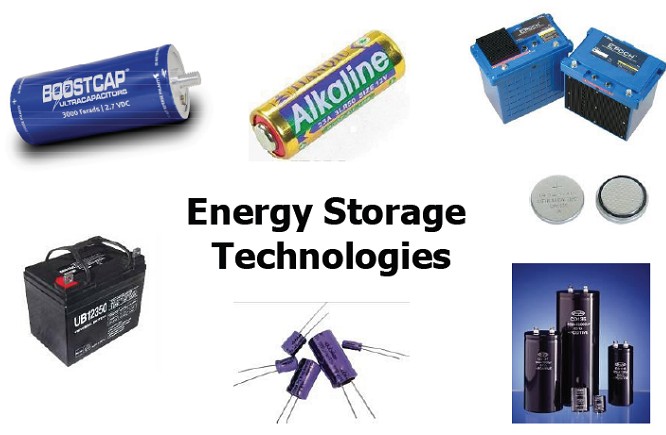
图1:各种各样的储能产品

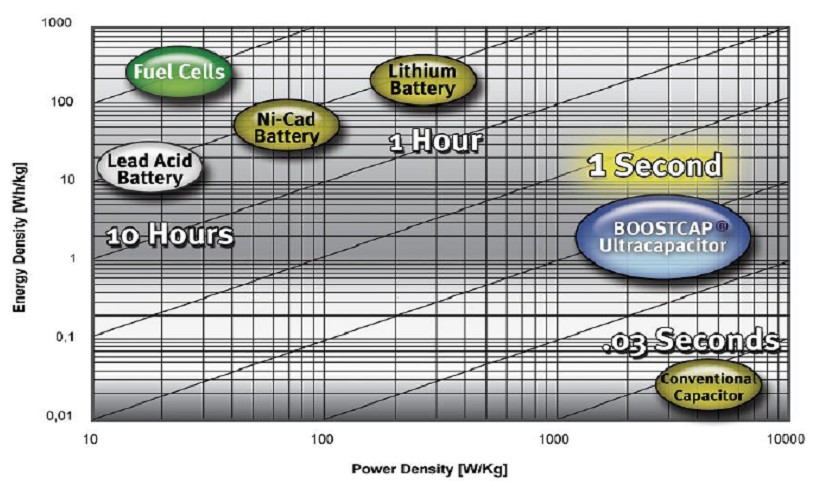
之所以叫超级电容,是因为超级电容的容值都是法拉级的,且可以很快提供一个充放电,这是传统的电容或者电池做不到的。下面介绍了各种产品不同的应用范围,横坐标是能流密度,纵坐标是能量密度,从中可以看到哪个地方是电池的应用范围,哪个地方是传统电容的应用范围,哪一块是超级电容的应用范围。
image
图2. 超级电容和其他储能技术的比较

我们知道电池的充放电大概在1小时到10个小时左右,而传统电容是作为滤波使用的,充放电是在0.03秒,但是超级电容就在1秒左右,基本上是从0.1秒到10秒,这正是汽车比如刹车起动的时候要用的,当然任何的设备比如风能变桨系统,变桨的时候要提供能量也是在这个时间段。超级电容的能流密度和能量密度都非常高。超级电容是用物理的方法储能,电池是用化学反应的方法来储能,所以电池的反应时间会很长,超级电容可以快速的充放电,这是它的根本原因,也是超级电容的性能优势之所在。

传统的储能系统是使用铅酸电池。以风力发电为例,有风时由风力发电机发电,无风时由储能系统供电。当电源断开进行切换时,铅酸电池需要十几秒的反应时间。这时便可由超级电容进行辅助。由于超级电容是将电荷储存起来,可以快速的补充和释放,而电池则需要经过化学反应的方式进行充放电。在这十几秒的时间里,超级电容可以提供短时间的能量,保证电源稳定。超级电容可以工作在在-40℃~65℃之间,可以覆盖PC -20℃~60℃的工作温度范围和电池0℃~50℃的工作温度。超级电容是功率密集元件,但放电时间较短,电池是能量密集型元件,放电时间较长。
image
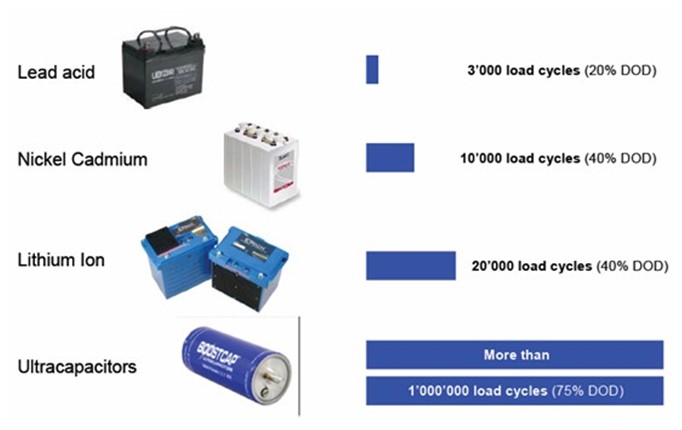
图3.超级电容与电池的充放电次数比较

超级电容的应用主要是用作备用电源和提供峰值功率。超级电容用作备用电源时,具有高可靠性、免维护、长寿命和宽工作温度范围的特点。由于超级电容能够进行高功率的充放电,所以可以将火车,城市轻轨的刹车能量储存起来,加速时提供峰值功率,或者可以在吊车起吊时,电动机启动时提供峰值功率。
image
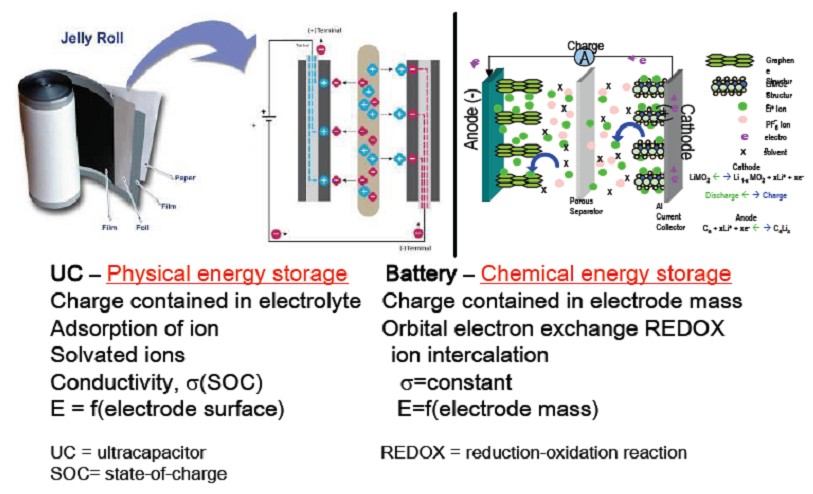
图4.超级电容与电池的储能原理比较

如上图4所示,超级电容和电池在储能原理上最大的不同在于超级电容利用的是物理的储能方式而电池利用的是化学的储能方式。同时,超级电容和电池的储能的决定因素也不同。
image
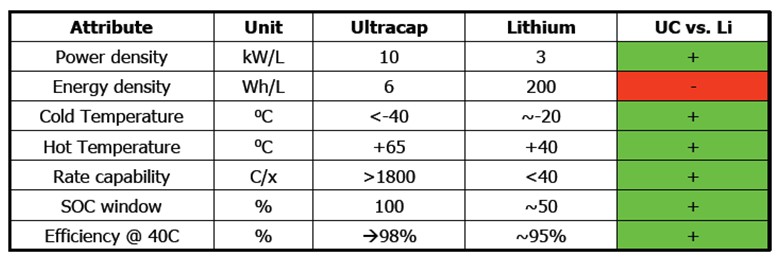
图5.超级电容与锂离子电池比较

超级电容器是功率密集元件(>10kW/L)而锂离子电池是能量密集元件 (~200 Wh/L)。
image
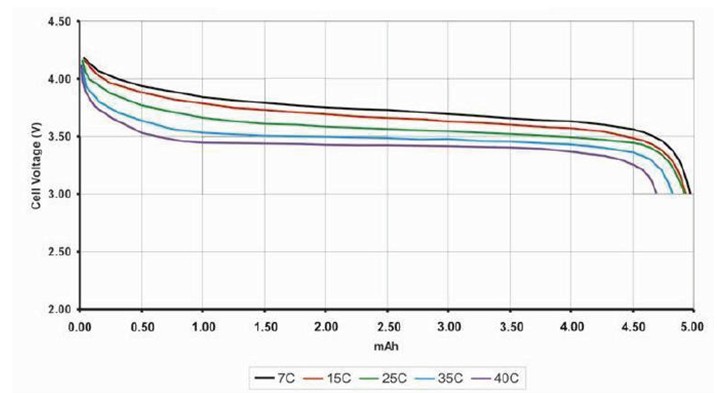
图6.电池电压随电池能量的变化

image
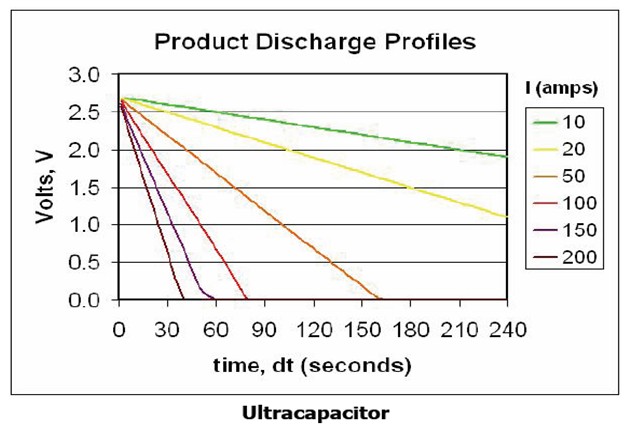
图7.超级电容器的放电特性

超级电容与电池比较,有如下特性:

  a.超低串联等效电阻(LOW ESR),功率密度(Power Density)是锂离子电池的数十倍以上,适合大电流放电,(一枚4.7F电容能释放瞬间电流18A以上)。
  b. 超长寿命,充放电大于50万次,是Li-Ion电池的500倍,是Ni-MH和Ni-Cd电池的1000倍,如果对超级电容每天充放电20次,连续使用可达68年。
  c. 可以大电流充电,充放电时间短,对充电电路要求简单,无记忆效应。
  d. 免维护,可密封。
  e.温度范围宽-40℃~+70℃,一般电池是-20℃~60℃。

  • Sign in to reply
  • Cancel
element14 Community

element14 is the first online community specifically for engineers. Connect with your peers and get expert answers to your questions.

  • Members
  • Learn
  • Technologies
  • Challenges & Projects
  • Products
  • Store
  • About Us
  • Feedback & Support
  • FAQs
  • Terms of Use
  • Privacy Policy
  • Legal and Copyright Notices
  • Sitemap
  • Cookies

An Avnet Company © 2025 Premier Farnell Limited. All Rights Reserved.

Premier Farnell Ltd, registered in England and Wales (no 00876412), registered office: Farnell House, Forge Lane, Leeds LS12 2NE.

ICP 备案号 10220084.

Follow element14

  • X
  • Facebook
  • linkedin
  • YouTube