element14 Community
element14 Community
    Register Log In
  • Site
  • Search
  • Log In Register
  • Community Hub
    Community Hub
    • What's New on element14
    • Feedback and Support
    • Benefits of Membership
    • Personal Blogs
    • Members Area
    • Achievement Levels
  • Learn
    Learn
    • Ask an Expert
    • eBooks
    • element14 presents
    • Learning Center
    • Tech Spotlight
    • STEM Academy
    • Webinars, Training and Events
    • Learning Groups
  • Technologies
    Technologies
    • 3D Printing
    • FPGA
    • Industrial Automation
    • Internet of Things
    • Power & Energy
    • Sensors
    • Technology Groups
  • Challenges & Projects
    Challenges & Projects
    • Design Challenges
    • element14 presents Projects
    • Project14
    • Arduino Projects
    • Raspberry Pi Projects
    • Project Groups
  • Products
    Products
    • Arduino
    • Avnet & Tria Boards Community
    • Dev Tools
    • Manufacturers
    • Multicomp Pro
    • Product Groups
    • Raspberry Pi
    • RoadTests & Reviews
  • About Us
    About the element14 Community
  • Store
    Store
    • Visit Your Store
    • Choose another store...
      • Europe
      •  Austria (German)
      •  Belgium (Dutch, French)
      •  Bulgaria (Bulgarian)
      •  Czech Republic (Czech)
      •  Denmark (Danish)
      •  Estonia (Estonian)
      •  Finland (Finnish)
      •  France (French)
      •  Germany (German)
      •  Hungary (Hungarian)
      •  Ireland
      •  Israel
      •  Italy (Italian)
      •  Latvia (Latvian)
      •  
      •  Lithuania (Lithuanian)
      •  Netherlands (Dutch)
      •  Norway (Norwegian)
      •  Poland (Polish)
      •  Portugal (Portuguese)
      •  Romania (Romanian)
      •  Russia (Russian)
      •  Slovakia (Slovak)
      •  Slovenia (Slovenian)
      •  Spain (Spanish)
      •  Sweden (Swedish)
      •  Switzerland(German, French)
      •  Turkey (Turkish)
      •  United Kingdom
      • Asia Pacific
      •  Australia
      •  China
      •  Hong Kong
      •  India
      •  Japan
      •  Korea (Korean)
      •  Malaysia
      •  New Zealand
      •  Philippines
      •  Singapore
      •  Taiwan
      •  Thailand (Thai)
      •  Vietnam
      • Americas
      •  Brazil (Portuguese)
      •  Canada
      •  Mexico (Spanish)
      •  United States
      Can't find the country/region you're looking for? Visit our export site or find a local distributor.
  • Translate
  • Profile
  • Settings
Business of Engineering
  • Technologies
  • More
Business of Engineering
Blog What does being an engineer mean to you?
  • Blog
  • Forum
  • Documents
  • Quiz
  • Events
  • Polls
  • Files
  • Members
  • Mentions
  • Sub-Groups
  • Tags
  • More
  • Cancel
  • New
Join Business of Engineering to participate - click to join for free!
  • Share
  • More
  • Cancel
Group Actions
  • Group RSS
  • More
  • Cancel
Engagement
  • Author Author: JenCooke
  • Date Created: 23 Jun 2014 9:35 AM Date Created
  • Views 5732 views
  • Likes 1 like
  • Comments 21 comments
  • engineer
  • birthday
Related
Recommended

What does being an engineer mean to you?

JenCooke
JenCooke
23 Jun 2014

We’ve got a birthday coming up. The element14 Community will turn five years old soon and this milestone has got us thinking about the big questions. Who we are, why we’re here and what we mean to people, that sort of thing.


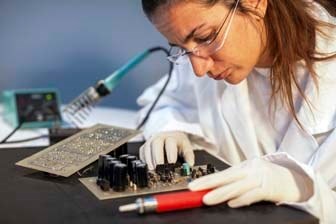
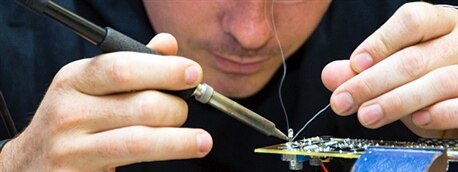
The element14 Community was created for engineers. So we wanted to spend our birthday week celebrating and recognising you, the people who design, build and maintain the technology in our world today.
 

imageimage


We want to really understand what being an engineer means and what drives you all in your engineering endeavours. We’ve put together a few questions and we’d love to know what you think:


What characteristics do you feel determine you as an engineer?


How did you come to the realisation you wanted to be an engineer?


Are there any ‘rites of passage’ an engineer should go through?


What advice would you give to any budding engineers?


Do you communicate and network with other engineers? How?


Do you have any stories to show what being an engineer is all about?


Please answer in the comments below!

  • Sign in to reply

Top Comments

  • DAB
    DAB over 11 years ago +3
    I always liked to figure out how things worked and applying technology to solve problems, so being an engineer was a natural choice for me. I initially became an electronics technician, but found that…
  • Instructorman
    Instructorman over 11 years ago +2
    What characteristics do you feel determine you as an engineer? There are several. First, there is a comfort with things artificial - machines, devices, systems, infrastructure - that not all people seem…
  • dougw
    dougw over 11 years ago +2
    What characteristics do you feel determine you as an engineer? The primary characteristic that I feel defines me as an engineer is a passion for solving problems. I get real satisfaction from building…
  • baldengineer
    baldengineer over 11 years ago

    How did you come to the realisation you wanted to be an engineer?

    Back To The Future came out when I was in elementary school.  Like most kids I was fascinated by the movie and by time travel.  Doc Brown was my hero.  His entire workshop was filled with all of these cool inventions that he made.  That's when I knew I wanted to be an inventor when I grew up.  In fact, at the time I made two life goals:  1) Work for NASA and 2) Invent something sold in stores.


    So, since I was barely old enough to do division and multiplication, I knew I wanted to be an inventor.  It wasn't until high school I realized that meant "engineer".


    As for my goals, I never took a job for NASA but I did get an offer for a position at Goddard.  I've also consulted on a number of satellite projects.  #2 happened during my first internship.


    I should point out that Doc Brown made me want to be an inventor.  And now, I'm an application and technology expert at a Capacitor company...

    • Cancel
    • Vote Up +1 Vote Down
    • Sign in to reply
    • More
    • Cancel
  • JenCooke
    JenCooke over 11 years ago in reply to johnbeetem

    Thanks John for your comments.  I like your story of visiting UC Berkeley Botanical Gardens to see the flowers and you were more interested in the irrigation system. LOL - the sign of a true engineer!  Would you be happy for me to use some of your comments in the press?

    Jen

    • Cancel
    • Vote Up 0 Vote Down
    • Sign in to reply
    • More
    • Cancel
  • JenCooke
    JenCooke over 11 years ago in reply to DAB

    Thank you very much for your comments DAB.  Some interesting points, particularly the note on communicating.  Would you be happy for me to use some of your comments in the media?

    Jen

    • Cancel
    • Vote Up 0 Vote Down
    • Sign in to reply
    • More
    • Cancel
  • Instructorman
    Instructorman over 11 years ago

    What characteristics do you feel determine you as an engineer?

    There are several.  First, there is a comfort with things artificial - machines, devices, systems, infrastructure - that not all people seem to have.  This comfort seems to grow out of an innate ability to see how technology integrates with human enterprise and a proclivity for applying technical and scientific principles to the solution of certain human problems.  Deciding which human problems may benefit from a technical or scientific solution, and which may not, is a type of wisdom that all engineers, I believe, should work to develop.


    As mentioned by DAB, mathematical skill is necessary, but I think not sufficient, to determine your engineering character.  Honestly, I'd classify my math skills as a little above average, but not stellar.  In my experience there are two types of math knowledge or skill required.  First, a solid understanding of key concepts - what is a derivative, what is an integral, what is standard deviation, what is a logarithm, how are systems of equations solved, et cetera.  Second, a working competency with numbers, over an enormous range from very large to very small.  Can you estimate the value of common physical quantities in specific situations?  Can you judge if a number presented by a calculator, computer, fellow engineer, sales rep, or test equipment is reasonable or not?


    A mentioned by John Beetem, obsession with problem solving is necessary too.  I don't like to think of myself as obsessed, but when I step away from my bench and consider what I do dispassionately, yeah - it kind of looks like obsession.  What other descriptor should be used for someone that expends substantial resources, some non-renewable like time, as in swaths of your lifetime, toward achieving something as tenuous as merely solving a problem?  Often these problems are not big picture epic scale problems, like climbing a mountain, getting an astronaut to the moon or addressing climate change.  They are often nit-picky scale problems like making a button cell battery last longer, or keeping noise from clobbering a low level signal, or bullet proofing a user interface.  Solving these problems, however small and nit-picky, can help a team climb a mountain, or get an astronaut to the moon, or address climate change.  If the idea of attaching yourself to a problem, including non-glamorous problems, and being dragged through a labyrinth of mystery and adventure does not appeal, then you may not have an engineer inside you.


    How did you come to the realisation you wanted to be an engineer?

    When, in the spring of 1968, my father bought a vacuum tube radio kit and let me assemble it.  I remember feeling an odd comfort and realization when assembling the resistors, capacitors, wires, tubes and sockets.  These things, these colourful, delicate and clever things, when assembled correctly, were the portal, the interface, the technology that bridged the realm of invisible radio waves to the realm of intelligible sound waves.  It was at this time I realized that if other humans could master these things and make them do wonderful things like convert invisible waves into music, that I could learn to do the same, and more. I find it a little odd that when introduced to the technology under the hood of the family car I did not sense the same wonder.  I thought "dirty", "smelly" and "dangerous", but electronics at that time was none of those, until I got my first 300 VDC shock off a plate supply, seared my flesh on a soldering iron and choked on the rancid smoke pouring out of a seriously overloaded resistor.


    Are there any ‘rites of passage’ an engineer should go through?

    • You should take something apart, actually, many things, and read the insides like you are reading a good mystery novel.  Try to predict how the story will end.
    • You should build things, many things, and make mistakes.  Some things should work when you are finished, and you will be proud, but you will learn more from those that do not work, and be prouder when you do not accept defeat and figure out what went wrong.
    • You should experience failure and hit the limits of your ability.  Sometimes you will not have the ability to solve the problem.  Take risks and discover where your walls are then learn how to reach out to others for help.
    • Spend time working with others.  Learn to say what you mean and mean what you say and realize that many people you will have to work with don't follow this maxim.  You will more than once be in a meeting where something like this will happen.  Be patient with others, learn to listen deeply, learn to scaffold upon the knowledge of others and fulfil your role as liaison between the unaware and the magisterium of technology.
    • Estimate a project incorrectly and realize when the job is done at triple the time you promised that you worked for less than minimum wage.  You will be a better estimator afterward.


    Mark

    • Cancel
    • Vote Up +2 Vote Down
    • Sign in to reply
    • More
    • Cancel
  • johnbeetem
    johnbeetem over 11 years ago

    From what my parents told me, I was a born engineer.  When I was about 3 or 4 years old, they took me to the UC Berkeley Botanical Gardens so I could look at all the pretty trees and flowers.  Instead, I was fascinated by the irrigation system and went running around to see where all the pipes went.  Good practice for tracing signals on multi-layer PC boards image


    I grew up in a neighborhood with practically no other children, other than my big sister.  My mother was worried that I wasn't getting enough interaction with other children, so she enrolled me in a nursery school.  This was too late: the teacher reported that instead of playing with the other children, I had discovered the school's collection of jigsaw puzzles and I was methodically putting these together, showing unusual focus for a boy my age.  What was most alarming is that I would store the puzzle away when I was done instead of leaving them out.  Maybe this is why I don't need automatic garbage collection. image


    So I had important engineer characteristics from an early age: obsession with solving problems and the ability to focus on them.


    Rites of passage: I don't know what schools are like nowadays, but I remember always being a social outcast.  This really didn't bother me, because I had plenty of interesting problems to work on.  I went to a high school that had strong math and science, so there were enough geeks to form a critical mass.  For example, we had a top-notch math team.


    Advice to budding engineers: Try not to worry about being a social outcast.  It will give you more time to learn neat stuff.  Don't wait for people to show you neat stuff -- find it for yourself.  My early knowledge of computers and electronics all came from going to the library and reading books.  Nowadays you have amazing resources like Wikipedia, so you don't even have to find physical books.  Also, you can often get used books for very cheap.  You don't need the latest and most expensive books to learn engineering: the fundamentals change very slowly, so get cheap used books.


    This is a great time (technically) for budding engineers: you can get cheap boards like Raspberry Pi and Papilio FPGA boards to play with things and see them working.  My first computer was an Heathkit H-8, and that cost big bucks compared to a RasPi.  So did my Heathkit top-of-the-line 15 MHz dual-trace sillyscope.


    On the other hand, nobody knows what sort of job prospects budding engineers will have.  It's no longer the case that an engineering degree is automatically a ticket to a long, well-paid career with a comfortable retirement.  In a way, this is good because people who want to become engineers only because they think it will pay well are probably going to be unhappy.  People who are obsessed with problem solving and understanding how things work (and fail) are the ones who are going to enjoy the work needed to become an engineer -- indeed, all those problem sets are going to be a fun adventure, not a burdensome chore.  As with most professions, the best and happiest are usually those who can't imagine being anything else.


    I'm currently working as an independent consultant, so my day-to-day interaction with other engineers is e-mail with clients and sites such as this one and Geek Times.  To get a periodic "fix" of feeling like a real engineer, I go to physical conferences in SillyIcon Valley twice a year: the Embedded Systems Conference (aka Design West aka EE Live!) and the ARM TechCon.  I get the cheapskate "exhibits-only" badge and generally just go one day.  ESC has never disappointed, but lately ARM TechCon has become more ARM MarketingCon.  ESC this year was quite different from the others: usually I'm more interested in the new technology and tech talks.  This year I met face-to-face a number of people I enjoyed interacting with at Geek Times and that was what made this year's EE Live! most interesting.

    • Cancel
    • Vote Up +1 Vote Down
    • Sign in to reply
    • More
    • Cancel
<>
element14 Community

element14 is the first online community specifically for engineers. Connect with your peers and get expert answers to your questions.

  • Members
  • Learn
  • Technologies
  • Challenges & Projects
  • Products
  • Store
  • About Us
  • Feedback & Support
  • FAQs
  • Terms of Use
  • Privacy Policy
  • Legal and Copyright Notices
  • Sitemap
  • Cookies

An Avnet Company © 2026 Premier Farnell Limited. All Rights Reserved.

Premier Farnell Ltd, registered in England and Wales (no 00876412), registered office: Farnell House, Forge Lane, Leeds LS12 2NE.

ICP 备案号 10220084.

Follow element14

  • X
  • Facebook
  • linkedin
  • YouTube