


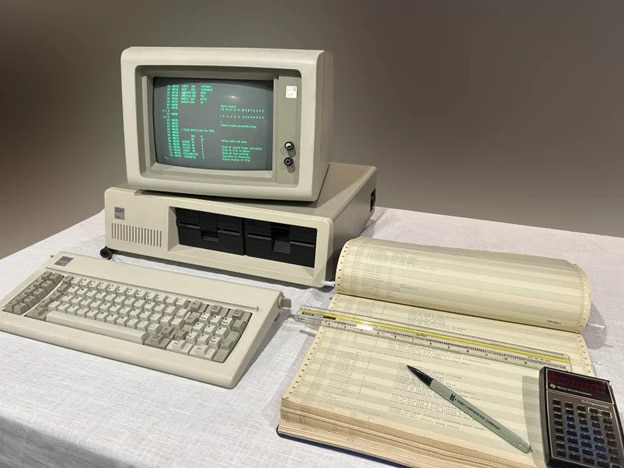
Developing a DOS operating system in the early days. (Image Credit: Rich Cini/Microsoft)
Microsoft has been making its early operating system code available to the public over the past few years. In 2018, the tech giant open-sourced MS-DOS 1.25 and 2.0 before allowing public access to MS-DOS 4.0 in 2024. More recently, Microsoft released the source code for the 86-DOS 1.00 to mark its 45th anniversary. Microsoft and the Computer History Museum say the release preserves an important part of computing history and is intended for those who want to learn about it.
Even then, the archive goes further than the code itself. We can also see software history in scanned listings, internal documents, assembler printouts, and analog artifacts that shaped operating systems from the late 1970s and early 1980s. The MS-DOS 1.25 and 2.0 releases remind us that there’s more to the story than just code, as context matters when exploring the evolution of modern platforms.
Yufeng Gao and Rich Cini’s team of historians and Preservationists found, scanned, and transcribed a stack of DOS-era source listings from Tim Paterson, the original author of 86-DOS. Those listings are loaded with development snapshots, kernel source, CHKDSK and other utilities, and assembler listings. It also included the assembly, giving us a glimpse into how MS-DOS and PC-DOS took shape.
Microsoft’s releases aren’t meant for real-world use. But anyone interested in how operating systems were structured on 1st-gen 8086 hardware can still learn from them. Since DOS 1.0 is so small and limited, it works like a traceable system that can be understood from top to bottom.
“It’s also worth noting that these materials aren’t just operating system releases in the traditional sense. In several cases, the listings represent point‑in‑time working states and hand-written notes, preserved by Tim Paterson himself. Think of them as a printed commit history of a Git repository. They create a timeline of changes, showing which features were implemented when, what errors were made, and how they were fixed. Soon you’ll be able to visit these living artifacts at the Interim Computer Museum as they’ve been generously donated by Tim Paterson,” Microsoft wrote in its blog post.
I hope this leads to another path for the embedded OS space.
Have a story tip? Message me here at element14.

