element14 Community
element14 Community
    Register Log In
  • Site
  • Search
  • Log In Register
  • Community Hub
    Community Hub
    • What's New on element14
    • Feedback and Support
    • Benefits of Membership
    • Personal Blogs
    • Members Area
    • Achievement Levels
  • Learn
    Learn
    • Ask an Expert
    • eBooks
    • element14 presents
    • Learning Center
    • Tech Spotlight
    • STEM Academy
    • Webinars, Training and Events
    • Learning Groups
  • Technologies
    Technologies
    • 3D Printing
    • FPGA
    • Industrial Automation
    • Internet of Things
    • Power & Energy
    • Sensors
    • Technology Groups
  • Challenges & Projects
    Challenges & Projects
    • Design Challenges
    • element14 presents Projects
    • Project14
    • Arduino Projects
    • Raspberry Pi Projects
    • Project Groups
  • Products & Partners
    Products & Partners
    • Arduino
    • Avnet & Tria Boards Community
    • Dev Tools
    • Manufacturers
    • Multicomp Pro
    • Product Groups
    • Raspberry Pi
    • RoadTests & Reviews
  • About Us
    About the element14 Community
  • Store
    Store
    • Visit Your Store
    • Choose another store...
      • Europe
      •  Austria (German)
      •  Belgium (Dutch, French)
      •  Bulgaria (Bulgarian)
      •  Czech Republic (Czech)
      •  Denmark (Danish)
      •  Estonia (Estonian)
      •  Finland (Finnish)
      •  France (French)
      •  Germany (German)
      •  Hungary (Hungarian)
      •  Ireland
      •  Israel
      •  Italy (Italian)
      •  Latvia (Latvian)
      •  
      •  Lithuania (Lithuanian)
      •  Netherlands (Dutch)
      •  Norway (Norwegian)
      •  Poland (Polish)
      •  Portugal (Portuguese)
      •  Romania (Romanian)
      •  Russia (Russian)
      •  Slovakia (Slovak)
      •  Slovenia (Slovenian)
      •  Spain (Spanish)
      •  Sweden (Swedish)
      •  Switzerland(German, French)
      •  Turkey (Turkish)
      •  United Kingdom
      • Asia Pacific
      •  Australia
      •  China
      •  Hong Kong
      •  India
      •  Japan
      •  Korea (Korean)
      •  Malaysia
      •  New Zealand
      •  Philippines
      •  Singapore
      •  Taiwan
      •  Thailand (Thai)
      •  Vietnam
      • Americas
      •  Brazil (Portuguese)
      •  Canada
      •  Mexico (Spanish)
      •  United States
      Can't find the country/region you're looking for? Visit our export site or find a local distributor.
  • Translate
  • Profile
  • Settings
Embedded and Microcontrollers
  • Technologies
  • More
Embedded and Microcontrollers
Blog Room-Temperature Superconductivity Needs More Than Electron Pairing
  • Blog
  • Forum
  • Documents
  • Quiz
  • Polls
  • Files
  • Members
  • Mentions
  • Sub-Groups
  • Tags
  • More
  • Cancel
  • New
Join Embedded and Microcontrollers to participate - click to join for free!
  • Share
  • More
  • Cancel
Group Actions
  • Group RSS
  • More
  • Cancel
Engagement
  • Author Author: Catwell
  • Date Created: 18 Nov 2026 9:30 AM Date Created
  • Views 94 views
  • Likes 3 likes
  • Comments 0 comments
  • research
  • superconductor
  • room-temperature superconductivity
  • on_campus
  • europe
  • university
  • innovation
Related
Recommended

Room-Temperature Superconductivity Needs More Than Electron Pairing

Catwell
Catwell
18 Nov 2026

image

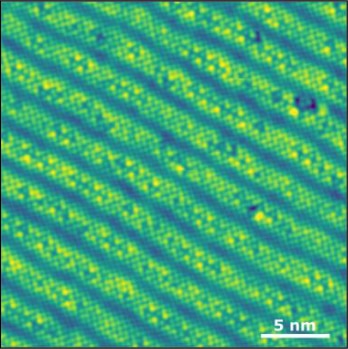
Topographic image of Bi2Sr2CaCu2O8+δ, showing crystal supermodulation. (Image Credit: Science (2026))

Scientists from Leiden, Munich, and Utrecht conducted a study to better understand high-temperature superconductors. This may help scientists discover materials that can conduct electricity with zero resistance at everyday temperatures.

Scanning tunneling microscopy and shot-noise measurements enabled them to investigate Bi₂Sr₂CaCu₂O₈₊δ, a cuprate high-temperature superconductor. Samples with various superconducting transition temperatures, such as underdoped, optimally doped, and overdoped materials were then examined.

In the paper, the team says that, in a cuprate high-temperature superconductor, electron pairs may persist at room temperature. This is higher than the temperature at which the material becomes superconducting. Based on the finding, pairing electrons isn’t the only barrier. Each pair needs to behave coherently, which means moving in a coordinated collective state.

The team compared the energy associated with electron pairing to the material’s pseudogap energy. By doing so, this showed both energies match across samples with different superconducting transition temperatures. Since the pseudogap can persist up to room temperature, the team says that electron pairing may also persist there.

The researchers measured at cryogenic temperatures (360 mK to 4.3 K). More tests using gold and by applying magnetic fields allowed them to determine that the signal is associated with electron pairing, not equipment error.

Electricity is conducted from superconductors with no resistance. Most materials require extreme cooling. High-temperature cuprate superconductors function at cryogenic temperatures, making widespread use more challenging.

It’s essential for electrons to form Cooper pairs so that superconductivity will occur. And they must be phase coherent. Those processes happen together in conventional low-temperature superconductors. A key signal was a step-like increase in the effective charge measured via shot noise. This signal helped identify the energy at which pairing emerges.

Have a story tip? Message me here at element14.

  • Sign in to reply
element14 Community

element14 is the first online community specifically for engineers. Connect with your peers and get expert answers to your questions.

  • Members
  • Learn
  • Technologies
  • Challenges & Projects
  • Products
  • Store
  • About Us
  • Feedback & Support
  • FAQs
  • Terms of Use
  • Privacy Policy
  • Legal and Copyright Notices
  • Sitemap
  • Cookies

An Avnet Company © 2026 Premier Farnell Limited. All Rights Reserved.

Premier Farnell Ltd, registered in England and Wales (no 00876412), registered office: Farnell House, Forge Lane, Leeds LS12 2NE.

Follow element14

  • X
  • Facebook
  • linkedin
  • YouTube