About 6 months ago I got a Dev Kit free from another supplier who was trying to win my business.
At first I thought it was a bit gimicky - a small PCB with a few chips on it, when you waved it in the air it spelled out messages using a single row of 8 LEDs. Just wonderful, I thought.
However, as I played with the kit, and loaded up a few more of the demo projects that came with it, I realised that this was something very different from what I had been used to working with.
It turned out the device is actually a PLD - a programmable logic device. It has an ARM Cortex processor core, and whole bunch of programmable logic. Now, I'd looked at PLD, PGA etc before and dismissed it as being only for the 'big guys' - with big development budgets and loads of time to work with this stuff. But this device was different... mainly due to the development environment which comes with it.
Let me go back a bit however, and cover some stuff for those who are not familiar with programmable logic.
A programmable logic device, in simple terms, is a collection of logic blocks which can be interconnected, and configured to do just about anything. They can be configured to be any number of things, such as UARTS, i2c masters or slaves, CAN controllers, logic gates (AND, OR, NOT, OR, XOR etc etc), GPIO with open drain, or open collector, or strong drive, or pullup, or pull down.... They can be USB devices, RS232, RS485, even analog ADC and DAC, with all kinds of possibilities. The configuration possibilities are endless.... and it's all implemented in HARDWARE not software. In fact, it's possible to configure the device to perform a full function of many different kinds without even writing a single piece of code to run on it's core!
As well as the programmable logic blocks, the device also contains an ARM Cortex 32 bit core, EEPROM, FLASH and RAM, Clock generators, interrupt controllers, SWD debuggers - just about everything you need to build a working system all on one chip.
I hear you say, yes but it's all very complex and all very expensive - but that;s the big thing with these modern devices - they are not complex to use, or implement, and are no longer expensive.
The devices I am talking about are the latest range of PSoC 3 and PSoC 5 devices from Cypress - and available from Farnell/Element 14. Cypress do not refer to them as PLD or CPLD, but rather as 'System On Chip' - but to some people SoC means fixed function - so be prepared to view them with an open mind.
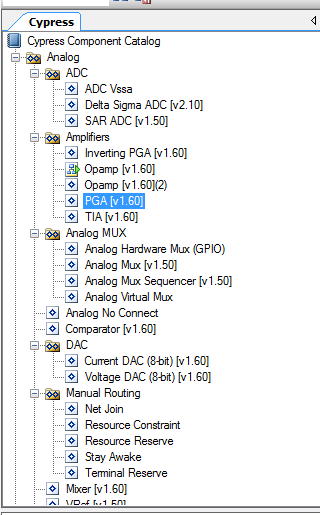
The new development environment which is available for free (PSoC Creator) is fab. It combines a drag-and-drop editor with a huge library of pre-built components, with a great C/C++ Compiler - so you can configure the logic blocks, and program the core all in one IDE - all tightly integrated. It contains a huge library of devices that can be implemented, everything from discrete digital i/o to complex analog mixers, various interfaces such as CAN, USB, UART, I2C, SPI etc, as well as logic functions such as shift registers, LCD Drivers, and you can also design your own logic blocks.
If you're in the habbit of putting a micro-controller and a bunch of glue-logic into your designs, why not consider looking at the new breed of PSoC 3 or 5 devices - you won't be disappointed.
One great place to start would be with the PSoC5 First Touch Kit - available from Farnell at item number 1823448
Bootnote.
I am an independent consultant engineer, and not affiliated with Farnell, Element14 or Cypress. The above is all my own thoughts, and does not represent the comments of the manufacturers or distributors mentioned above.