element14 Community
element14 Community
    Register Log In
  • Site
  • Search
  • Log In Register
  • Community Hub
    Community Hub
    • What's New on element14
    • Feedback and Support
    • Benefits of Membership
    • Personal Blogs
    • Members Area
    • Achievement Levels
  • Learn
    Learn
    • Ask an Expert
    • eBooks
    • element14 presents
    • Learning Center
    • Tech Spotlight
    • STEM Academy
    • Webinars, Training and Events
    • Learning Groups
  • Technologies
    Technologies
    • 3D Printing
    • FPGA
    • Industrial Automation
    • Internet of Things
    • Power & Energy
    • Sensors
    • Technology Groups
  • Challenges & Projects
    Challenges & Projects
    • Design Challenges
    • element14 presents Projects
    • Project14
    • Arduino Projects
    • Raspberry Pi Projects
    • Project Groups
  • Products
    Products
    • Arduino
    • Avnet & Tria Boards Community
    • Dev Tools
    • Manufacturers
    • Multicomp Pro
    • Product Groups
    • Raspberry Pi
    • RoadTests & Reviews
  • About Us
  • Store
    Store
    • Visit Your Store
    • Choose another store...
      • Europe
      •  Austria (German)
      •  Belgium (Dutch, French)
      •  Bulgaria (Bulgarian)
      •  Czech Republic (Czech)
      •  Denmark (Danish)
      •  Estonia (Estonian)
      •  Finland (Finnish)
      •  France (French)
      •  Germany (German)
      •  Hungary (Hungarian)
      •  Ireland
      •  Israel
      •  Italy (Italian)
      •  Latvia (Latvian)
      •  
      •  Lithuania (Lithuanian)
      •  Netherlands (Dutch)
      •  Norway (Norwegian)
      •  Poland (Polish)
      •  Portugal (Portuguese)
      •  Romania (Romanian)
      •  Russia (Russian)
      •  Slovakia (Slovak)
      •  Slovenia (Slovenian)
      •  Spain (Spanish)
      •  Sweden (Swedish)
      •  Switzerland(German, French)
      •  Turkey (Turkish)
      •  United Kingdom
      • Asia Pacific
      •  Australia
      •  China
      •  Hong Kong
      •  India
      • Japan
      •  Korea (Korean)
      •  Malaysia
      •  New Zealand
      •  Philippines
      •  Singapore
      •  Taiwan
      •  Thailand (Thai)
      • Vietnam
      • Americas
      •  Brazil (Portuguese)
      •  Canada
      •  Mexico (Spanish)
      •  United States
      Can't find the country/region you're looking for? Visit our export site or find a local distributor.
  • Translate
  • Profile
  • Settings
Embedded and Microcontrollers
  • Technologies
  • More
Embedded and Microcontrollers
Embedded Forum Design Challenge : relay spike protection
  • Blog
  • Forum
  • Documents
  • Quiz
  • Polls
  • Files
  • Members
  • Mentions
  • Sub-Groups
  • Tags
  • More
  • Cancel
  • New
Join Embedded and Microcontrollers to participate - click to join for free!
Actions
  • Share
  • More
  • Cancel
Forum Thread Details
  • State Suggested Answer
  • Replies 15 replies
  • Answers 1 answer
  • Subscribers 474 subscribers
  • Views 5263 views
  • Users 0 members are here
  • embedded
  • development
  • relay
Related

Design Challenge : relay spike protection

Catwell
Catwell over 15 years ago
This is a common problem with relays. The relay coil acts like an inductor when power is removed, and it sends a spike of power back into your circuit. And let's say you are originally putting 5V through the coil. When the power is removed, in some cases, the coil could send a spike of any level, even in the range of 400V, back into your circuit. And the problems cause by that are many, from burning out circuitry to tremendous electromagnetic interference.
 
 
I have seen spikes that oscillate between hundreds of volts positive and negative. Like below:
 
image
The challenge is to eliminate the problem in the cheapest way, with as few components as possible. Let's just say space and money are scarce for this project. And the relay is connected to very sensitive circuitry.
 
 
Use the relay drawing here to draw your ideas.
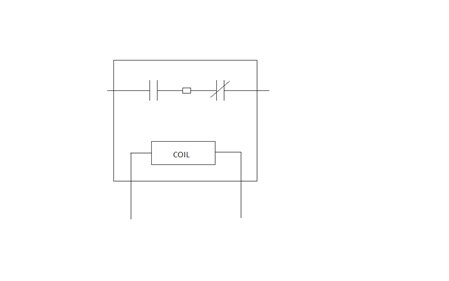
image
The relay drawing here has NC & NO contacts.
 
Cabe
Attachments:
image
  • Sign in to reply
  • Cancel

Top Replies

  • Catwell
    Catwell over 15 years ago +1
    Besides feedback and EMI, not suppressing transient spikes in relays reduces the life of the contacts significantly. Like welding, metal is deposited from one contact to another. In extreme cases, the…
Parents
  • Catwell
    0 Catwell over 15 years ago
    Besides feedback and EMI, not suppressing transient spikes in relays reduces the life of the contacts significantly. Like welding, metal is deposited from one contact to another. In extreme cases, the contacts completely fuse together. Using a single diode suppressor, text book answer, will still let this effect occur.


    This is an excerpt from a Tyco Electronics technical support document:
    Many engineers use a rectifier diode alone to provide the transient
    suppression for relay coils. While this is cost effective and fully eliminates
    the transient voltage, its impact on relay performance can be devastating.
    Problems of unexplained, random "tack welding" frequently occur in these
    systems. In some applications, this problem is merely a minor nuisance
    or inconvenience and the controller or operator will cycle the relay until
    the proper response is obtained. In many applications; however, the first
    occurrence may cause a complete system failure or even present a
    hazardous situation. It is important that these systems be designed with
    another method of relay suppression.
     
    image
    In the above figure you can see the current ripple after the deenergizing of the coil. This is the result of the magnetic restraining force fighting against the relay's spring opening force, or the slow decay of magnetic flux in the relay contacts. This shows the momentary welding effect.
     
     
    The Tyco document continues:
    The use of a reversed-biased rectifier diode in series with a zener diode
    will provide the best solution when the relay can be polarized. This
    suppression is often recommended by Siemens Electromechanical
    Components (SEC) for use in automotive circuits. The impact on release
    dynamics is minimal and poses no loss of reliability. This is normally a
    low-cost method and the only design precaution is to select a zener with
    an appropriate breakdown voltage and impulse power specifications
    adequate for the relay in its application. In printed circuit board applications
    with transistors used as relay drivers, the zener diode can be placed "across"
    the transistor; that is, for a common emitter circuit, cathode connected to
    collector and anode connected to the emitter (the series rectifier diode is
    not used in this type of circuit).
     
    image
    Adding a zener diode limits the relay coil's switch voltage closer to the switch rating. So one can effectively suppress enormous voltage spikes and avoid contact welding with little money and added complexity. See above


    I am adding the documents I found on the subject explaining in detail all the issues with relays. I recommend reading all of them and make all the practices, there in, standard in your designs.


    Cabe
    Attachments:
    imageslac-tn-65-052.pdf
    image125.pdf
    image13c3311.pdf
    image13c3264.pdf
    • Cancel
    • Vote Up +1 Vote Down
    • Sign in to reply
    • Verify Answer
    • Cancel
Reply
  • Catwell
    0 Catwell over 15 years ago
    Besides feedback and EMI, not suppressing transient spikes in relays reduces the life of the contacts significantly. Like welding, metal is deposited from one contact to another. In extreme cases, the contacts completely fuse together. Using a single diode suppressor, text book answer, will still let this effect occur.


    This is an excerpt from a Tyco Electronics technical support document:
    Many engineers use a rectifier diode alone to provide the transient
    suppression for relay coils. While this is cost effective and fully eliminates
    the transient voltage, its impact on relay performance can be devastating.
    Problems of unexplained, random "tack welding" frequently occur in these
    systems. In some applications, this problem is merely a minor nuisance
    or inconvenience and the controller or operator will cycle the relay until
    the proper response is obtained. In many applications; however, the first
    occurrence may cause a complete system failure or even present a
    hazardous situation. It is important that these systems be designed with
    another method of relay suppression.
     
    image
    In the above figure you can see the current ripple after the deenergizing of the coil. This is the result of the magnetic restraining force fighting against the relay's spring opening force, or the slow decay of magnetic flux in the relay contacts. This shows the momentary welding effect.
     
     
    The Tyco document continues:
    The use of a reversed-biased rectifier diode in series with a zener diode
    will provide the best solution when the relay can be polarized. This
    suppression is often recommended by Siemens Electromechanical
    Components (SEC) for use in automotive circuits. The impact on release
    dynamics is minimal and poses no loss of reliability. This is normally a
    low-cost method and the only design precaution is to select a zener with
    an appropriate breakdown voltage and impulse power specifications
    adequate for the relay in its application. In printed circuit board applications
    with transistors used as relay drivers, the zener diode can be placed "across"
    the transistor; that is, for a common emitter circuit, cathode connected to
    collector and anode connected to the emitter (the series rectifier diode is
    not used in this type of circuit).
     
    image
    Adding a zener diode limits the relay coil's switch voltage closer to the switch rating. So one can effectively suppress enormous voltage spikes and avoid contact welding with little money and added complexity. See above


    I am adding the documents I found on the subject explaining in detail all the issues with relays. I recommend reading all of them and make all the practices, there in, standard in your designs.


    Cabe
    Attachments:
    imageslac-tn-65-052.pdf
    image125.pdf
    image13c3311.pdf
    image13c3264.pdf
    • Cancel
    • Vote Up +1 Vote Down
    • Sign in to reply
    • Verify Answer
    • Cancel
Children
No Data
element14 Community

element14 is the first online community specifically for engineers. Connect with your peers and get expert answers to your questions.

  • Members
  • Learn
  • Technologies
  • Challenges & Projects
  • Products
  • Store
  • About Us
  • Feedback & Support
  • FAQs
  • Terms of Use
  • Privacy Policy
  • Legal and Copyright Notices
  • Sitemap
  • Cookies

An Avnet Company © 2025 Premier Farnell Limited. All Rights Reserved.

Premier Farnell Ltd, registered in England and Wales (no 00876412), registered office: Farnell House, Forge Lane, Leeds LS12 2NE.

ICP 备案号 10220084.

Follow element14

  • X
  • Facebook
  • linkedin
  • YouTube