element14 Community
element14 Community
    Register Log In
  • Site
  • Search
  • Log In Register
  • Community Hub
    Community Hub
    • What's New on element14
    • Feedback and Support
    • Benefits of Membership
    • Personal Blogs
    • Members Area
    • Achievement Levels
  • Learn
    Learn
    • Ask an Expert
    • eBooks
    • element14 presents
    • Learning Center
    • Tech Spotlight
    • STEM Academy
    • Webinars, Training and Events
    • Learning Groups
  • Technologies
    Technologies
    • 3D Printing
    • FPGA
    • Industrial Automation
    • Internet of Things
    • Power & Energy
    • Sensors
    • Technology Groups
  • Challenges & Projects
    Challenges & Projects
    • Design Challenges
    • element14 presents Projects
    • Project14
    • Arduino Projects
    • Raspberry Pi Projects
    • Project Groups
  • Products
    Products
    • Arduino
    • Avnet & Tria Boards Community
    • Dev Tools
    • Manufacturers
    • Multicomp Pro
    • Product Groups
    • Raspberry Pi
    • RoadTests & Reviews
  • About Us
  • Store
    Store
    • Visit Your Store
    • Choose another store...
      • Europe
      •  Austria (German)
      •  Belgium (Dutch, French)
      •  Bulgaria (Bulgarian)
      •  Czech Republic (Czech)
      •  Denmark (Danish)
      •  Estonia (Estonian)
      •  Finland (Finnish)
      •  France (French)
      •  Germany (German)
      •  Hungary (Hungarian)
      •  Ireland
      •  Israel
      •  Italy (Italian)
      •  Latvia (Latvian)
      •  
      •  Lithuania (Lithuanian)
      •  Netherlands (Dutch)
      •  Norway (Norwegian)
      •  Poland (Polish)
      •  Portugal (Portuguese)
      •  Romania (Romanian)
      •  Russia (Russian)
      •  Slovakia (Slovak)
      •  Slovenia (Slovenian)
      •  Spain (Spanish)
      •  Sweden (Swedish)
      •  Switzerland(German, French)
      •  Turkey (Turkish)
      •  United Kingdom
      • Asia Pacific
      •  Australia
      •  China
      •  Hong Kong
      •  India
      • Japan
      •  Korea (Korean)
      •  Malaysia
      •  New Zealand
      •  Philippines
      •  Singapore
      •  Taiwan
      •  Thailand (Thai)
      • Vietnam
      • Americas
      •  Brazil (Portuguese)
      •  Canada
      •  Mexico (Spanish)
      •  United States
      Can't find the country/region you're looking for? Visit our export site or find a local distributor.
  • Translate
  • Profile
  • Settings
Experts, Learning and Guidance
  • Technologies
  • More
Experts, Learning and Guidance
Ask an Expert Forum It is impossible to online buy a cheap Non-contact Direct Current voltage tester pens.
  • Blog
  • Forum
  • Documents
  • Leaderboard
  • Files
  • Members
  • Mentions
  • Sub-Groups
  • Tags
  • More
  • Cancel
  • New
Join Experts, Learning and Guidance to participate - click to join for free!
Actions
  • Share
  • More
  • Cancel
Forum Thread Details
  • State Not Answered
  • Replies 24 replies
  • Subscribers 309 subscribers
  • Views 4329 views
  • Users 0 members are here
Related
See a helpful answer?

Be sure to click 'more' and select 'suggest as answer'!

If you're the thread creator, be sure to click 'more' then 'Verify as Answer'!

It is impossible to online buy a cheap Non-contact Direct Current voltage tester pens.

z234
z234 over 2 years ago

Dear friends,

I found it is impossible to online buy a cheap Non-contact Direct Current voltage tester pens.

They only sell AC pens.

Does anyone know where to buy cheap Non-contact Direct Current (DC) tester pens , that is not those very expensive Fluke pens?

Thanks for all your great help and May God bless you and your family Two hearts Pray

  • Sign in to reply
  • Cancel

Top Replies

  • kmikemoo
    kmikemoo over 2 years ago in reply to kmikemoo +5
    So the ET30 arrived at 9:45pm on the day it was supposed to. Preliminary play shows it responds to real magnets, even the fairly weak hobby magnets. It does not respond to anything made of or resembling…
  • Gough Lui
    Gough Lui over 2 years ago +4
    In general, AC emits alternating magnetic fields which are easy to measure and radiate some distance. By contrast, DC emits a static magnetic field which is much more difficult to detect and measure as…
  • javagoza
    javagoza over 2 years ago in reply to kmikemoo +4
    Magnetic sheets have a very curious magnetic field. https://en.wikipedia.org/wiki/Halbach_array Flux distribution for a refrigerator magnet Cancellation of magnetic components resulting in a…
Parents
  • ciorga
    0 ciorga over 2 years ago

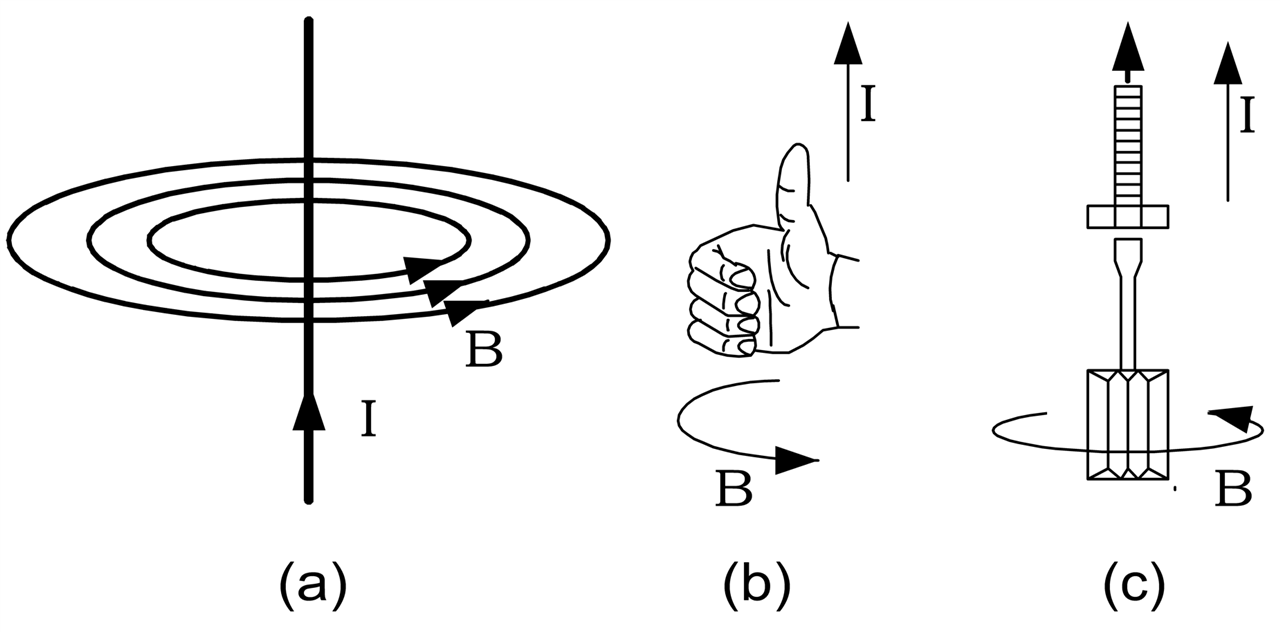
    Hi kmikemo, here are some thoughts that may explain your measurement with the ET30 magnetic field detector:  Let's first remember that electric current flows in electric loops, so for any "forward" current flowing through a wire there is a "return" current flowing in opposite direction through a different wire back to the voltage supply.  When you measure the magnetic field generated by a current through a wire you are actually measuring a superposition of the magnetic field lines generated by the "forward" current and "return" current.  Here is a picture from my book "Noise Coupling in Integrated Circuits" that shows the magnetic field lines generated by an electric current:

    image

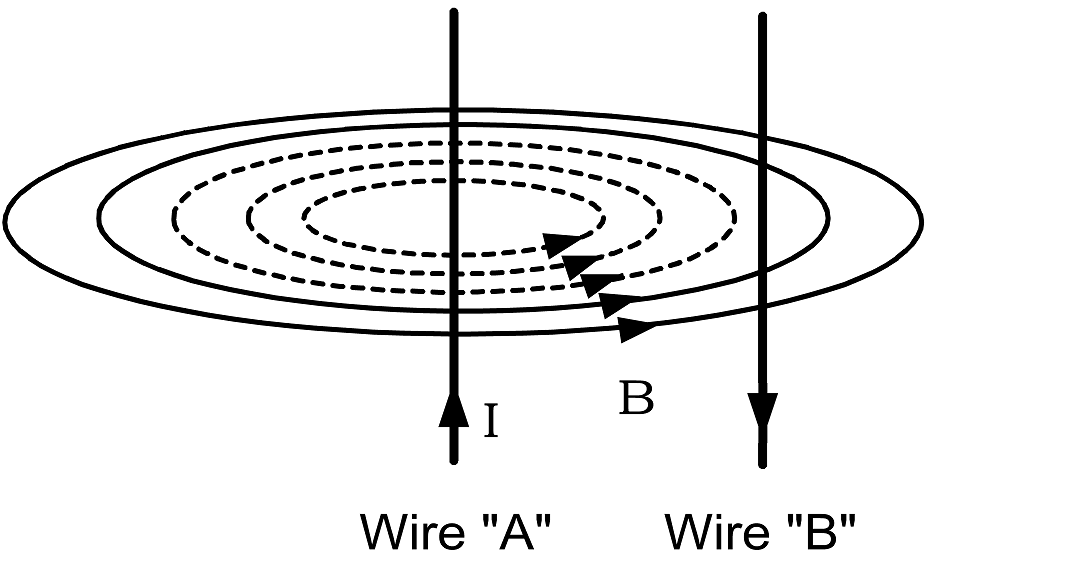
    The return current flows in opposite direction, so in the next figure Wire A is the forward current and Wire B is the return current.  Imagine that wire B generates the same circular magnetic field lines but rotating in opposite direction:

    image

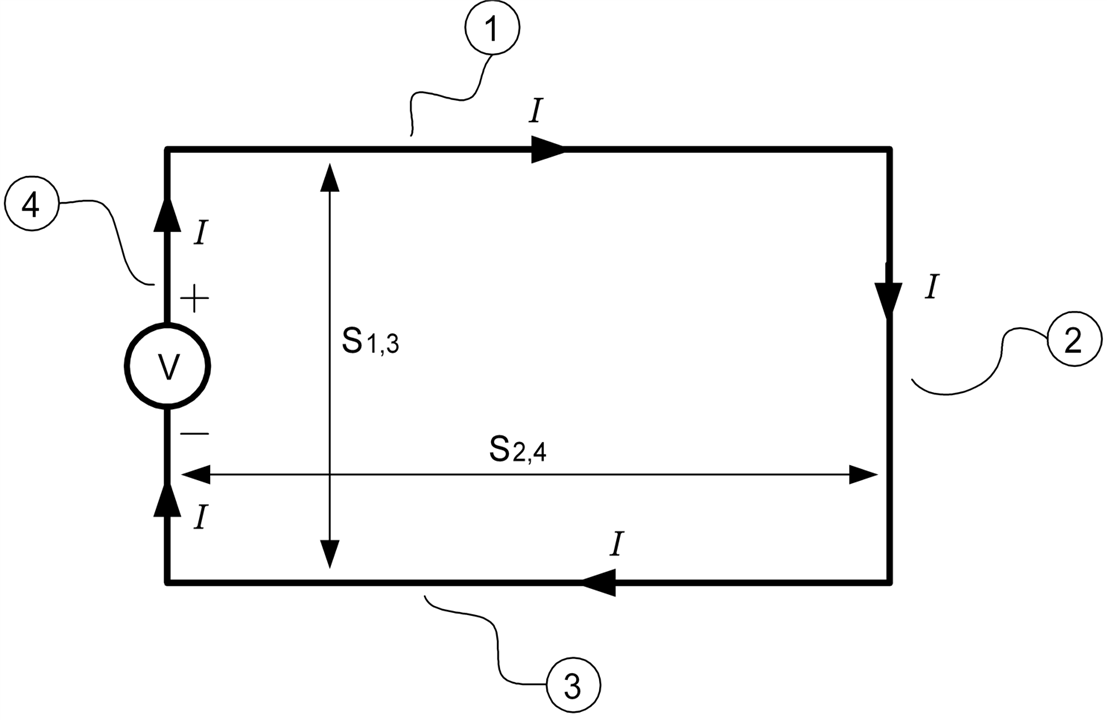
    So in between the wires the magnetic field lines of wire A and wire B have the same direction, so the magnetic field intensity doubles up, and outside the magnetic field lines of wire A and wire B have opposite direction and the magnetic intensity subtracts.  If the two wires are next to each other the magnetic field intensity outside gets close to zero, so your magnetic probe will not measure anything.  This is often the case of PCBs with ground planes where the spacing between the forward current and the return current is the thickness of the PCB dielectric.  So if you try a measurement on a setup that allows you to measure the magnetic field in the space between the forward current and return current you will probably be able to get a valid result.  Like for example, place your probe inside the current flow loop as shown in the diagram below:

    image

    Hope my explanation helps clarify your measurement issue.  If anyone is interested in my book here is the link to the listing on Amazon.com:

    https://www.amazon.com/Noise-Coupling-Integrated-Circuits-Suppression/dp/0615197566/ref=sr_1_1?crid=3N1OY4M6MKV58&keywords=noise+coupling+in+integrated+circuits&qid=1694372443&sprefix=noise+coupling+in+integrated+circuits%2Caps%2C184&sr=8-1

    Best Wishes,

    Cosmin

    • Cancel
    • Vote Up 0 Vote Down
    • Sign in to reply
    • Verify Answer
    • Cancel
Reply
  • ciorga
    0 ciorga over 2 years ago

    Hi kmikemo, here are some thoughts that may explain your measurement with the ET30 magnetic field detector:  Let's first remember that electric current flows in electric loops, so for any "forward" current flowing through a wire there is a "return" current flowing in opposite direction through a different wire back to the voltage supply.  When you measure the magnetic field generated by a current through a wire you are actually measuring a superposition of the magnetic field lines generated by the "forward" current and "return" current.  Here is a picture from my book "Noise Coupling in Integrated Circuits" that shows the magnetic field lines generated by an electric current:

    image

    The return current flows in opposite direction, so in the next figure Wire A is the forward current and Wire B is the return current.  Imagine that wire B generates the same circular magnetic field lines but rotating in opposite direction:

    image

    So in between the wires the magnetic field lines of wire A and wire B have the same direction, so the magnetic field intensity doubles up, and outside the magnetic field lines of wire A and wire B have opposite direction and the magnetic intensity subtracts.  If the two wires are next to each other the magnetic field intensity outside gets close to zero, so your magnetic probe will not measure anything.  This is often the case of PCBs with ground planes where the spacing between the forward current and the return current is the thickness of the PCB dielectric.  So if you try a measurement on a setup that allows you to measure the magnetic field in the space between the forward current and return current you will probably be able to get a valid result.  Like for example, place your probe inside the current flow loop as shown in the diagram below:

    image

    Hope my explanation helps clarify your measurement issue.  If anyone is interested in my book here is the link to the listing on Amazon.com:

    https://www.amazon.com/Noise-Coupling-Integrated-Circuits-Suppression/dp/0615197566/ref=sr_1_1?crid=3N1OY4M6MKV58&keywords=noise+coupling+in+integrated+circuits&qid=1694372443&sprefix=noise+coupling+in+integrated+circuits%2Caps%2C184&sr=8-1

    Best Wishes,

    Cosmin

    • Cancel
    • Vote Up 0 Vote Down
    • Sign in to reply
    • Verify Answer
    • Cancel
Children
No Data
element14 Community

element14 is the first online community specifically for engineers. Connect with your peers and get expert answers to your questions.

  • Members
  • Learn
  • Technologies
  • Challenges & Projects
  • Products
  • Store
  • About Us
  • Feedback & Support
  • FAQs
  • Terms of Use
  • Privacy Policy
  • Legal and Copyright Notices
  • Sitemap
  • Cookies

An Avnet Company © 2026 Premier Farnell Limited. All Rights Reserved.

Premier Farnell Ltd, registered in England and Wales (no 00876412), registered office: Farnell House, Forge Lane, Leeds LS12 2NE.

ICP 备案号 10220084.

Follow element14

  • X
  • Facebook
  • linkedin
  • YouTube