element14 Community
element14 Community
    Register Log In
  • Site
  • Search
  • Log In Register
  • Community Hub
    Community Hub
    • What's New on element14
    • Feedback and Support
    • Benefits of Membership
    • Personal Blogs
    • Members Area
    • Achievement Levels
  • Learn
    Learn
    • Ask an Expert
    • eBooks
    • element14 presents
    • Learning Center
    • Tech Spotlight
    • STEM Academy
    • Webinars, Training and Events
    • Learning Groups
  • Technologies
    Technologies
    • 3D Printing
    • FPGA
    • Industrial Automation
    • Internet of Things
    • Power & Energy
    • Sensors
    • Technology Groups
  • Challenges & Projects
    Challenges & Projects
    • Design Challenges
    • element14 presents Projects
    • Project14
    • Arduino Projects
    • Raspberry Pi Projects
    • Project Groups
  • Products & Partners
    Products & Partners
    • Arduino
    • Avnet & Tria Boards Community
    • Dev Tools
    • Manufacturers
    • Multicomp Pro
    • Product Groups
    • Raspberry Pi
    • RoadTests & Reviews
  • About Us
    About the element14 Community
  • Store
    Store
    • Visit Your Store
    • Choose another store...
      • Europe
      •  Austria (German)
      •  Belgium (Dutch, French)
      •  Bulgaria (Bulgarian)
      •  Czech Republic (Czech)
      •  Denmark (Danish)
      •  Estonia (Estonian)
      •  Finland (Finnish)
      •  France (French)
      •  Germany (German)
      •  Hungary (Hungarian)
      •  Ireland
      •  Israel
      •  Italy (Italian)
      •  Latvia (Latvian)
      •  
      •  Lithuania (Lithuanian)
      •  Netherlands (Dutch)
      •  Norway (Norwegian)
      •  Poland (Polish)
      •  Portugal (Portuguese)
      •  Romania (Romanian)
      •  Russia (Russian)
      •  Slovakia (Slovak)
      •  Slovenia (Slovenian)
      •  Spain (Spanish)
      •  Sweden (Swedish)
      •  Switzerland(German, French)
      •  Turkey (Turkish)
      •  United Kingdom
      • Asia Pacific
      •  Australia
      •  China
      •  Hong Kong
      •  India
      •  Japan
      •  Korea (Korean)
      •  Malaysia
      •  New Zealand
      •  Philippines
      •  Singapore
      •  Taiwan
      •  Thailand (Thai)
      •  Vietnam
      • Americas
      •  Brazil (Portuguese)
      •  Canada
      •  Mexico (Spanish)
      •  United States
      Can't find the country/region you're looking for? Visit our export site or find a local distributor.
  • Translate
  • Profile
  • Settings
Experts, Learning and Guidance
  • Technologies
  • More
Experts, Learning and Guidance
Ask an Expert Forum Difficulty soldering to pin headers
  • Blog
  • Forum
  • Documents
  • Leaderboard
  • Files
  • Members
  • Mentions
  • Sub-Groups
  • Tags
  • More
  • Cancel
  • New
Join Experts, Learning and Guidance to participate - click to join for free!
Actions
  • Share
  • More
  • Cancel
Forum Thread Details
  • State Not Answered
  • Replies 8 replies
  • Subscribers 337 subscribers
  • Views 398 views
  • Users 0 members are here
  • Pin headers solderability
Related
See a helpful answer?

Be sure to click 'more' and select 'suggest as answer'!

If you're the thread creator, be sure to click 'more' then 'Verify as Answer'!

Difficulty soldering to pin headers

5ilicon
5ilicon 21 days ago

I have been struggling to solder tinned stranded wire to gold-plated pin headers. The solder doesn't seem to adhere to the pins.

I have tried lightly abrading the pin surface and cleaning with Isopropanol, applying liquid flux, increasing the iron tip temperature to 400°C!

Eventually, the wire attaches using the high temperature however, sometimes not very well. The pins also melt the plastic support material and come loose.

These are the pin headers:
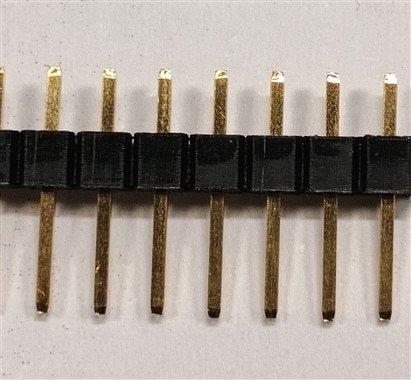
image

Any suggestions?

  • Sign in to reply
  • Cancel

Top Replies

  • misaz
    misaz 21 days ago +3
    You get more accureate ideas from others soon. I would suggeset wild idea of simply buying combined tin/Gold plated pinheaders instead. This idea of course do not work with other goold plated part like…
  • wolfgangfriedrich
    wolfgangfriedrich 21 days ago +3
    Is the solder melting to the tip of the iron OK? If not, your station might be set to 400 degC but your tip could be much colder. Please send a picture of the iron tip. 400 degC is way to much to solder…
  • vmate
    vmate 21 days ago +2
    Is it possible that your iron is not making proper thermal contact with the pin? To me, it sounds like very slow heating, hence needing some time for the solder to eventually stick.
  • misaz
    0 misaz 21 days ago

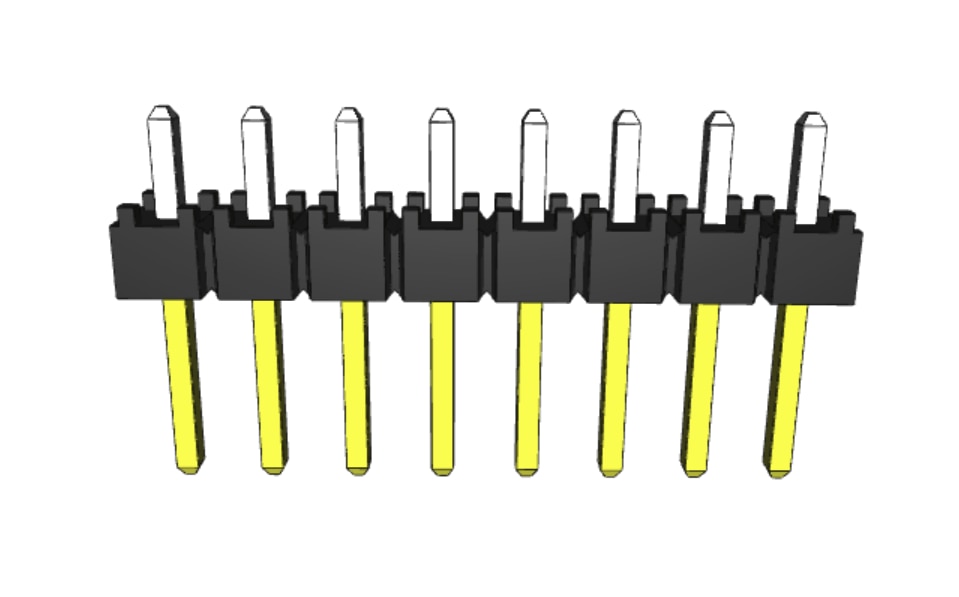
    You get more accureate ideas from others soon. I would suggeset wild idea of simply buying combined tin/Gold plated pinheaders instead. This idea of course do not work with other goold plated part like pogo pins which also need to be soldered from time to time.

    This one is TSW-108-07-L-S but many cheaper exists.

    image

    • Cancel
    • Vote Up +3 Vote Down
    • Sign in to reply
    • Verify Answer
    • Cancel
  • vmate
    0 vmate 21 days ago

    Is it possible that your iron is not making proper thermal contact with the pin? To me, it sounds like very slow heating, hence needing some time for the solder to eventually stick.

    • Cancel
    • Vote Up +2 Vote Down
    • Sign in to reply
    • Verify Answer
    • Cancel
  • wolfgangfriedrich
    0 wolfgangfriedrich 21 days ago

    Is the solder melting to the tip of the iron OK? If not, your station might be set to 400 degC but your tip could be much colder. Please send a picture of the iron tip. 400 degC is way to much to solder pins like this, maximum of 300 should easily do it. Still hot enough to melt the plastic. 

    Also, if you put a jumper on the other side over the pin to solder and the next one, it holds the pin in place even if the plastic support gets soft. 

    • Cancel
    • Vote Up +3 Vote Down
    • Sign in to reply
    • Verify Answer
    • Cancel
  • 5ilicon
    0 5ilicon 20 days ago in reply to wolfgangfriedrich

    Thanks for all the replies so far.

    I am using SAC305 solder and it melts perfectly on the tip.

    The wires tinned easily at a low temperature, as do other soldering tasks.

    I can eventually solder the wires to the pin headers by holding the tip for longer however, the plastic begins to melt.

    The solder joint in some cases is weak.

    I have seen tinned pin headers but only have gold-plated ones to use.

    • Cancel
    • Vote Up 0 Vote Down
    • Sign in to reply
    • Verify Answer
    • Cancel
  • shabaz
    0 shabaz 20 days ago

    Amazing how expensive this is nowadays.. I got it for half the price just a few years ago:

    https://cpc.farnell.com/multicore-loctite/dlmp22-500g-reel/solder-lmp-0-71mm-500g/dp/SD00065?CMP=TREML007-005

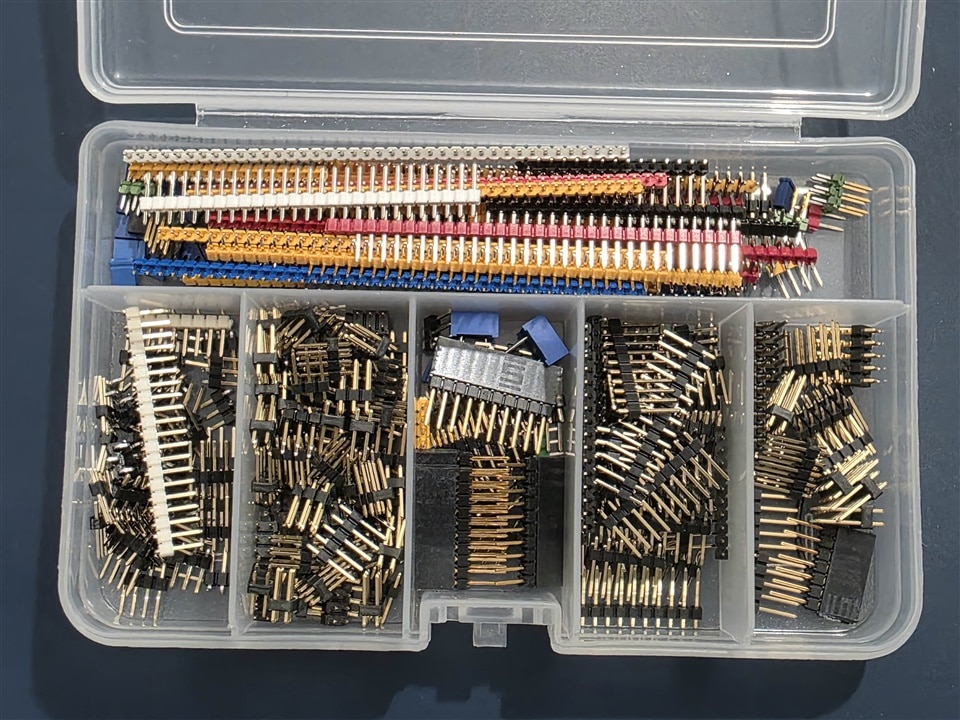
    My little header pins assortment!

    image

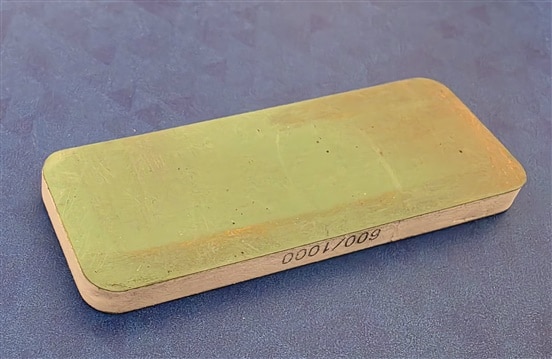
    If you're sure you've got a good iron with enough power, and good tip with a flat side (e.g. sliced conical or chisel) to transfer the heat, then it may just be the solder. I can solder visibly tarnished connectors with solder that contains rosin core flux, if the solder is thick enough (such as 0.7mm dia) to contain enough flux, and if the tarnishing isn't crazy-excessive. It takes a few seconds more but you can see it suddenly properly wet. However, this isn't good practise; better to clean the contacts (there are special fiberglass pens for that, but my method is to instead use a foam-core sanding stick, like those used for fingernails). 

    image

    If connectors are tarnished then worth double-checking they will make good contact with the mating connector (I have had to throw out some sockets on occasion, things oxidise a lot here).

    • Cancel
    • Vote Up +1 Vote Down
    • Sign in to reply
    • Verify Answer
    • Cancel
  • wolfgangfriedrich
    0 wolfgangfriedrich 20 days ago in reply to 5ilicon

    That sounds all good. 

    Try soldering the wire to the pin in 2 steps:

    1. Put some solder on the iron tip and some flux on the pin. Hold the tip to the bottom side of the pin and hold the solder on top of the pin. When the solder melts and covers the gold pin, you know the pin was hot enough. 

    2. Now melt some solder to the wire that it is tinned nicely, a little too much solder does not hurt. Now put some more flux on the wire and pin again. Heat the pin again from underneath and hold the wire to the pin from the top. If you have good heat transfer from the iron to the pin and wire, everything should 'melt' together nicely.  

    • Cancel
    • Vote Up +1 Vote Down
    • Sign in to reply
    • Verify Answer
    • Cancel
  • michaelkellett
    0 michaelkellett 20 days ago

    There are several possibilities.

    The iron temperature has been suggested but since you can tin the wire OK I suspect that the pin headers are cheapos and are gold coloured but not actually gold plated.

    Using flux might help or possibly using leaded solder.

    I've used a lot of cheap headers (like the Multicomp ones from Farnell that have been fine but I'm less sure about the totally unbranded ones from Amazon or Aliexpress (although I have not had any problems using leaded solder).

    MK

    • Cancel
    • Vote Up +1 Vote Down
    • Sign in to reply
    • Verify Answer
    • Cancel
  • BigG
    0 BigG 20 days ago

    Yep, have had the same problems as you describe and tried the same remedies to little effect. As you rightly say "The pins also melt the plastic support material and come loose."

    I've resorted to a bit of strip board. Solder that on first and the solder the wires on the strip board. Not ideal.

    • Cancel
    • Vote Up 0 Vote Down
    • Sign in to reply
    • Verify Answer
    • Cancel
element14 Community

element14 is the first online community specifically for engineers. Connect with your peers and get expert answers to your questions.

  • Members
  • Learn
  • Technologies
  • Challenges & Projects
  • Products
  • Store
  • About Us
  • Feedback & Support
  • FAQs
  • Terms of Use
  • Privacy Policy
  • Legal and Copyright Notices
  • Sitemap
  • Cookies

An Avnet Company © 2026 Premier Farnell Limited. All Rights Reserved.

Premier Farnell Ltd, registered in England and Wales (no 00876412), registered office: Farnell House, Forge Lane, Leeds LS12 2NE.

Follow element14

  • X
  • Facebook
  • linkedin
  • YouTube