element14 Community
element14 Community
    Register Log In
  • Site
  • Search
  • Log In Register
  • Community Hub
    Community Hub
    • What's New on element14
    • Feedback and Support
    • Benefits of Membership
    • Personal Blogs
    • Members Area
    • Achievement Levels
  • Learn
    Learn
    • Ask an Expert
    • eBooks
    • element14 presents
    • Learning Center
    • Tech Spotlight
    • STEM Academy
    • Webinars, Training and Events
    • Learning Groups
  • Technologies
    Technologies
    • 3D Printing
    • FPGA
    • Industrial Automation
    • Internet of Things
    • Power & Energy
    • Sensors
    • Technology Groups
  • Challenges & Projects
    Challenges & Projects
    • Design Challenges
    • element14 presents Projects
    • Project14
    • Arduino Projects
    • Raspberry Pi Projects
    • Project Groups
  • Products
    Products
    • Arduino
    • Avnet & Tria Boards Community
    • Dev Tools
    • Manufacturers
    • Multicomp Pro
    • Product Groups
    • Raspberry Pi
    • RoadTests & Reviews
  • About Us
  • Store
    Store
    • Visit Your Store
    • Choose another store...
      • Europe
      •  Austria (German)
      •  Belgium (Dutch, French)
      •  Bulgaria (Bulgarian)
      •  Czech Republic (Czech)
      •  Denmark (Danish)
      •  Estonia (Estonian)
      •  Finland (Finnish)
      •  France (French)
      •  Germany (German)
      •  Hungary (Hungarian)
      •  Ireland
      •  Israel
      •  Italy (Italian)
      •  Latvia (Latvian)
      •  
      •  Lithuania (Lithuanian)
      •  Netherlands (Dutch)
      •  Norway (Norwegian)
      •  Poland (Polish)
      •  Portugal (Portuguese)
      •  Romania (Romanian)
      •  Russia (Russian)
      •  Slovakia (Slovak)
      •  Slovenia (Slovenian)
      •  Spain (Spanish)
      •  Sweden (Swedish)
      •  Switzerland(German, French)
      •  Turkey (Turkish)
      •  United Kingdom
      • Asia Pacific
      •  Australia
      •  China
      •  Hong Kong
      •  India
      •  Korea (Korean)
      •  Malaysia
      •  New Zealand
      •  Philippines
      •  Singapore
      •  Taiwan
      •  Thailand (Thai)
      • Americas
      •  Brazil (Portuguese)
      •  Canada
      •  Mexico (Spanish)
      •  United States
      Can't find the country/region you're looking for? Visit our export site or find a local distributor.
  • Translate
  • Profile
  • Settings
Industrial Automation
  • Technologies
  • More
Industrial Automation
Blog AiFoam Gives Robots the Ability to Self-Repair
  • Blog
  • Forum
  • Documents
  • Quiz
  • Events
  • Polls
  • Files
  • Members
  • Mentions
  • Sub-Groups
  • Tags
  • More
  • Cancel
  • New
Join Industrial Automation to participate - click to join for free!
  • Share
  • More
  • Cancel
Group Actions
  • Group RSS
  • More
  • Cancel
Engagement
  • Author Author: Catwell
  • Date Created: 2 Aug 2021 6:08 PM Date Created
  • Views 812 views
  • Likes 4 likes
  • Comments 0 comments
  • singapore
  • robotics
  • robot
  • on_campus
  • cabeatwell
  • national university of singapore
  • university
  • innovation
Related
Recommended

AiFoam Gives Robots the Ability to Self-Repair

Catwell
Catwell
2 Aug 2021

image

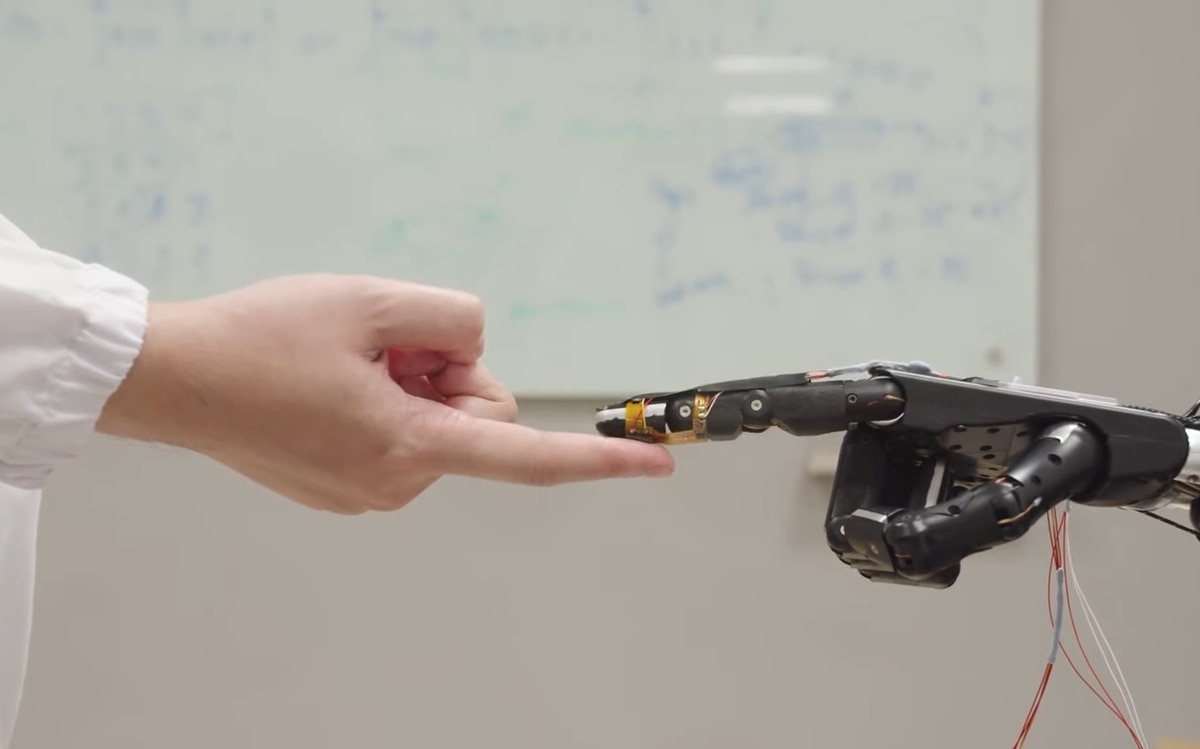
Artificially innervated foam (AiFoam) was designed using high-elasticity polymer infused with metal particles and tiny electrodes, giving it the ability to self-heal and a sense of touch. (Image credit: National University of Singapore via YouTube)


While robots are getting smarter through AI, they cannot feel and touch objects like humans, which can be detrimental to humans' work environment. Scientists from the National University of Singapore have developed an intelligent foam capable of self-healing and sense objects similar to human skin. Those scientists’ breakthroughs could give those robots more than a sense of touch with the added ability to sense objects around them without needing to touch them.


Known as artificially innervated foam (AiFoam), the new material is soft like a sponge and can perform those abilities mentioned earlier, all at the same time. “We want to show that it is possible to replicate the human sense of touch in a robot, which opens up a new paradigm in the interaction between man and machine for future applications,” states Assistant Professor Benjamin Tee. A robot outfitted with an AiFoam skin could theoretically manipulate rigid and soft objects alike without damaging them.


You don't have permission to edit metadata of this video.
Edit media
x
image
Upload Preview
image


The scientists developed AiFoam using elastic polymer created by mixing a Teflon-like substance (known as a fluoropolymer) with a surfactant that lowers surface tension. The result is a material that, when separated into pieces, fuses effortlessly back into one piece. The scientists then infused the material with microscopic metal particles that enable the foam to sense the presence of a capacitive object, such as a human finger. Embedded electrodes housed underneath the surface of the foam provide object detection and the direction of the object based on the amount of force of the interaction. The scientists are currently looking to robotics and prosthetics manufacturers about utilizing AiFoam and incorporating it into other applications.


Have a story tip? Message me at: http://twitter.com/Cabe_Atwell


  • Sign in to reply
element14 Community

element14 is the first online community specifically for engineers. Connect with your peers and get expert answers to your questions.

  • Members
  • Learn
  • Technologies
  • Challenges & Projects
  • Products
  • Store
  • About Us
  • Feedback & Support
  • FAQs
  • Terms of Use
  • Privacy Policy
  • Legal and Copyright Notices
  • Sitemap
  • Cookies

An Avnet Company © 2025 Premier Farnell Limited. All Rights Reserved.

Premier Farnell Ltd, registered in England and Wales (no 00876412), registered office: Farnell House, Forge Lane, Leeds LS12 2NE.

ICP 备案号 10220084.

Follow element14

  • X
  • Facebook
  • linkedin
  • YouTube