


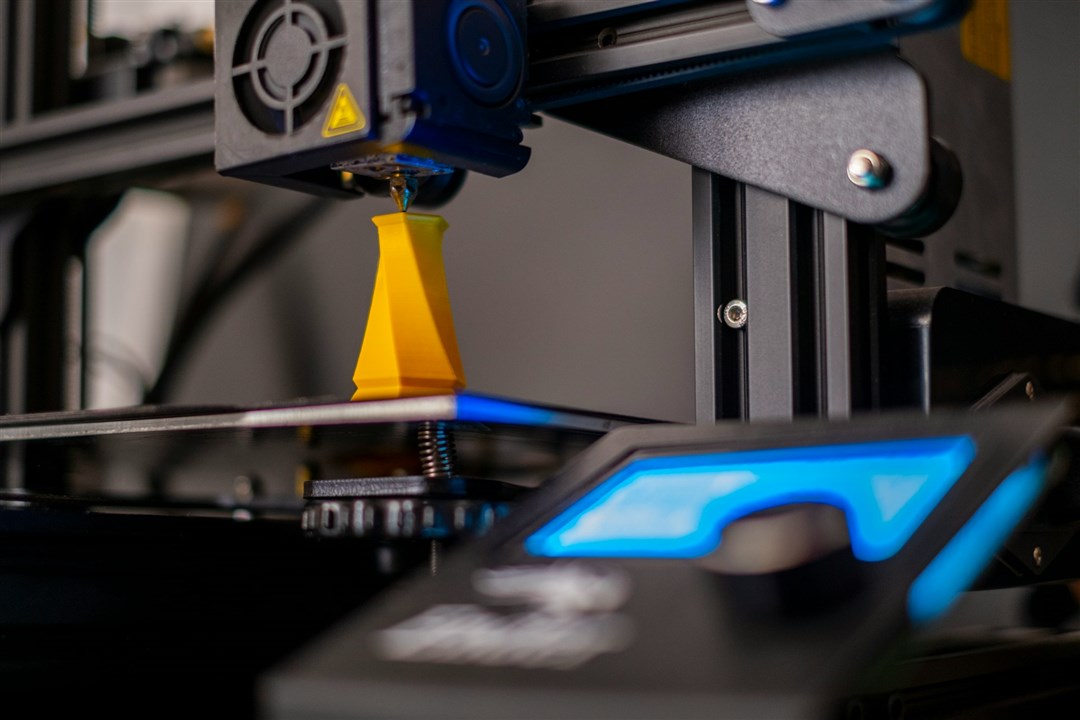
(Image Credit: Osman Talha Dilyar/Unsplash)
Some makers worry about using 3D printers at home as they may emit ultrafine particles and volatile organic compounds in the air during printing. This raises concerns about indoor air quality, especially around pets and children. Bambu Lab created PLA Pure, a 3D printing filament that is clean, food-safe, and UL Greenguard-certified, as the company claims. The product is sold in three soft pastel colors, including black and white, for $24.99 (spool) or $21.99 (refill).
Although filament manufacturers don’t need to include the ingredients on the package or website, Bambu Lab does that anyway. It provides more information on the filament’s composition and its performance in indoor environments. On the company’s website, it says PLA Pure uses acrylic copolymer, polylactic acid (PLA), color pigments, ethylene bis-stearamide (EBS), and asbestos-free talc.
However, the most eyebrow-raising one is asbestos-free talc. After all, it reflects an issue with mineral sourcing rather than 3D printing concerns. Talc and asbestos can be found naturally in the same geological deposits. And it’s very difficult to separate them during processing. Manufacturers using talc may test their raw materials to ensure they don’t have any asbestos contamination. By disclosing this information, Bambu Lab is being transparent about the materials going into their filaments.
According to Bambu Lab, PLA Pure has a UL GREENGUARD (UL2409) certification. This means it underwent tests for particles and Volatile Organic Compound emissions that affect air quality. They say the levels are lower than those in an average living room, kitchen, or office, suggesting the air is cleaner than expected.
Even though the PLA Basic has the same indoor air quality certification, PLA Pure’s simpler ingredient formulation produces lower emissions. They ran tests on its A1 and A2L printers without using air filters or an enclosure, replicating a home environment. During printing, PLA Pure emits 0.01-0.02 mg/m3 of formaldehyde, 0.24-0.44 mg/m3 of TVOCs, and 0.015-0.027 mg/m3 of PM 2.5. While PLA is one of the lower-emission materials in 3D printing, emissions vary based on the additives, formulation, pigments, and printing conditions.
PLA Pure does not perform worse even with fewer additives. It has the same mechanical properties as PLA Basic and achieves layer adhesion comparable to typical PLA filaments. PLA Pure is also suitable and safe for toys. The filament complies with the EN 71-3 certification, a European toy safety standard. This helps prevent the final product from releasing hazardous levels of heavy metals, such as chromium, lead, and cadmium.
Have a story tip? Message me here at element14.
