element14 Community
element14 Community
    Register Log In
  • Site
  • Search
  • Log In Register
  • Community Hub
    Community Hub
    • What's New on element14
    • Feedback and Support
    • Benefits of Membership
    • Personal Blogs
    • Members Area
    • Achievement Levels
  • Learn
    Learn
    • Ask an Expert
    • eBooks
    • element14 presents
    • Learning Center
    • Tech Spotlight
    • STEM Academy
    • Webinars, Training and Events
    • Learning Groups
  • Technologies
    Technologies
    • 3D Printing
    • FPGA
    • Industrial Automation
    • Internet of Things
    • Power & Energy
    • Sensors
    • Technology Groups
  • Challenges & Projects
    Challenges & Projects
    • Design Challenges
    • element14 presents Projects
    • Project14
    • Arduino Projects
    • Raspberry Pi Projects
    • Project Groups
  • Products
    Products
    • Arduino
    • Avnet & Tria Boards Community
    • Dev Tools
    • Manufacturers
    • Multicomp Pro
    • Product Groups
    • Raspberry Pi
    • RoadTests & Reviews
  • About Us
  • Store
    Store
    • Visit Your Store
    • Choose another store...
      • Europe
      •  Austria (German)
      •  Belgium (Dutch, French)
      •  Bulgaria (Bulgarian)
      •  Czech Republic (Czech)
      •  Denmark (Danish)
      •  Estonia (Estonian)
      •  Finland (Finnish)
      •  France (French)
      •  Germany (German)
      •  Hungary (Hungarian)
      •  Ireland
      •  Israel
      •  Italy (Italian)
      •  Latvia (Latvian)
      •  
      •  Lithuania (Lithuanian)
      •  Netherlands (Dutch)
      •  Norway (Norwegian)
      •  Poland (Polish)
      •  Portugal (Portuguese)
      •  Romania (Romanian)
      •  Russia (Russian)
      •  Slovakia (Slovak)
      •  Slovenia (Slovenian)
      •  Spain (Spanish)
      •  Sweden (Swedish)
      •  Switzerland(German, French)
      •  Turkey (Turkish)
      •  United Kingdom
      • Asia Pacific
      •  Australia
      •  China
      •  Hong Kong
      •  India
      •  Korea (Korean)
      •  Malaysia
      •  New Zealand
      •  Philippines
      •  Singapore
      •  Taiwan
      •  Thailand (Thai)
      • Americas
      •  Brazil (Portuguese)
      •  Canada
      •  Mexico (Spanish)
      •  United States
      Can't find the country/region you're looking for? Visit our export site or find a local distributor.
  • Translate
  • Profile
  • Settings
Industrial Automation
  • Technologies
  • More
Industrial Automation
Blog Dam alternative energy issues
  • Blog
  • Forum
  • Documents
  • Quiz
  • Events
  • Polls
  • Files
  • Members
  • Mentions
  • Sub-Groups
  • Tags
  • More
  • Cancel
  • New
Join Industrial Automation to participate - click to join for free!
  • Share
  • More
  • Cancel
Group Actions
  • Group RSS
  • More
  • Cancel
Engagement
  • Author Author: Catwell
  • Date Created: 1 Dec 2016 10:39 PM Date Created
  • Views 644 views
  • Likes 2 likes
  • Comments 2 comments
  • hydroelectric
  • alternative_energy
  • environment
  • industry
  • hydroelectric dam
  • cabeatwell
  • electric grid
  • environmental impact
  • power
  • report
Related
Recommended

Dam alternative energy issues

Catwell
Catwell
1 Dec 2016

image

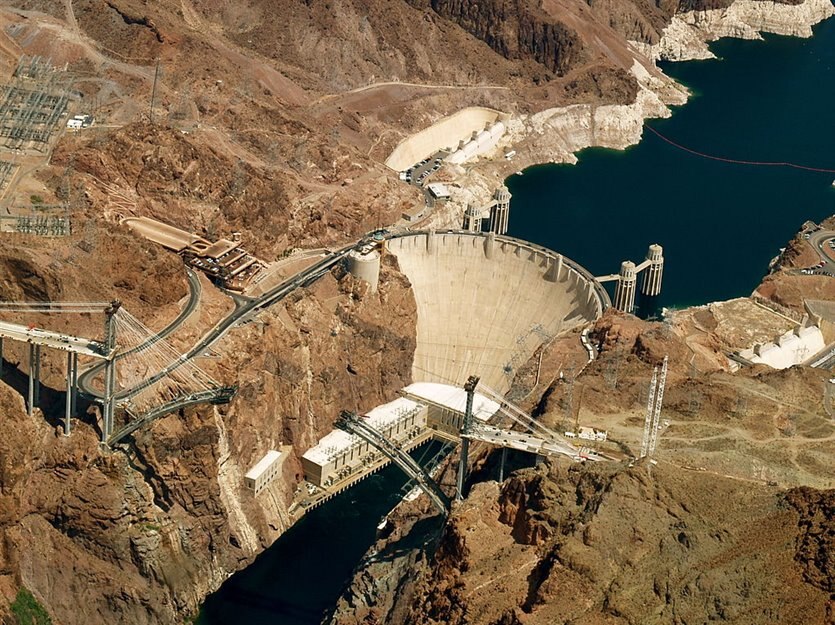
Large hydroelectric dam reservoirs release large volumes of greenhouse gases due to organic matter, contributing to 1% global greenhouse gas emissions. An aerial view of the Hoover Dam, one of the largest in North America  (image via Wikimedia Commons, free media repository)


I’ve been a critic of “green energy” in the past, since a lot of us don’t know all the downsides. For example, wind turbines depleting the earth of its natural energy or how have many other issues come alone with them – especially in urban areas. Now info on Hydroelectric dams impact comes to light. 


It’s been suggested before that the reservoirs in large dams are a source of greenhouse gases and have some kind of environmental impact on Earth’s atmosphere. But until a team of collaborating scientists released their findings, how much of an impact was just conjecture.

Looking at data from 250 dams around the world, the scientists looked at surface area and greenhouse gas emissions from each site.


Turns out the news is not good. According to the team headed by Bridget Deemer, from the School of Environment in Vancouver, Washington, dams release 25% more methane and carbon dioxide than previously imagined. In total, the study concluded that hydroelectric dams around the world contribute a total of 1 billion tons of greenhouse gases annually, or 1.3% of all anthropogenic greenhouse gas emissions globally.


Why is that? Well, the large, deep lakes in reservoirs store a lot of organic material, like dead trees and leaves, carried to the dam by river. It sinks to the bottom of the reservoir and is decomposed by bacteria there, emitting gases in the process.


This isn’t the first study to talk about dams contributing to emissions. Other studies have looked at the location and size of the dam as producing the most gas. But the key finding of Deemer’s team is that the biggest predictor of how gas a dam will produce is how much chlorophyll is present in the water-i.e., how much plant matter was carried downstream. This means that dams full of sludge are highly polluting dams.


That the numbers are so much higher may come as a shock to renewable energy enthusiasts, who laud dams as being a relatively low-impact way to get electricity. But these findings likely won’t surprise environmental scientists who have studied the long term impacts of dams on ecosystems. Dams dramatically alter the ecology of freshwater systems, often making rivers uninhabitable to fish, salmon being one famous example.


If not the nail on the coffin lid of hydroelectric power, this study may at least inspire scientists to keep looking for alternatives.


Have a story tip? Message me at: cabe(at)element14(dot)com

http://twitter.com/Cabe_Atwell

  • Sign in to reply
  • Catwell
    Catwell over 8 years ago in reply to m.ratcliffe

    100% correct. Fills the area with sludge.


    I imagine, normally, a lot of that material would be carried downstream and eventually cast off to shore somewhere. Definitely reducing the amount of organic particles in any one place.


    C    

    • Cancel
    • Vote Up 0 Vote Down
    • Sign in to reply
    • More
    • Cancel
  • m.ratcliffe
    m.ratcliffe over 8 years ago

    Very few large problems are solved in one go, this organic build up and breakdown is just a smaller secondary problem to solved. For example if this large mass of organic material is collected, it could be used to regenerate soil quality in the local areas.


    Am I right in assuming its the lack of oxygen in these lakes that makes organic matter decompose with worse side effects than if it decomposed on land?

    • Cancel
    • Vote Up 0 Vote Down
    • Sign in to reply
    • More
    • Cancel
element14 Community

element14 is the first online community specifically for engineers. Connect with your peers and get expert answers to your questions.

  • Members
  • Learn
  • Technologies
  • Challenges & Projects
  • Products
  • Store
  • About Us
  • Feedback & Support
  • FAQs
  • Terms of Use
  • Privacy Policy
  • Legal and Copyright Notices
  • Sitemap
  • Cookies

An Avnet Company © 2025 Premier Farnell Limited. All Rights Reserved.

Premier Farnell Ltd, registered in England and Wales (no 00876412), registered office: Farnell House, Forge Lane, Leeds LS12 2NE.

ICP 备案号 10220084.

Follow element14

  • X
  • Facebook
  • linkedin
  • YouTube