


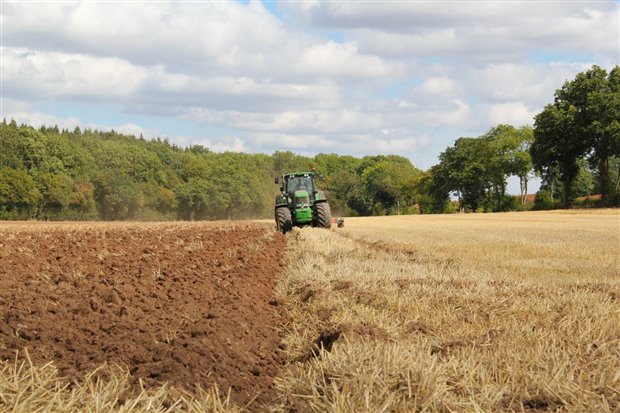
The UK’s newly unveiled farming policy is designed to benefit England’s wildlife and climate for 50 years. It also introduces the biggest cuts for the wealthiest farmers. (Image Credit: Richard Bell/Unsplash)
The UK government has unveiled a new farming policy designed to benefit England’s wildlife and climate for 50 years. According to government ministers, this plan is the biggest shake-up of the country’s farming industry. The current scheme allows farmers to receive subsidies of £1.6bn ($1.9bn) per year, which is based on how much land they own. This benefits wealthier farmers because they receive larger funds. These new measures phase out the current subsidies by 2028. Funds are then used to help restore wild habitats, produce new woodlands, improve soils, prevent floods, and reduce pesticide use.
The wealthiest farmers who receive over £150,000 ($180,000) per year are expected to see the biggest cuts, starting with 25% in 2021. Those who receive less than £30,000 ($36,000) are only getting a 5% cut next year. Some of the biggest beneficiaries of the current scheme include the Duke of Westminster, Queen Elizabeth, inventor James Dyson, and racehorse owner Prince Khalid bin Abdullah al Saud.
Under the new plan, farmers receive grants to improve productivity and animal welfare, which includes new robotic equipment. Within seven years, it allows farmers to produce healthy and profitable food in a sustainable approach without using subsidies.
George Eustice, the environment secretary, acknowledged the environmental damage done by industrial farming over the past 50 years. He also said the new policy would be beneficial for nature and help fight the climate crisis. Farming, which inhabits 70% of England, is the main cause of biodiversity loss and generates greenhouse gas emissions and water pollution.
The current agricultural policy is regarded as damaging for nature. The change is expected to be introduced when the UK leaves the EU as the Brexit withdrawal period ends on December 31st. Farming and environment groups reacted positively to the new policy, but they also said more detail was urgently needed. However, with Brexit quickly approaching, some are concerned about the uncertainties of food tariffs and trade deals.
The total payment to farmers every year remains the same until 2025. Two-thirds of it is paid for owning land, but by 2025, it decreases to one-third and zero by 2028. Environmental action funds should increase from a quarter of the total to over half by 2025. The rest of the funds go towards boosting productivity.
Before fully launching in 2024, the new payment system is expected to be trialed with 5,000 farmers. However, a payment scheme for natural food defenses and restoring peatlands and saltmarshes has not been set. Additionally, the possible cut in carbon emissions hasn’t been assessed.
The cuts should reduce the income of livestock farmers by 60% to 80% by 2024. The government plan also includes funding improvements for animal manure management since slurry is a major polluter of water and air.
Additionally, the government said it plans on reducing bureaucratic hurdles for farmers. This would be done by replacing automatic fines with warning letters for small issues and more targeted inspections.
These new measures are only applicable to England. This is because Wales, Scotland, and Northern Ireland are creating their own plans.
Lisbon saw one of its worst summers in 2017, which was very stressful for Sofia and André Oliveira. Portugal had record wildfires and severe heat waves that claimed the lives of 120 civilians. Scientists linked the extreme heat to climate change. Now, the two children are on the verge of a breakthrough in their climate action. With the help of an ongoing crowdfunding campaign, Sofia, André, and four other Portuguese citizens filed the first climate-related case at the European Court of Human Rights (ECHR). They argue that governments in 33 European countries haven’t done much to protect their citizens’ human rights from the impacts of climate change. On November 30th, the court announced that the case is being forwarded to defendant countries and ordered them to respond to the case’s arguments.
In its letter, the court asked whether climate change constitutes a violation of Article 3 of the European Human Rights Act on “inhuman or degrading treatment or punishment.” National governments in Europe could be ordered to ramp up their emissions reductions if the ECHR finds the case in favor of the Portuguese youth.
The case argues that the rights of the Oliveira children and four other youth are violated by climate impacts in Portugal. Lawyers focused on the right to enjoy their rights free of discrimination, the right to life, and the right to a home and family life.
Have a story tip? Message me at: http://twitter.com/Cabe_Atwell
