element14 Community
element14 Community
    Register Log In
  • Site
  • Search
  • Log In Register
  • Community Hub
    Community Hub
    • What's New on element14
    • Feedback and Support
    • Benefits of Membership
    • Personal Blogs
    • Members Area
    • Achievement Levels
  • Learn
    Learn
    • Ask an Expert
    • eBooks
    • element14 presents
    • Learning Center
    • Tech Spotlight
    • STEM Academy
    • Webinars, Training and Events
    • Learning Groups
  • Technologies
    Technologies
    • 3D Printing
    • FPGA
    • Industrial Automation
    • Internet of Things
    • Power & Energy
    • Sensors
    • Technology Groups
  • Challenges & Projects
    Challenges & Projects
    • Design Challenges
    • element14 presents Projects
    • Project14
    • Arduino Projects
    • Raspberry Pi Projects
    • Project Groups
  • Products
    Products
    • Arduino
    • Avnet & Tria Boards Community
    • Dev Tools
    • Manufacturers
    • Multicomp Pro
    • Product Groups
    • Raspberry Pi
    • RoadTests & Reviews
  • About Us
  • Store
    Store
    • Visit Your Store
    • Choose another store...
      • Europe
      •  Austria (German)
      •  Belgium (Dutch, French)
      •  Bulgaria (Bulgarian)
      •  Czech Republic (Czech)
      •  Denmark (Danish)
      •  Estonia (Estonian)
      •  Finland (Finnish)
      •  France (French)
      •  Germany (German)
      •  Hungary (Hungarian)
      •  Ireland
      •  Israel
      •  Italy (Italian)
      •  Latvia (Latvian)
      •  
      •  Lithuania (Lithuanian)
      •  Netherlands (Dutch)
      •  Norway (Norwegian)
      •  Poland (Polish)
      •  Portugal (Portuguese)
      •  Romania (Romanian)
      •  Russia (Russian)
      •  Slovakia (Slovak)
      •  Slovenia (Slovenian)
      •  Spain (Spanish)
      •  Sweden (Swedish)
      •  Switzerland(German, French)
      •  Turkey (Turkish)
      •  United Kingdom
      • Asia Pacific
      •  Australia
      •  China
      •  Hong Kong
      •  India
      • Japan
      •  Korea (Korean)
      •  Malaysia
      •  New Zealand
      •  Philippines
      •  Singapore
      •  Taiwan
      •  Thailand (Thai)
      • Vietnam
      • Americas
      •  Brazil (Portuguese)
      •  Canada
      •  Mexico (Spanish)
      •  United States
      Can't find the country/region you're looking for? Visit our export site or find a local distributor.
  • Translate
  • Profile
  • Settings
Industrial Automation
  • Technologies
  • More
Industrial Automation
Blog Germany: The First AI to Space Travel
  • Blog
  • Forum
  • Documents
  • Quiz
  • Events
  • Polls
  • Files
  • Members
  • Mentions
  • Sub-Groups
  • Tags
  • More
  • Cancel
  • New
Join Industrial Automation to participate - click to join for free!
  • Share
  • More
  • Cancel
Group Actions
  • Group RSS
  • More
  • Cancel
Engagement
  • Author Author: Catwell
  • Date Created: 17 Jul 2018 6:16 PM Date Created
  • Views 749 views
  • Likes 2 likes
  • Comments 0 comments
  • artificial intelligence
  • on_campus
  • space
  • cabeatwell
  • airbus
  • ai
  • university
  • germany
  • iss
  • aerospace
  • innovation
Related
Recommended

Germany: The First AI to Space Travel

Catwell
Catwell
17 Jul 2018

image

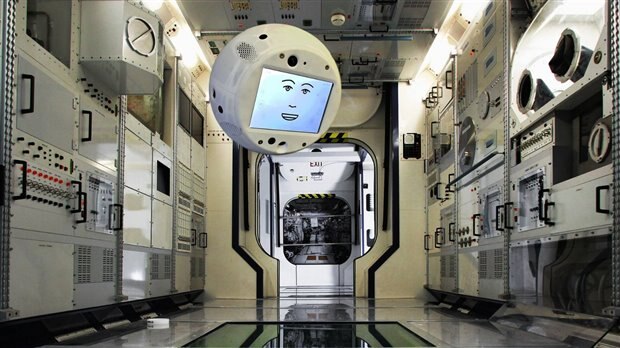
The German government funded a project that lead to the creation of an AI meant to support the astronauts during their mission in space. CIMON during one of the experiments. (Image via Airbus)


What happens when IBM collaborates with AIRBUS and DLR (the German space agency)? Together they create a robot astronaut that uses artificial intelligence to assist human astronauts during their missions in space. CIMON, for Crew Interactive Mobile companion, was the new addition to the load Space X’s Dragon cargo capsule carried recently to the International Space Station. As the first AI to board a spaceship, CIMON’s presence on the crew sets the path for future cooperation between AI-enabled robots and humans during a mission out in space.


Mostly shaped like a sphere, CIMON is an improved version of the “flying brain” created by Prof. Simon Wright back in 1978. However, CIMON might be the closest thing to making science fiction a reality: with a body built by Airbus and a software inspired by IBM’s Watson, CIMON is in the top of the line technology-wise. Funded by the German Federal Ministry of Economic Affairs and Energy, CIMON is also the fruit of a 2-year collaboration between some of the best scientists from the Ludwig-Maximilian University Hospital of Munich. The body of the robot was built through a 3-D printing process and is made of plastic and metal. The face it uses to recognize its human colleagues is actually a display screen hiding cameras and sensors. Other cameras and sensors on the side of the body help evaluate distance, voice recognition, and record data.


While IBM’s Watson provided a voice-controlled artificial intelligence, the assistance system of CIMON was developed by the scientists at LMU. The vision behind it all was to create support for the astronauts during their missions, even though for now CIMON is not equipped to help with very complex tasks. In fact, to test CIMON, the Germans took it on their 31st parabolic flight which took place in Bordeaux and served to observe CIMON’s behavior in microgravity mode. After CIMON passed that test, it flew to the International Space Station where it was introduced to Alexander Gerst, a German astronaut who will be CIMON’s main partner. Although the robot can understand command from anyone, it’s programmed to work best with Gerst. To further prepare CIMON for its future duties, Gerst performed a series of experiments on it: some with crystals, Rubik’s cube and some medical experiment. The results of those experiments revealed that CIMON’s presence made it possible for the astronaut to focus on important tasks without juggling multiple tasks. CIMON also gave the astronaut full access to data using its voice-control feature. And to make it even more convenient, CIMON will be astronauts’ camera on board to document important events. All the tests proved that CIMON can be a real team player among the astronauts and really facilitate operations during missions.


In sum, CIMON could improve the level of productivity of astronauts in space. Nonetheless, productivity is not the only component of performance. It is possible to be effective but not efficient, and stress is often the culprit when it comes to lack of performance. Scientists of the LMU in Munich discovered that working with a colleague, in a team or just getting assistance during a strenuous task reduces the amount of stress the worker experiences. In other words, the team hopes that in addition to helping with productivity, CIMON will help reduce the level of stress astronauts experience during a mission. With such skill, CIMON could have other applications than being an astronaut.


See more news at:

http://twitter.com/Cabe_Atwell

  • Sign in to reply
element14 Community

element14 is the first online community specifically for engineers. Connect with your peers and get expert answers to your questions.

  • Members
  • Learn
  • Technologies
  • Challenges & Projects
  • Products
  • Store
  • About Us
  • Feedback & Support
  • FAQs
  • Terms of Use
  • Privacy Policy
  • Legal and Copyright Notices
  • Sitemap
  • Cookies

An Avnet Company © 2025 Premier Farnell Limited. All Rights Reserved.

Premier Farnell Ltd, registered in England and Wales (no 00876412), registered office: Farnell House, Forge Lane, Leeds LS12 2NE.

ICP 备案号 10220084.

Follow element14

  • X
  • Facebook
  • linkedin
  • YouTube