


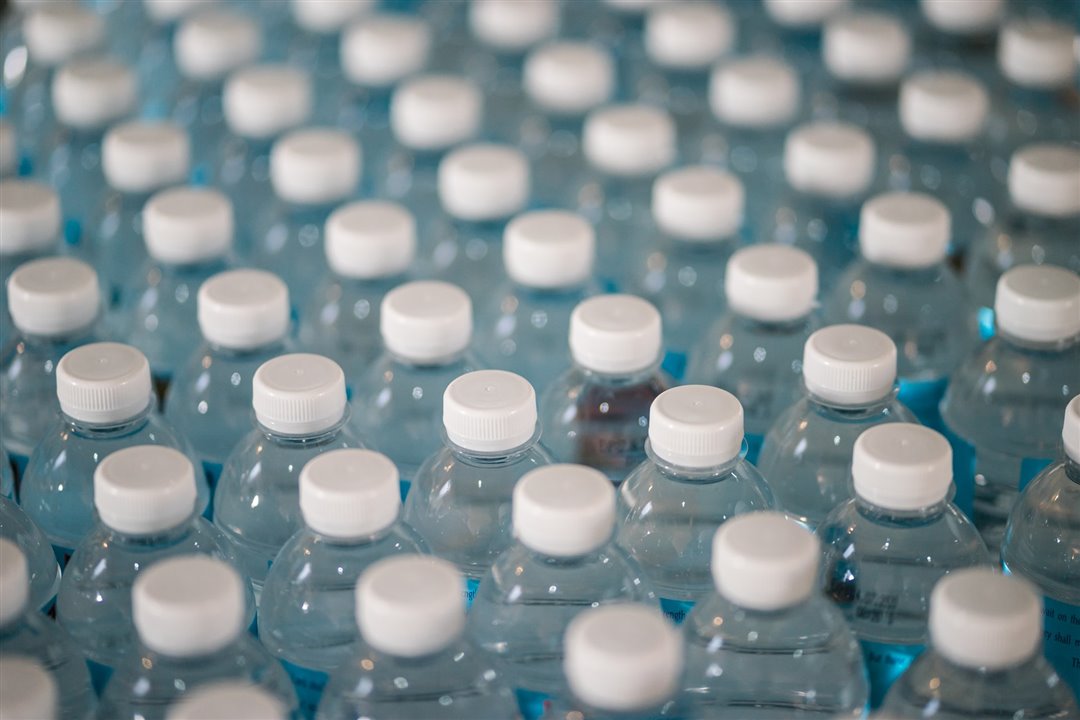
Upcycling plastics to produce other valuable materials makes recycling an economically viable solution. (Image Credit: Jonathon Chng/Unsplash)
While Europe’s recycling rates increase, conventional techniques remain limited due to the harsh remelting factors reducing materials’ quality whenever they’re recycled. Researchers at the University of Bath developed a new technique to upcycle plastic waste at room temperature. They hope this process could lead to an energy-efficient and economically viable recycling solution.
Overall, this polycarbonate rapid chemical recycling process only takes 20 minutes at room temperature to complete. The team used a zinc-based catalyst and methanol to break down poly(bisphenol A carbonate) (BPA-PC) beads, which have applications in the engineering and construction industries.
Afterward, the waste gets converted into bisphenol A (BPA) and dimethyl carbonate (DMC), which helps maintain its quality for reusability purposes over unlimited cycles. BPA recovery also keeps environmentally harmful pollutants from leaking out. On the other hand, DMC can be used as a fundamental building block for varying industrial chemicals.
The zinc catalyst can be used with other BPA-PC sources, such as CD and mixed plastic sources. This makes it more practical for industrial purposes. At the same time, it’s convenient for other plastics, including poly (lactic acid) and poly (ethylene terephthalate) (PET), at higher temperatures.
The researchers also demonstrated a circular approach toward creating numerous renewable plastic sourced from waste PET bottles—poly(ester-amide)s (PEAs) and their terephthalamide monomers. These materials offer excellent thermal properties and have biomedical applications.
“It’s really exciting to see the versatility of our catalysts in producing a wide range of value-added products from plastic waste,” Lead researcher Professor Matthew Jones, at the University of Bath’s CSCT, said, “It’s crucial we target such products, where possible, to help promote and accelerate the implementation of emerging sustainable technologies through economic incentives.”
“Whilst plastics will play a key role in achieving a low-carbon future, current practices are unsustainable,” the first author of the paper, Jack Payne from the CSCT, said, ”Moving forward, it’s imperative we source plastics from renewable feedstocks, embed biodegradability/recyclability at the design phase and diversify existing waste management strategies. “
“Such future innovation should not be limited to emerging materials but encompass established products too. Our method creates new opportunities for polycarbonate recycling under mild conditions, helping to promote a circular economy approach and keep carbon in the loop indefinitely.”
So far, this technology only works on a small scale. Now, the team is developing a catalyst optimization and scaling up the process (300 mL) with other researchers at the university.
Have a story tip? Message me at: http://twitter.com/Cabe_Atwell
-

sonus00
-
Cancel
-
Vote Up
0
Vote Down
-
-
Sign in to reply
-
More
-
Cancel
Comment-

sonus00
-
Cancel
-
Vote Up
0
Vote Down
-
-
Sign in to reply
-
More
-
Cancel
Children